
Market Minds Advisory
Pelvic Cancer Induced Hemorrhagic Cystitis Market

Pelvic Cancer Induced Hemorrhagic Cystitis Market: A Late Complication, A Fragmented Response, and the Evidence That Finally Arrived

Bladder bleeding often begins four years after the pelvic radiotherapy that caused it, by which point the treating oncologist has long discharged the patient and nobody owns the complication clinically.

Lead Analyst

Alice Ballenger

Published

August 2026

Make Smarter Decisions with Customized Research Insights

Request a free sample report and evaluate market opportunities, growth trends, and competitive dynamics relevant to your business needs.

2025 MARKET VALUE$0.7BMarket Size 2025
2036 FORECAST VALUE$1.6BBase Case , 2026 to 2036
CAGR 2026 TO 20367.8 %Bull 9.0% / Bear 6.6%
INCREMENTAL OPPORTUNITY$0.9BNet 10- year value creation
EXPANSION MULTIPLE2.12x2036 value over 2026 base
Strategic Levers
M&A Pipeline
Regional Outlook
Country Rankings
Competitive Intelligence
Segmental Deep-dive
Call-Us : 91 93563 13602

Executive Snapshot and Market Trajectory

The complication arrives late. Radiation-induced bladder bleeding typically presents around four years after treatment, when the patient has left oncology follow-up, and urology inherits a problem it did not create and has limited evidence to treat. The handover is where this market's problems begin.
Hyperbaric oxygen therapy compounds at 11.7%, a full 1.50x the market rate, because a randomised trial published in 2019 finally gave a modality that had been used on clinical judgment for decades something closer to proof. East Asia holds the largest share at 30%, on pelvic cancer volume and a hyperbaric chamber installed base larger than the rest of the world combined. Access rather than acceptance limits it now.
Concentration is very low at 34%, and that reflects a treatment pathway split across genericised drugs, service networks, endoscopy devices and hospital irrigation supply. No participant currently owns the pathway, and several are positioned to try. Baxter and Fresenius Kabi hold the uroprotectant and hospital irrigation positions through contracts negotiated for far broader reasons. Healogics runs the largest hyperbaric service network in the United States, built originally around wound care rather than urology.
Market Definition
This market covers therapy for hemorrhagic cystitis arising from pelvic cancer treatment, spanning uroprotective prophylaxis agents, intravesical instillation therapies, hyperbaric oxygen therapy, endoscopic and surgical intervention, and supportive care with continuous bladder irrigation. Products, services and procedures are counted where delivered specifically for this indication. Hemorrhagic cystitis of viral or infectious origin, interstitial cystitis and bladder pain syndrome, haematuria from active bladder malignancy, and the radiotherapy or chemotherapy that causes the complication are excluded.
Base Year Value
$0.7B in 2025 (MMA Primary Research Dataset, August 2026)
Forecast Period
2026 to 2036, eleven discrete annual values
CAGR
7.8% base case. Bull 9.0%. Bear 6.6%.
Fastest Growth Segment
Hyperbaric Oxygen Therapy: 11.7% CAGR
Fastest Growth Country
China: 11.0% CAGR
Fastest Growth Region
South Asia and Pacific: 9.8% CAGR
Largest Region
East Asia: 30% of 2025 global value
Market Leaders
Baxter International, Fresenius Kabi, IBSA Group, Healogics, and Boston Scientific. Source: MMA Primary Research Dataset, July 2026.
Primary Survey
n=3,800 procurement and R&D decision-makers, Q4 2025, six countries
Methodology
Demand-side build-up, cross-validated against public data, 47 expert interviews

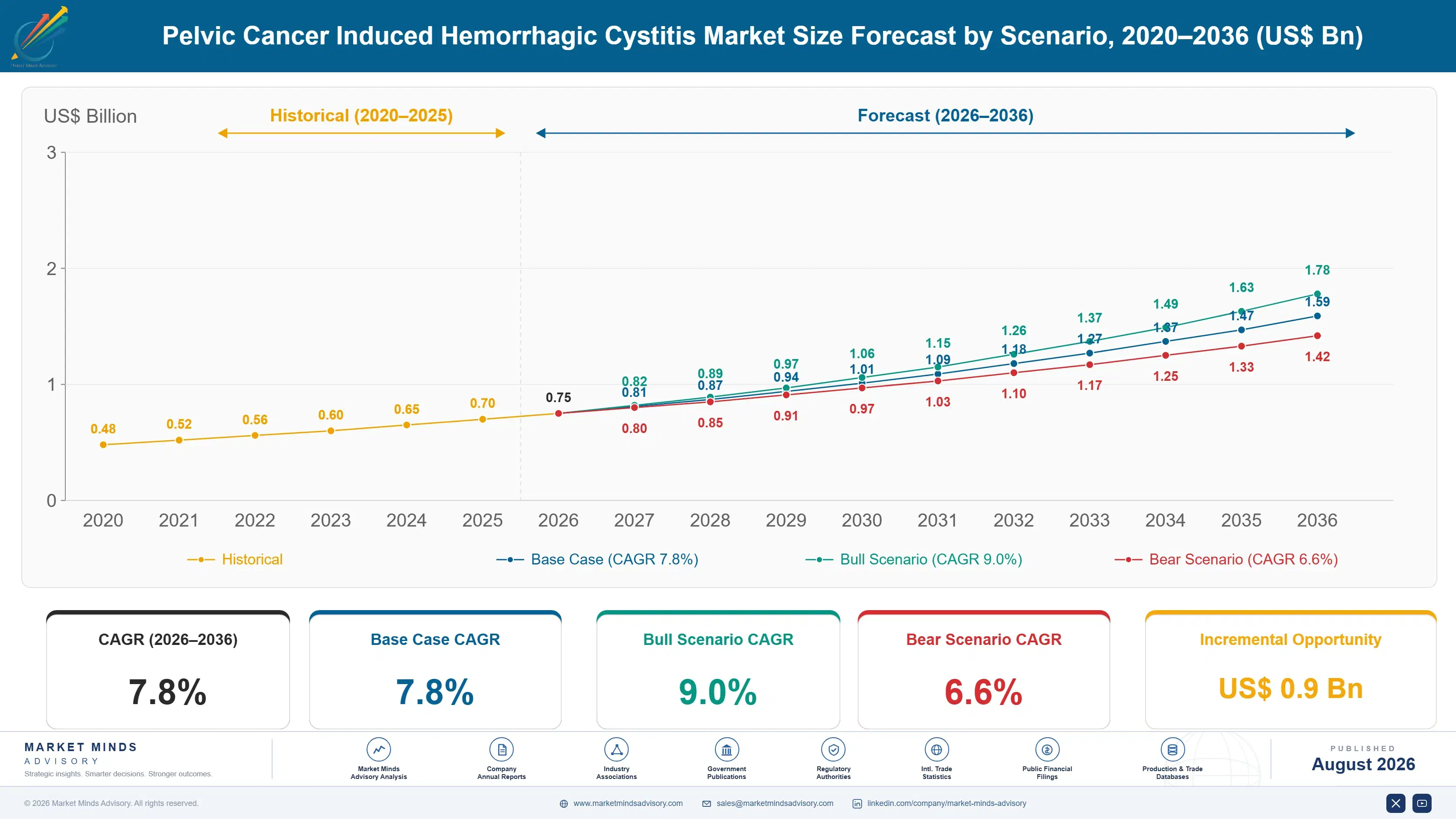
Pelvic Cancer Induced Hemorrhagic Cystitis Market Forecast Scenarios

pelvic-cancer-induced-hemorrhagic-market-size-forecast-scenario-1787305767727
Growth ran near 6.8% from 2020 to 2025 on rising pelvic radiotherapy volume rather than on any change in how the complication is treated. More prostate, cervical, rectal and bladder cancer patients received curative radiotherapy and survived long enough to develop late bladder toxicity. Treatment itself stayed largely as it was, with hyperbaric oxygen the one modality gaining ground on published evidence.
Base case growth of 7.8% rests on three mechanisms. Pelvic radiotherapy volume continues rising as survival improves and treatment shifts toward organ preservation over cystectomy. Hyperbaric capacity keeps expanding, particularly across China, which converts an evidence-based therapy from theoretically available into practically accessible. And intravesical glycosaminoglycan replacement is moving from specialist centres into general urology practice across Europe. Each mechanism operates independently of the other two. None depends on a new product reaching approval.
The bull case at 9.0% assumes reimbursement for hyperbaric oxygen in radiation tissue injury broadens beyond the markets currently covering it, which would materially raise treated share. The bear case at 6.6% reflects the opposite force: dose-sparing radiotherapy techniques including MR-guided adaptive planning reduce future incidence, and any acceleration in their adoption shrinks the eventual patient pool. Timing, not direction, is open.

Radiation Cystitis: Late Onset, Divided Ownership

Two entirely different mechanisms produce the same clinical picture. Chemotherapy-induced hemorrhagic cystitis follows ifosfamide or high-dose cyclophosphamide within days, is well understood, and is largely prevented by uroprotectant cover given alongside the drug. Radiation-induced disease is the harder problem: it appears a median of four years after pelvic radiotherapy, progresses through vascular damage nobody can reverse, and affects roughly 8% of patients treated with curative intent.
TOP FIVE CONCENTRATION34%Highly fragmented across drug, device and service participants
LATE TOXICITY INCIDENCE8%Pelvic radiotherapy patients developing late bladder bleeding eventually
MEDIAN ONSET INTERVAL4 yearsTypical delay between pelvic radiotherapy and symptom presentation
HYPERBARIC COURSE LENGTH40 sessionsSessions in a standard course for radiation tissue injury
ADMISSION WITH TRANSFUSION27%Patients needing inpatient admission with transfusion support during episodes
UROPROTECTANT PROPHYLAXIS UPTAKE76%Ifosfamide patients receiving uroprotective cover before chemotherapy administration
That delay creates a commercial oddity. The oncologist who caused the complication has usually discharged the patient by the time it appears, so the presenting clinician is a urologist or an emergency physician with no relationship to the original treatment decision. Nobody owns the complication across the pathway. Referral is inconsistent, treatment sequences vary widely between hospitals, and roughly 27% of patients end up admitted with transfusion support.
Evidence has been thin for decades, and that is finally changing. Hyperbaric oxygen was used on clinical judgment for years before a randomised trial in 2019 provided controlled data. Intravesical glycosaminoglycan replacement has accumulated observational support. Neither has displaced the older options of alum irrigation, formalin instillation or endoscopic fulguration, which remain in wide use because they are immediately available.
"This is a market defined by a handover that goes wrong. The radiation oncologist causes the injury, discharges the patient, and four years later a urologist sees blood in the urine with no clear idea what was delivered to that bladder or at what dose. Fix the handover and the treatment pathway improves more than any new product would."
Principal Analyst, Oncology Supportive Care and Urology Practice · MMA Healthcar

Market Trends

Randomised evidence moved hyperbaric oxygen into guideline positioning

Hyperbaric oxygen was delivered for radiation tissue injury for decades on physiological reasoning and case series rather than on controlled data, which kept reimbursement uneven and referral patterns inconsistent. The RICH-ART trial published in 2019 supplied randomised evidence in radiation-induced cystitis specifically, and guideline and payer positioning has moved steadily since. A standard course runs to around 40 sessions, so the reimbursement decision carries real financial weight for both provider and payer. The modality now compounds at 11.7%, faster than anything else in the pathway. Access to a chamber, rather than clinical acceptance, now limits how many patients receive it.
Market Impact: Incidence near 8% of treated patien
Dose-sparing radiotherapy techniques reduce the future patient pool

Intensity-modulated, image-guided and MR-guided adaptive radiotherapy all reduce the dose reaching the bladder wall during pelvic treatment, and lower dose means lower late toxicity. The effect on this market is delayed by the same four-year onset interval that defines the disease, so today's incidence reflects treatment delivered years ago. Participants planning beyond the forecast period have to model a declining incidence rate against a rising treated population. The two forces currently offset, with volume growth still ahead of technique improvement. Beyond the forecast horizon that balance reverses, and long-dated positions need to model the crossover explicitly.
Market Impact: Modality compounding at 11.7% annua

Market Opportunities and Growth Drivers

Organ preservation strategies replace cystectomy in bladder cancer

Trimodality therapy combining maximal resection, chemotherapy and radiotherapy has become an accepted alternative to radical cystectomy for suitable muscle-invasive bladder cancer patients, and uptake continues rising as long-term survival data accumulates. Preserving the bladder means the bladder remains available to develop late radiation injury, which a cystectomy patient cannot. Prostate and cervical radiotherapy volumes are rising in parallel on improving access and survival. Roughly 8% of curatively treated pelvic patients eventually present with late bladder bleeding, and the denominator keeps growing. A preserved bladder is a bladder that can still be injured, which is the uncomfortable arithmetic behind this growth.
Market Impact: Onset lagging treatment by 4 years

Hyperbaric capacity expansion converts evidence into access

Randomised evidence only matters where a patient can reach a chamber. China operates a hyperbaric installed base larger than the rest of the world combined, built originally for occupational and neurological indications and now increasingly used for radiation tissue injury. Capacity across South and Southeast Asia is expanding on a similar logic. Each new facility converts a therapy that exists on paper into one a urologist can actually refer to, which is why the modality grows at 11.7% while overall market growth sits at 7.8%. Capacity built for one purpose is being redirected toward another, at almost no capital cost.
Market Impact: Older options costing under 1% comp

Market Restraints and Challenges

No specialty owns the complication across the care pathway

The radiation oncologist has discharged the patient years before symptoms appear, and the urologist who sees the bleeding frequently lacks the original dosimetry or even the treatment history. The root cause is that survivorship follow-up rarely extends far enough to catch a complication with a four-year median onset. Commercial impact is inconsistent referral, wide variation in treatment sequence between hospitals, and diagnosis often reached only after an emergency admission. Participants are funding survivorship pathway programmes, urology education and structured referral protocols linking radiation oncology to urology directly. None of that changes who holds the record.
Market Impact: Standard course running 40 sessions

Older interventions remain in use because they are immediately available

Alum irrigation, formalin instillation and endoscopic fulguration are cheap, familiar and available in any hospital at three in the morning, which is when severe bleeding usually presents. The root cause is timing rather than clinical preference: a hyperbaric course requires scheduling, referral and around 40 sessions, none of which addresses active haemorrhage tonight. Commercial impact is that newer modalities compete for the maintenance phase rather than the acute one. Participants are positioning newer therapies as sequential rather than substitutional, which reflects clinical reality accurately. Acute intervention and maintenance therapy are not competing for the same decision at all.
Market Impact: Incidence effect delayed 4 years
3 additional market trends, 2 additional growth drivers, and 4 additional restraints and challenges are covered in the full report. Contact sales@marketmindsadvisory.com to access the complete intelligence.

Segment CAGR and Growth Architecture

Five therapeutic intervention classes divide this market, and every one is defined by what is delivered to the patient for this indication specifically. The division separates prevention from acute control and from long-term tissue repair, which is how clinicians actually sequence the pathway in practice. Prevention, control and repair are genuinely different commercial businesses despite treating one condition.
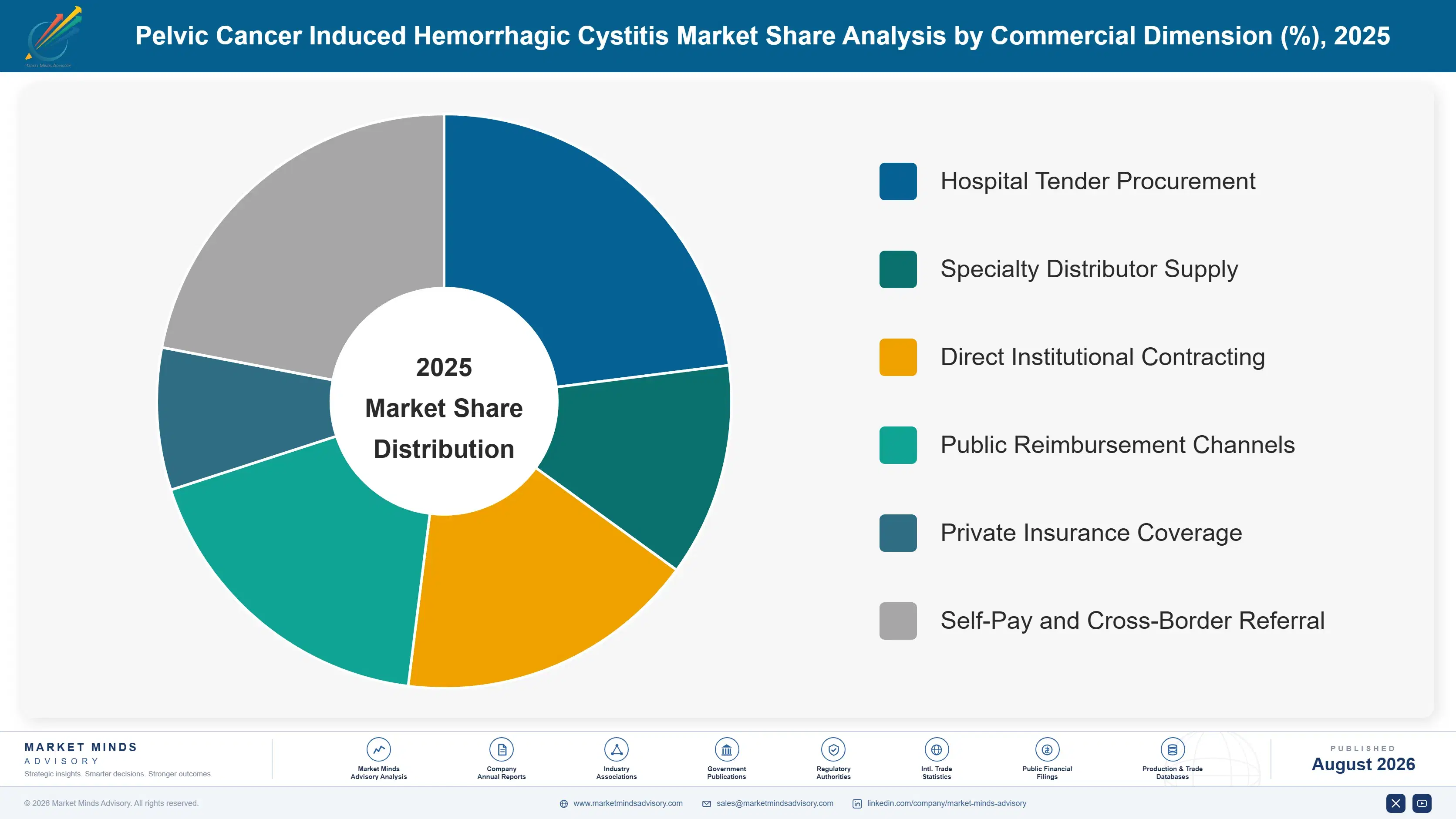
pelvic-cancer-induced-hemorrhagic-market-market-share-analysis-1787305768260

Hyperbaric Oxygen Therapy

Compounding at 11.7%, a full 1.50x the market rate, hyperbaric oxygen addresses the underlying vascular injury rather than the bleeding itself, promoting angiogenesis in irradiated bladder tissue over a course of roughly 40 sessions. Randomised evidence published in 2019 moved it from judgment-based practice toward guideline positioning, and reimbursement has followed unevenly across markets. Growth depends more on chamber access than on clinical acceptance, which is why China's very large installed base matters commercially. The modality treats the maintenance phase rather than acute haemorrhage, so it sequences after immediate control rather than replacing it. Service economics turn entirely on chamber utilisation, and an underfilled schedule damages an operator far more than any cost movement does.
CAGR 11.7%

Intravesical Instillation Therapies

Growing at 9.8%, this class covers glycosaminoglycan replacement using hyaluronic acid and chondroitin sulfate alongside the older alum and formalin instillations that remain in wide hospital use. The newer agents restore the bladder's protective urothelial layer rather than cauterising bleeding surfaces, and observational evidence has accumulated steadily without a definitive randomised trial. European uptake runs ahead of North American, reflecting regulatory classification differences that put several products on the medical device pathway. Movement from specialist centres into general urology practice is the principal growth mechanism across the forecast period. Alum and formalin remain in wide hospital use and are counted here, so segment growth blends a declining older practice with a rising newer one.
CAGR 9.8%
Full segment breakdown across 5 segments available in the complete report.

Regional Architecture and Country Demand Map

Regional distribution follows pelvic radiotherapy volume and the availability of hyperbaric capacity, which do not overlap neatly. Several large radiotherapy markets have almost no chamber access, while some markets with substantial capacity built it for entirely unrelated clinical indications. Access and volume are separate questions here.

East Asia

Thirty per cent of global value, the largest regional position, and hyperbaric capacity is the reason. China operates a hyperbaric chamber installed base larger than the rest of the world combined, built through decades of investment for occupational, neurological and carbon monoxide indications, and increasingly directed toward radiation tissue injury as oncology volumes rise. Cervical and bladder cancer radiotherapy volumes across China are very large, and survival improvement is converting treated patients into late-toxicity patients. Japan contributes a smaller but higher-value position with strong intravesical practice. Chinese demand compounds at 11.0%, the fastest of any country covered. Regional treatment patterns lean toward hospital-delivered intervention rather than outpatient maintenance therapy. Outpatient maintenance therapy is comparatively underdeveloped.
Share: 30% | CAGR: 8.8% (2026 to 2036)

North America

Twenty-eight per cent of value, and the pathway here is better reimbursed than it is organised. Hyperbaric oxygen for soft tissue radionecrosis has established coverage, which supports a substantial service network across hospital-based and freestanding facilities, and Healogics operates the largest of these. Prostate radiotherapy volume is the dominant source of eventual cases. What the region lacks is referral consistency: urologists frequently see patients years after treatment without dosimetry records, and interviewed clinicians described diagnosis reached through emergency presentation far more often than through survivorship follow-up. Prostate radiotherapy volume is the dominant eventual source of cases, and the population treated in their sixties a decade ago is now presenting. Canada's position is smaller and constrained by hyperbaric facility distribution.
Share: 28% | CAGR: 7.4% (2026 to 2036)
Regional intelligence for 5 additional markets available in the complete report: Western Europe, South Asia and Pacific, Latin America, Middle East and Africa, Eastern Europe. Contact sales@marketmindsadvisory.com.
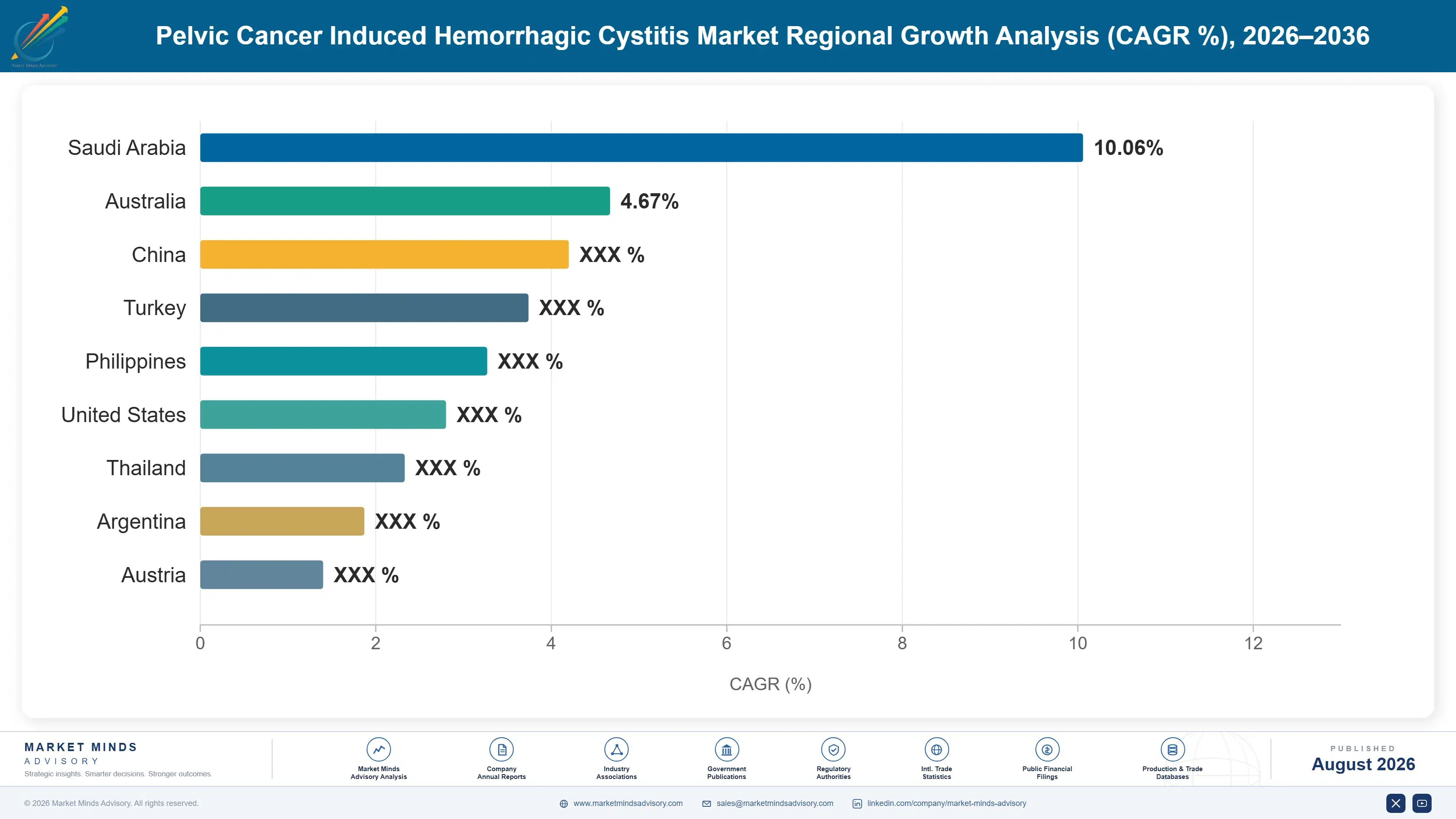
pelvic-cancer-induced-hemorrhagic-market-country-cagr-analysis-1787305768780

Where Value Sits In This Pathway

Nobody owns this complication, which is the central commercial fact. The participant that connects radiation oncology to urology, gets the patient diagnosed before an emergency admission, and holds them through a sequenced treatment course captures far more than any single product in the pathway does. Component supply into an episode nobody is measuring is worth considerably less.

Build the survivorship referral link that does not exist

Patients present a median of four years after treatment, usually to a clinician with no access to the original dosimetry. Funding structured survivorship pathways that flag pelvic radiotherapy patients for urological review converts emergency presentations into planned referrals, and interviewed centres running such programmes reported diagnosis reached 30% to 40% earlier in the disease course. Earlier diagnosis means more patients reach maintenance therapies rather than arriving in acute haemorrhage. The participant funding the pathway also shapes which treatment sequence it recommends, which is worth considerably more than the programme costs.
Market Impact: Diagnosis reached 30% to 40% earlie

Sequence products across acute and maintenance phases

Older interventions win the acute episode because they are available immediately, and no evidence package changes that at three in the morning. Positioning newer therapies as what follows control rather than what replaces it removes a competition that cannot be won and creates one that can. Centres adopting formal sequenced protocols reported repeat admission rates falling by roughly 25% against unstructured management. The commercial consequence is that a participant selling only the acute intervention or only the maintenance therapy captures a fraction of an episode that a sequenced portfolio holds entirely.
Market Impact: Repeat admissions falling by roughl

Attach hyperbaric referral to urology rather than wound care

Most hyperbaric service networks were built around diabetic wound care, and their referral relationships sit with podiatry and vascular surgery rather than urology. Radiation cystitis courses run to around 40 sessions and reimburse comparably, yet urology referral volumes stay well below the eligible population. Service operators building urology-facing referral programmes reported case volumes rising materially within two years without adding a single chamber. The asset is already installed; what is missing is a relationship with the specialty that sees these patients first. Building it costs a referral programme rather than a facility.
Market Impact: Courses of 40 sessions reimbursed c

Move intravesical therapy into general urology practice

Glycosaminoglycan replacement is concentrated in specialist centres in most markets despite requiring no equipment a general urology clinic lacks. European uptake demonstrates what broader practice adoption looks like, and the gap between specialist and general use is the largest single volume opportunity in this segment, worth an estimated 40% expansion in treated patients. Training, protocol simplification and clear positioning relative to older instillations are the working tools. The regulatory classification difference between markets shapes how quickly this can be done in each. Nothing about the therapy requires a specialist centre at all.
Market Impact: Treated patients expanding by rough

Who Controls the Margin Pool

The top five hold 34% of the market measured on revenue attributable to this indication, the basis used throughout this section. Concentration is very low because the pathway spans genericised injectables, device-classified instillations, hospital irrigation supply, endoscopy equipment and hyperbaric services, and no participant competes across more than two of those. The gap between leader and challenger is narrow, and largely an artefact of which adjacent business happens to touch the indicati
Competitive activity runs along three lines. Service networks are building urology-facing referral programmes against installed hyperbaric capacity that is currently underused for this indication. Intravesical product holders are pushing from specialist centres into general urology practice, particularly across Europe. And hospital supply participants compete on tender terms for irrigation solutions and catheters, where the indication is invisible inside broader contracts.

Pressure is emerging from an unusual direction. Dose-sparing radiotherapy reduces future incidence, and any participant modelling beyond the forecast period faces a shrinking denominator against a currently growing one. Rankings will shift toward participants holding a sequenced position across the episode rather than a single product within it, because episode ownership is defensible in a way that component supply is not.
pelvic-cancer-induced-hemorrhagic-market-company-positioning-matrix-1787305769305

Competitive Moat and Risk Dimensions

BAXTER INTERNATIONAL

Moat: Breadth across supportive pathway

The company touches this indication through uroprotectant supply, irrigation solutions and hospital injectables simultaneously, which gives it a presence across the acute episode that single-product participants cannot match. Hospital contracting relationships run deep and cover many product lines at once, so the indication travels inside agreements negotiated for entirely broader reasons and rarely faces a standalone purchasing decision.
BAXTER INTERNATIONAL

Risk: Genericised products under tender

Almost everything the company supplies to this pathway is genericised and purchased through hospital tender, where price rather than clinical differentiation decides awards. That leaves little defensible margin and no mechanism to capture value from improving outcomes. Growth depends on volume rather than on positioning, which caps what the position can be worth even as the treated population expands.
HEALOGICS

Moat: Largest hyperbaric service network

Operating the largest hyperbaric network in the United States gives the company installed capacity, reimbursement expertise and hospital partnership structures that a new entrant would need years to assemble. Radiation tissue injury courses run to around 40 sessions each, so a modest volume increase from urology referral fills capacity that is already built and largely paid for.
HEALOGICS

Risk: Single payer determination dependency

Revenue for this indication depends heavily on continued coverage of hyperbaric oxygen for soft tissue radionecrosis, and coverage policy for hyperbaric therapy has been revisited before in other indications. A restrictive change would affect the whole network at once. Referral concentration in wound care also leaves this indication a secondary line of business.

Players Tracked

Prominent Players

Baxter International
Fresenius Kabi
IBSA Group
Healogics
Boston Scientific

Other Key Players

Sandoz
Hikma Pharmaceuticals
Sun Pharmaceutical Industries
Teleflex
Coloplast
Becton Dickinson
Cook Medical
Olympus
Karl Storz
Sechrist Industries
Perry Baromedical
HAUX-Life-Support
Farco-Pharma
Combat Medical
RestorixHealth

Recent Developments

JUNE 2019

Randomised trial published for hyperbaric oxygen in radiation cystitis

The RICH-ART randomised controlled trial results were published in a peer-reviewed oncology journal, providing controlled evidence for hyperbaric oxygen in radiation-induced hemorrhagic cystitis after decades of judgment-based use. Guideline positioning and payer engagement across several markets moved in the years following publication. Referral behaviour moved more slowly than guideline language.
Signal: A modality used for decades without contro
JULY 2023

MR-guided radiotherapy supplier ceases operations

ViewRay filed for bankruptcy protection and wound down operations, removing one of only two suppliers of MR-guided adaptive radiotherapy systems from the market. The withdrawal slowed diffusion of a technique that reduces bladder dose during pelvic treatment and affects late toxicity incidence over years rather than quarters.
Signal: Dose-sparing technology diffusion will sha
JANUARY 2025

Baxter completes sale of kidney care business

Baxter International completed the sale of its kidney care business, operating as Vantive, to a private equity buyer. The divestiture, which was a sale rather than a spin-off or joint venture, concentrated the remaining portfolio around hospital products including the irrigation solutions and injectables that reach this indication.
Signal: Portfolio narrowing among hospital supplie

What Actually Costs Money Here

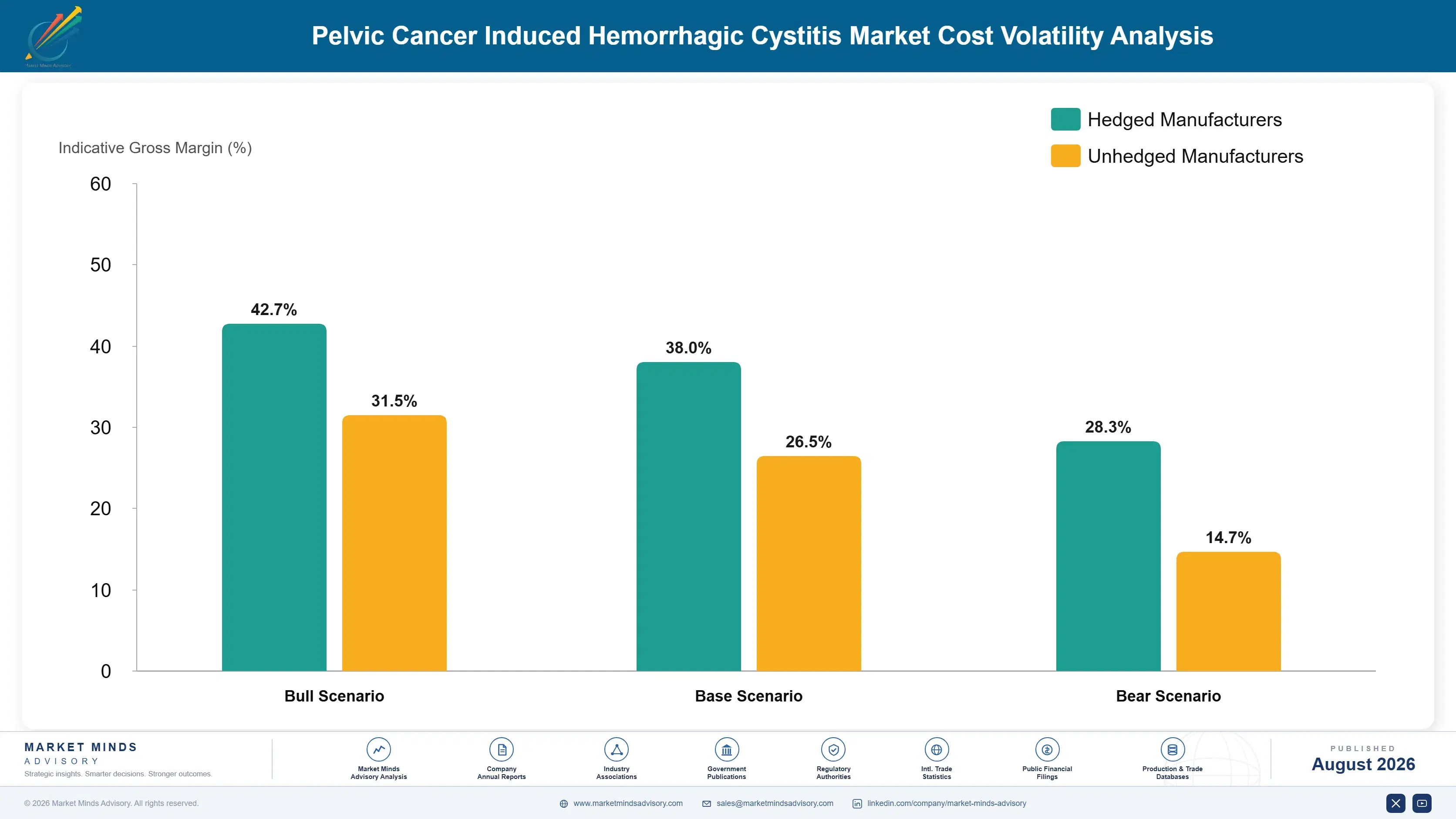
Cost structures differ so completely across this pathway that a single figure would mislead. For genericised injectables and irrigation solutions, active ingredient and sterile packaging account for roughly 46% of cost of goods, with most active ingredient sourced from India and China. For hyperbaric services the dominant cost is staffed chamber time, where clinical supervision and facility overhead absorb around 61% of revenue across a course.
Sterile water and electrolyte solution supply tightened noticeably through 2024 after hurricane damage to United States manufacturing capacity interrupted intravenous and irrigation fluid output, and hospitals rationed irrigation volumes for several months. Baxter's own disclosures documented the disruption and the recovery timeline. Energy cost movement affects hyperbaric operation directly, since compression and chamber conditioning are energy-intensive. Operators in high-tariff European markets reported energy moving from a rounding item to a visible cost line.

Exposure varies by participant type rather than by geography. Genericised suppliers carry input and manufacturing risk with almost no margin buffer, and a supply interruption costs them contracts rather than price. Service operators carry labour and energy exposure instead, and an underfilled chamber schedule damages them far more than any input cost movement. Device-classified intravesical products sit between the two.
pelvic-cancer-induced-hemorrhagic-market-cost-volatility-analysis-1787305769500

Geographic diversification of sterile fluid manufacturing

Concentrating irrigation and intravenous fluid production in a small number of plants proved costly when weather interrupted output, and suppliers have since qualified additional sites across regions. The capital cost is substantial and the regulatory qualification slow, but hospital customers now write supply continuity into tender terms explicitly, which changes the calculation. Continuity is now a scored criterion.

Chamber utilisation improvement through referral diversification

Hyperbaric economics depend almost entirely on filling scheduled chamber time, so operators dependent on a single referral specialty carry avoidable risk. Building urology referral alongside existing wound care relationships raises utilisation against capacity already installed and paid for, which improves margin without any capital expenditure at all. The constraint is relationship building. Most networks have never called on urology before.

Dual sourcing of active pharmaceutical ingredient

Uroprotectant and hemostatic agents rely on active ingredient from a narrow supplier base concentrated in Asia, where regulatory inspection findings have interrupted supply before. Qualifying a second source costs filing work and time, and thin generic margins make suppliers defer it until an interruption forces the decision at considerably worse cost. Branded participants generally qualify second sources routinely.

Portfolio Architecture for Margin Defence

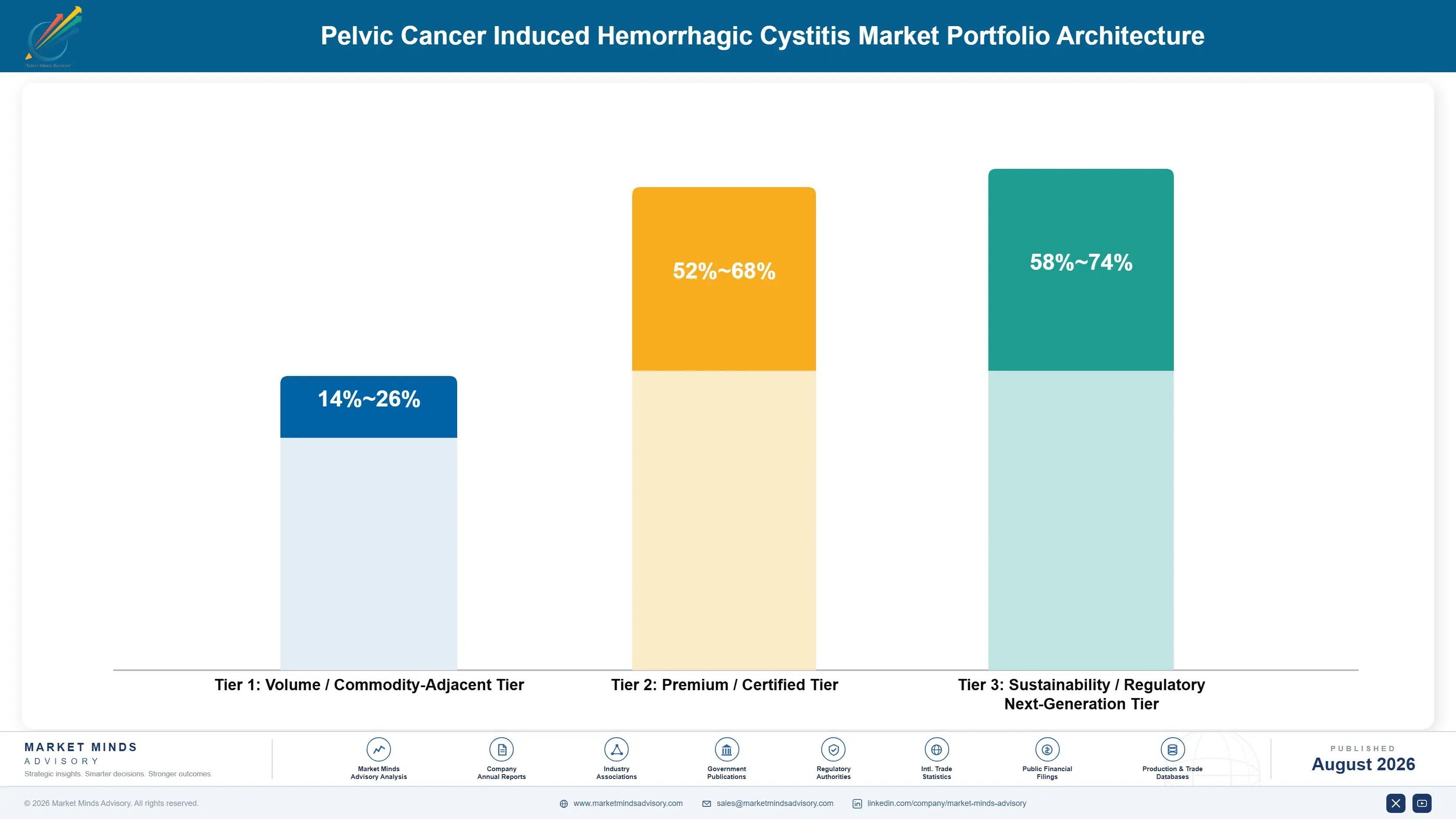
Margin architecture across this pathway is unusually wide because the participants are not really in the same business. Genericised injectables and irrigation solutions clear low double-digit gross margins under hospital tender. Device-classified intravesical products carry regulatory protection and specialist positioning that supports margins three to four times higher. Hyperbaric services sit between the two, with economics driven by chamber utilisation rather than by product cost at all.
The tension is between episode volume and episode value. The cheap interventions reach almost every patient because they are immediately available in any hospital, and they generate very little per episode. The higher-value therapies reach a minority who get referred, diagnosed early enough and funded, and they generate a large multiple per patient. Nobody has bridged the two positions successfully.

High-value pools concentrate where a therapy addresses the underlying tissue injury rather than the visible bleeding, because that is where clinical differentiation is defensible and where reimbursement decisions are made deliberately rather than absorbed into procedure codes. Hyperbaric courses and glycosaminoglycan replacement both sit there. Alum, formalin and irrigation supply are effectively commodity inputs to an episode nobody is measuring.

Volume / Commodity-Adjacent Tier

Genericised uroprotectants, irrigation solutions, catheters and hospital consumables purchased through tender where price decides awards, reaching nearly every episode and generating minimal value per patient treated. Withdrawal is impossible because acute episodes genuinely require these supplies.
Gross Margin: 14-26%

Premium / Certified Tier

Device-classified intravesical glycosaminoglycan replacement products and specialist endoscopic intervention, protected by regulatory classification and clinical positioning that separates them from immediately available alternatives. Specialist concentration currently limits volume more than any clinical factor does.
Gross Margin: 52-68%

Sustainability / Regulatory / Next-Generation Tier

Hyperbaric oxygen courses and emerging regenerative approaches addressing underlying vascular injury, defended by randomised evidence and reimbursement position rather than by any manufacturing or supply advantage. Utilisation of installed capacity decides the economics entirely.
Gross Margin: 58-74%
pelvic-cancer-induced-hemorrhagic-market-portfolio-architecture-1787305770002

High-value Sub-segments and Strategic Watch-out

Hyperbaric Oxygen Therapy

High value and the fastest growth at 11.7%, carrying randomised evidence that no other modality in this pathway holds. Access rather than acceptance limits it, and utilisation of installed chambers decides operator economics entirely. Urology referral volume remains far below the eligible population everywhere. Capacity is already built.
Gross Margin: 58-74%

Intravesical Instillation Therapies

High value at 9.8%, growing through movement from specialist centres into general urology practice. Regulatory classification differences between markets shape the pace, and European uptake shows what broader adoption eventually looks like. General practice adoption is the largest single volume opportunity available here. Nothing technical restricts it.
Gross Margin: 52-68%

Supportive Care and Bladder Irrigation

The volume core at 4.6%, reaching almost every episode through hospital supply contracts that never mention this indication. Margins are thin and tender-driven, yet withdrawal is impossible because the acute episode genuinely requires it. Every participant supplying this layer competes purely on delivered price. Delivered price decides awards.
Gross Margin: 14-26%

Uroprotective Prophylaxis Agents

The strategic watch-out at 3.4%. Prophylaxis works well enough that chemotherapy-induced disease is largely a solved problem, which caps the segment permanently while leaving the far harder radiation-induced population commercially open. The radiation-induced population remains the genuinely open commercial question. Radiation-induced disease remains the genuinely open commercial question here.
Gross Margin: 16-28%

Who Presents and Who Treats

Revenue here arrives in episodes rather than as an annuity, which distinguishes it from most supportive care markets. A patient presents with bleeding, receives acute control, and either stabilises or returns. Roughly 27% are admitted with transfusion support, and repeat presentation is common enough that episode recurrence rather than patient incidence drives volume. A treatment sequence that prevents recurrence is worth considerably more clinically than it appears commercially.
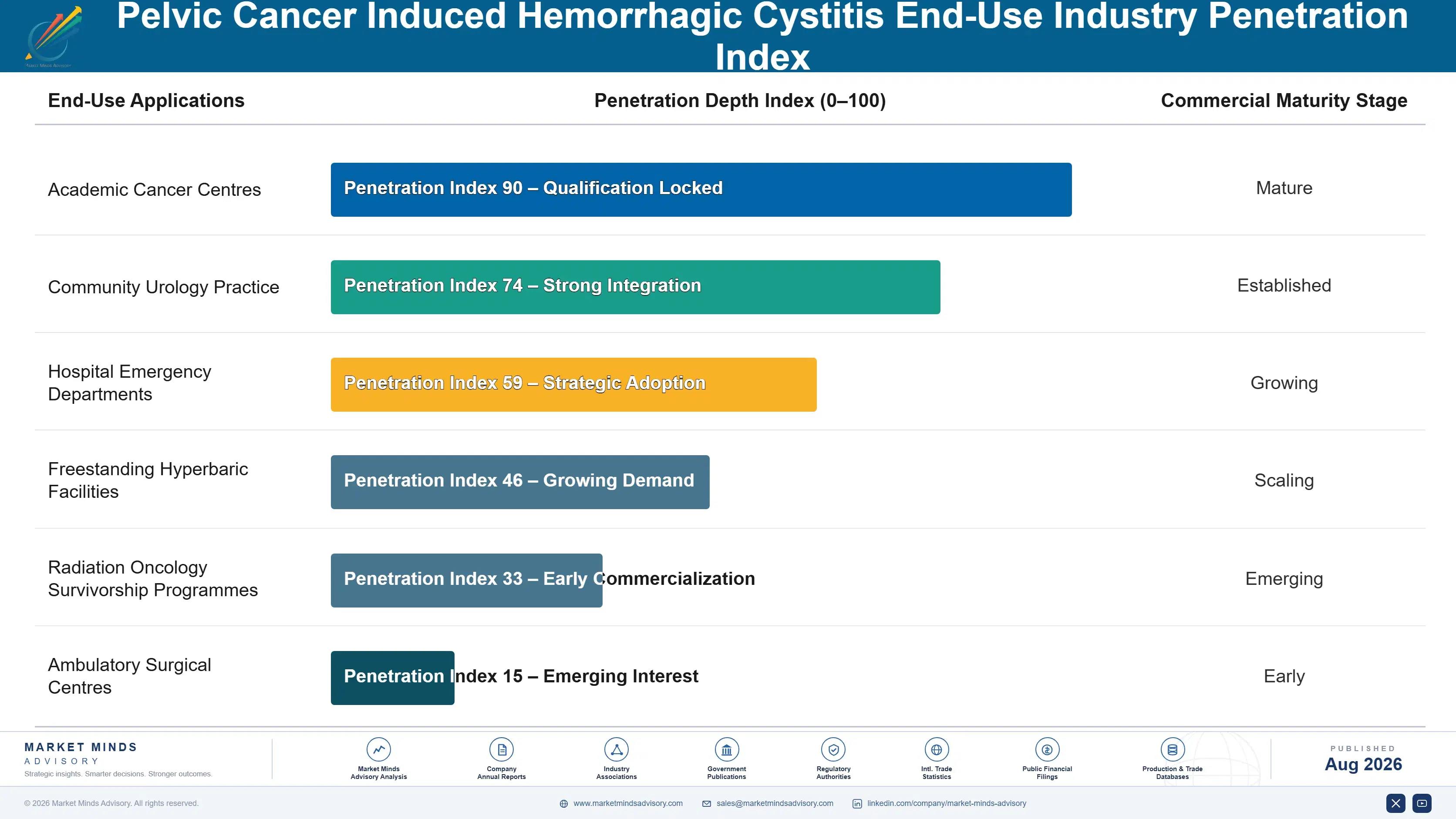
Adoption depth varies sharply by treating setting. Academic cancer centres with survivorship programmes catch patients earlier, refer to hyperbaric services and use intravesical maintenance therapy routinely. Community urology sees the same patients later, treats the acute episode with immediately available options, and refers onward inconsistently. Emergency departments encounter the most severe presentations with the least context. Roughly two-thirds of episodes are managed outside centres with any structured pathway.

The presenting population is changing in ways that matter. Prostate radiotherapy patients treated in their sixties now survive well into the window when late toxicity appears, so the typical presenting patient is older, more comorbid and less suitable for surgical intervention than a decade ago. That shifts demand toward tissue-directed and instillation therapies and away from cystectomy, which few of these patients would tolerate.
pelvic-cancer-induced-hemorrhagic-market-end-use-penetration-index-1787305770493

Where Value Actually Sits

These are among the four positions where our research anticipates prominent divergence between winners and laggards over the coming forecast period. Each is grounded in the demand model, the regulatory perimeter, and the announced capacity pipeline.
01 / REFERRAL PATHWAY CONSTRUCTION

Own the handover nobody currently owns

Patients present a median of four years after the radiotherapy that caused the injury, typically to a urologist holding no dosimetry and no treatment history to work from. Centres running structured survivorship referral programmes reported diagnosis being reached 30% to 40% earlier in the disease course, which moves those patients into planned maintenance therapy rather than an emergency admission. Whoever funds that pathway also shapes the treatment sequence it recommends, and that influence is worth far more than the programme costs.
02 / EPISODE SEQUENCE OWNERSHIP

Sell what follows acute control, not what replaces it

Alum irrigation, formalin instillation and endoscopic fulguration win the acute episode because they are immediately available in any hospital, and no evidence package changes that fact at three in the morning. Positioning the newer therapies as the maintenance phase that follows acute control removes a competition nobody can win and creates one that is genuinely open. Centres adopting formal sequenced protocols reported repeat admissions falling by roughly 25%, which is precisely the outcome payers will eventually choose to pay against.
03 / CHAMBER UTILISATION STRATEGY

The capacity exists; the referral relationship does not

Hyperbaric networks were built around diabetic wound care, and their referral relationships still sit with podiatry and vascular surgery rather than with the urologists who actually see radiation cystitis first. Radiation tissue injury courses run to roughly 40 sessions and reimburse comparably to established wound indications, yet urology referral volume stays far below the eligible patient population everywhere. Operators that built urology-facing referral programmes raised their case volume materially inside two years without installing a single additional chamber at any site.
04 / INCIDENCE HORIZON MODELLING

Dose sparing shrinks this market on a delay

Intensity-modulated, image-guided and MR-guided adaptive radiotherapy all reduce the dose reaching the bladder wall, and lower dose eventually means lower late toxicity across the whole treated population. The four-year median onset interval delays that effect entirely, so current incidence reflects treatment delivered years ago rather than the technique in use today. Any participant modelling beyond this forecast period has to set a declining incidence rate against a still-rising treated population, then decide which of those two opposing forces moves faster.

Engagement Snapshot From the Field

A live engagement with an industry participant carrying material or product regulatory and market exposure ahead of a defining policy shift, showing how our research translates into a defensible multi-year portfolio strategy.
MARKET MINDS ADVISORY · CLIENT ENGAGEMENT SUMMARY
Pelvic Cancer Induced Hemorrhagic Cystitis Producer Strategic Portfolio Review and Transition Roadmap 2026·Investment Scenario on Pelvic Cancer Induced Hemorrhagic Cystitis Exposure Evaluation 2025-26
CLIENT PROFILE
A specialty pharmaceutical and device company with annual revenue near $310 million (client-reported, unverified by MMA), holding an established intravesical glycosaminoglycan replacement product sold across several European markets. The company was weighing entry into North America and needed to understand whether the regulatory classification difference, referral behaviour and reimbursement pathway made the opportunity worth the filing and commercial investment required.
STRATEGIC CHALLENGE
The product held device classification in Europe and would face a considerably longer regulatory pathway in North America, where hyperbaric oxygen already held coverage for the same indication. Leadership needed to know whether the two modalities competed or sequenced, and whether urology referral volumes could support a direct commercial presence rather than a licensing arrangement.
MMA APPROACH
We interviewed 34 urologists and 12 radiation oncologists across four markets on referral behaviour, treatment sequencing and what triggers escalation beyond acute control. Hyperbaric network capacity and referral source mix were mapped against eligible patient geography. We modelled a direct commercial build against a licensing structure using survivorship programme coverage as the segmentation variable.
KEY FINDINGS
  1. Urologists described hyperbaric oxygen and intravesical therapy as sequential rather than competing, with most using instillation during and after a hyperbaric course rather than choosing between them.
  2. Only 31% of interviewed community urologists had referred a radiation cystitis patient for hyperbaric assessment in the preceding two years, citing unfamiliarity with the pathway rather than doubt about efficacy.
  3. Eligible patient geography clustered tightly around academic cancer centres with survivorship programmes, making a narrow targeted commercial footprint viable where a national build clearly was not.
  4. The regulatory pathway modelled at roughly twice the European timeline and cost, which pushed breakeven beyond the horizon a direct build could reasonably justify on its own.
CLIENT PROFILE
A specialty pharmaceutical and device company with annual revenue near $310 million (client-reported, unverified by MMA), holding an established intravesical glycosaminoglycan replacement product sold across several European markets. The company was weighing entry into North America and needed to understand whether the regulatory classification difference, referral behaviour and reimbursement pathway made the opportunity worth the filing and commercial investment required.
STRATEGIC CHALLENGE
The product held device classification in Europe and would face a considerably longer regulatory pathway in North America, where hyperbaric oxygen already held coverage for the same indication. Leadership needed to know whether the two modalities competed or sequenced, and whether urology referral volumes could support a direct commercial presence rather than a licensing arrangement.
MMA APPROACH
We interviewed 34 urologists and 12 radiation oncologists across four markets on referral behaviour, treatment sequencing and what triggers escalation beyond acute control. Hyperbaric network capacity and referral source mix were mapped against eligible patient geography. We modelled a direct commercial build against a licensing structure using survivorship programme coverage as the segmentation variable.
KEY FINDINGS
  1. Urologists described hyperbaric oxygen and intravesical therapy as sequential rather than competing, with most using instillation during and after a hyperbaric course rather than choosing between them.
  2. Only 31% of interviewed community urologists had referred a radiation cystitis patient for hyperbaric assessment in the preceding two years, citing unfamiliarity with the pathway rather than doubt about efficacy.
  3. Eligible patient geography clustered tightly around academic cancer centres with survivorship programmes, making a narrow targeted commercial footprint viable where a national build clearly was not.
  4. The regulatory pathway modelled at roughly twice the European timeline and cost, which pushed breakeven beyond the horizon a direct build could reasonably justify on its own.
RECOMMENDED STRATEGY
Phase 1: Phase one: license North American rights to a partner with existing urology field presence rather than building a commercial organisation from nothing. Phase 2: Phase two: fund survivorship referral programmes at twenty academic centres, building pathway familiarity that benefits the product regardless of who sells it. Phase 3: Phase three: deepen European general urology penetration, where the specialist to generalist gap represents the larger near-term volume opportunity available.
OUTCOME
The company signed a North American licensing agreement within nine months on terms including milestone payments tied to referral pathway metrics rather than to sales alone. European general urology accounts grew by roughly 28% over the following year (client-reported, unverified by MMA). Two funded survivorship programmes have since been adopted as templates by their host institutions.

Frequently Asked Questions

Foundational context covering the market sizes, CAGR, scope, country, region and competition that inform every finding below. This section is provided to cover basics and most often pre-purchase conversations, answered from the MMA Primary Research Dataset.

What is the current size of the Pelvic Cancer Induced Hemorrhagic Cystitis Market?

The global market is valued at $0.72 billion in 2025, rising to $0.78 billion in 2026. East Asia holds the largest share at 30%, reflecting pelvic cancer volume and hyperbaric chamber capacity.

How large will the Pelvic Cancer Induced Hemorrhagic Cystitis Market be by 2036?

MMA forecasts $1.65 billion by 2036, an increase of $0.87 billion over the 2026 base and an expansion multiple of 2.12x. Dose-sparing radiotherapy techniques represent the principal downside risk to that trajectory.

What is the CAGR for the Pelvic Cancer Induced Hemorrhagic Cystitis Market 2026 to 2036?

The base case compound annual growth rate is 7.8%, with a bull case at 9.0% and a bear case at 6.6%. Historical growth from 2020 to 2025 ran near 6.8% on rising pelvic radiotherapy volume.

Which segment is growing fastest?

Hyperbaric oxygen therapy compounds at 11.7%, a full 1.50x the market rate. A randomised trial published in 2019 supplied controlled evidence for a modality previously used on clinical judgment alone.

Who are the major companies in the Pelvic Cancer Induced Hemorrhagic Cystitis Market?

Baxter International, Fresenius Kabi, IBSA Group, Healogics and Boston Scientific together hold 34% of revenue attributable to this indication. Concentration is very low because the pathway spans drugs, devices and services.

Which country is growing fastest?

China compounds at 11.0%, faster than any other country covered, as a very large hyperbaric installed base is increasingly directed toward radiation tissue injury. Rising cervical and bladder cancer survival expands the eventual patient population.

Report Segmentation Architecture

The full report scope spans multiple orthogonal segmentation dimensions, with cross-tabulated demand data provided for each dimension pair. Coverage extends further to regional breakdowns, trend trajectories, and the competitive detail needed to support segment-level decision-making.

By Therapeutic Intervention Class

  • Uroprotective Prophylaxis Agents
  • Intravesical Instillation Therapies
  • Hyperbaric Oxygen Therapy
  • Endoscopic and Surgical Intervention
  • Supportive Care and Continuous Bladder Irrigation

By End-Use Industry

  • Academic Cancer Centres
  • Community Urology Practice
  • Hospital Emergency Departments
  • Freestanding Hyperbaric Facilities
  • Radiation Oncology Survivorship Programmes
  • Ambulatory Surgical Centres

By Commercial Dimension

  • Hospital Tender Procurement
  • Specialty Distributor Supply
  • Direct Institutional Contracting
  • Public Reimbursement Channels
  • Private Insurance Coverage
  • Self-Pay and Cross-Border Referral

By Region

  • East Asia
  • North America
  • Western Europe
  • South Asia and Pacific
  • Latin America
  • Middle East and Africa
  • Eastern Europe

Scope, Methodology, and Coverage

Every figure in this report is reproducible from documented input assumptions. The scope below maps the historical period, the forecast horizon, the segmentation dimensions, and the countries covered, alongside the underlying primary and qualitative methodology.
Historical Period
2020 to 2025
Forecast Period
2026 to 2036
Base Year
2025 (USD billions; MMA Primary Research Dataset, August 2026)
Market Definition
This market comprises therapy delivered for hemorrhagic cystitis arising from pelvic cancer treatment, measured at manufacturer or service revenue across hospital tender procurement, specialty distributor supply, direct institutional contracting, public reimbursement channels, private insurance coverage and self-pay purchase. Coverage spans uroprotective prophylaxis agents given alongside oxazaphosphorine chemotherapy, intravesical instillation therapies including glycosaminoglycan replacement with hyaluronic acid or chondroitin sulfate as well as alum and formalin instillation, hyperbaric oxygen therapy delivered for radiation tissue injury of the bladder, endoscopic and surgical intervention covering fulguration, selective arterial embolization and cystectomy with urinary diversion, and supportive care including continuous bladder irrigation systems, catheters and clot evacuation. Hemorrhagic cystitis of viral or bacterial origin including BK polyomavirus disease after transplantation, interstitial cystitis and bladder pain syndrome, haematuria arising from active bladder malignancy rather than from its treatment, and the radiotherapy or chemotherapy delivery that causes the complication fall outside scope.
Quantitative Units
USD millions (current prices); treated episodes; eligible patient population; hyperbaric courses delivered; sessions per course; admission and transfusion rate; intravesical instillations administered
Segmentation Dimensions
By Therapeutic Intervention Class; By End-Use Industry; By Commercial Dimension; By Region
Regions Covered
East Asia, North America, Western Europe, South Asia and Pacific, Latin America, Middle East and Africa, Eastern Europe
Countries Covered
China, Japan, South Korea, Taiwan, United States, Canada, Germany, Italy, United Kingdom, France, Spain, Netherlands, Sweden, Belgium, India, Australia, Singapore, Thailand, Malaysia, Indonesia, Brazil, Mexico, Argentina, Chile, Colombia, Saudi Arabia, United Arab Emirates, Egypt, South Africa, Poland, Czechia, Hungary, Romania, Turkey, and additional markets relevant to oncology supportive care analysis
Key Companies Profiled
Baxter International, Fresenius Kabi, IBSA Group, Healogics, Boston Scientific, Sandoz, Hikma Pharmaceuticals, Sun Pharmaceutical Industries, Teleflex, Coloplast, Becton Dickinson, Cook Medical, Olympus, Karl Storz, Sechrist Industries, Perry Baromedical, HAUX-Life-Support, Farco-Pharma, Combat Medical, RestorixHealth
Quantitative Methodology
Primary survey, n=3,800 respondents, Q4 2025, six countries; demand-side model with trade association cross-validation
Qualitative Methodology
47 expert interviews, Q4 2025; applied to validate demand model assumptions, identify emerging dynamics, and assess competitive positioning
Report Format
PDF and XLSX data workbook (Word format preview document)
Publisher
Market Minds Advisory
Report Code
MMA-2026-HLT-437
Published
August 2026
Contact
sales@marketmindsadvisory.com | www.marketmindsadvisory.com

Purchase the full Pelvic Cancer Induced Hemorrhagic Cystitis Market Report (2026 to 2036).

The full MMA report treats this indication as a pathway problem rather than a product market, tracing why a complication with a four-year onset interval leaves no specialty owning the patient. It sizes five therapeutic intervention classes and seven regions to 2036, modelling treated episodes, eligible population, hyperbaric course volume, admission rates and instillation activity separately. Competitive assessment covers twenty participants on one consistent indication-revenue basis. Cost exposure is traced through sterile fluid supply, active ingredient sourcing and chamber utilisation. Four commercial levers and a strategic verdict close the report, grounded in 47 expert interviews and a 3,800-respondent survey.
Five therapeutic intervention classes sized separately through 2036
Hyperbaric chamber capacity mapped against eligible patient geography
Referral pathway gaps quantified across academic and community settings
Twenty participants assessed on one consistent indication-revenue basis
Dose-sparing radiotherapy modelled against future incidence decline
Anonymised entry engagement with tested licensing recommendations

Built For The People Who Decide

From boardroom strategy to bench-side execution, this report is read cover-to-cover by leaders shaping the next decade of their industry, turning demand scenarios, market dynamics and valuation benchmarks into decisions.
CXOs/ Presidents/ VPs/ Managers
M&A and Corporate Development
Strategy Teams and R&D Heads
Procurement and Product Directors
Regulatory and Compliance Leaders
Investor Relations and Equity Analysts