
Market Minds Advisory
Major Depressive Disorder (MDD) Treatment Market

Major Depressive Disorder (MDD) Treatment Market: Genericised Volume, Treatment-Resistant Value, and the Return of New Mechanisms

Ninety-two per cent of antidepressant prescriptions are filled with molecules that cost pennies, so nearly every dollar of commercial value now sits with the third of patients those molecules failed.

Lead Analyst

Alice Ballenger

Published

August 2026

Make Smarter Decisions with Customized Research Insights

Request a free sample report and evaluate market opportunities, growth trends, and competitive dynamics relevant to your business needs.

2025 MARKET VALUE$18.0BMarket Size 2025
2036 FORECAST VALUE$51.4BBase Case , 2026 to 2036
CAGR 2026 TO 203610.0 %Bull 11.2% / Bear 8.8%
INCREMENTAL OPPORTUNITY$31.6BNet 10- year value creation
EXPANSION MULTIPLE2.59x2036 value over 2026 base
Strategic Levers
M&A Pipeline
Regional Outlook
Country Rankings
Competitive Intelligence
Segmental Deep-dive
Call-Us : 91 93563 13602

Executive Snapshot and Market Trajectory

Serotonergic antidepressants went generic and took the volume with them. What remains commercially interesting is the roughly 30% of patients who fail two adequate trials, and the mechanisms that finally arrived to treat them after three decades of very little. Value moved to the failures.
NMDA-modulating rapid-acting therapies compound at 15.0%, a full 1.50x the market rate, on esketamine and the oral dextromethorphan-bupropion combination that followed it. North America holds 44% of global value, a concentration explained by branded psychiatric pricing that runs several times European levels rather than by any difference in prevalence. Roughly 6,000 certified administration sites now operate, and the number of clinics rather than the number of patients sets the ceiling on supervised volume.
Concentration is unusually low at 41% because generic serotonergic agents fill most prescriptions while branded products hold most value. Johnson and Johnson leads on esketamine and a certified clinic network competitors would have to rebuild from nothing. Otsuka and AbbVie hold the adjunctive antipsychotic position. Competitive movement is running through acquisition of late-stage mechanisms rather than through promotion of existing ones. Promotion of existing molecules moves very little now.
Market Definition
This market covers pharmacological therapy prescribed for major depressive disorder in adults and adolescents, spanning serotonergic reuptake inhibitors, adjunctive atypical antipsychotics, NMDA-modulating rapid-acting agents, atypical and multimodal antidepressants, and legacy tricyclic and monoamine oxidase inhibitor agents, measured at manufacturer net revenue. Neuromodulation devices including transcranial magnetic stimulation and electroconvulsive therapy, psychotherapy services, digital therapeutics, bipolar depression, postpartum depression, and treatment of anxiety disorders without a depressive indication are excluded.
Base Year Value
$18.0B in 2025 (MMA Primary Research Dataset, August 2026)
Forecast Period
2026 to 2036, eleven discrete annual values
CAGR
10.0% base case. Bull 11.2%. Bear 8.8%.
Fastest Growth Segment
NMDA-Modulating Rapid-Acting Therapies: 15.0% CAGR
Fastest Growth Country
China: 12.6% CAGR
Fastest Growth Region
South Asia and Pacific: 12.2% CAGR
Largest Region
North America: 44% of 2025 global value
Market Leaders
Johnson and Johnson, Otsuka Pharmaceutical, AbbVie, Lundbeck, and Axsome Therapeutics. Source: MMA Primary Research Dataset, July 2026.
Primary Survey
n=3,800 procurement and R&D decision-makers, Q4 2025, six countries
Methodology
Demand-side build-up, cross-validated against public data, 47 expert interviews

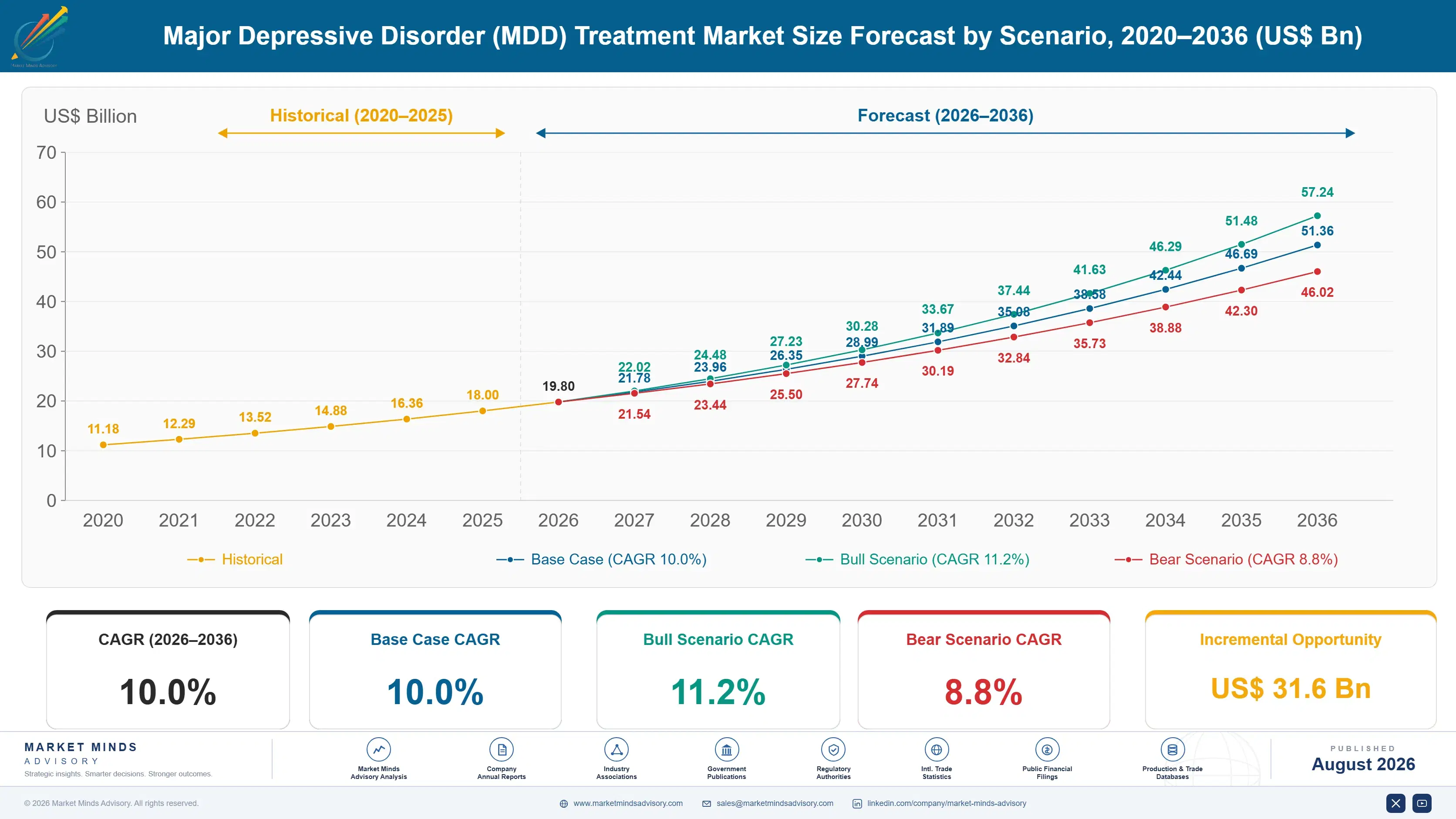
Major Depressive Disorder (MDD) Treatment Market Forecast Scenarios

major-depressive-disorder-mdd-treatment-size-forecast-scenario-1787305743483
Growth ran near 8.6% from 2020 to 2025, and almost none of it came from volume. Prescription numbers rose modestly while the value story sat entirely with three branded franchises: esketamine building a certified clinic network from scratch, adjunctive antipsychotics extending into partial responders, and the first oral rapid-acting agent reaching market in 2022. Generic serotonergic agents contributed nothing to value growth.
Base case growth of 10.0% rests on three mechanisms. Treatment-resistant depression is being defined and diagnosed more consistently, which converts a clinical description into a reimbursable population. Site-of-care infrastructure for supervised administration keeps expanding, and each certified centre raises the ceiling on esketamine volume. And adjunctive prescribing continues moving earlier in the treatment sequence rather than remaining a final option after multiple failures. All three are visible in prescribing data already rather than being assumptions about future behaviour.
The bull case at 11.2% assumes psilocybin-assisted therapy completes phase three successfully and reaches approval within the period, creating a second supervised-administration category. The bear case at 8.8% reflects the opposite risk, visible already in the complete response letter that zuranolone received for major depressive disorder and in the rejection of MDMA-assisted therapy for a neighbouring indication.

Depression Therapy: Cheap Volume, Expensive Failure

Fluoxetine, sertraline, escitalopram and venlafaxine are all decades past patent and cost a health system almost nothing. They fill roughly 92% of antidepressant prescriptions worldwide, and they generate almost no commercial value. Anyone describing this as a large pharmaceutical market is describing the branded 8%, which carries about 71% of the money and treats patients for whom the cheap molecules did not work.
TOP FIVE CONCENTRATION41%Fragmented across branded innovators and large generic manufacturers
TREATMENT-RESISTANT SHARE30%Patients failing two adequate antidepressant trials at proper dose
GENERIC PRESCRIPTION SHARE92%Portion of all prescriptions filled with genericised antidepressant molecules
BRANDED VALUE SHARE71%Share of market value held by protected branded products
CERTIFIED SITE NETWORK6,000 centresClinics certified to administer supervised rapid-acting therapy safely
SIX-MONTH DISCONTINUATION45%Patients stopping therapy within the first six months
That failure rate is the market. Around 30% of patients do not respond adequately to two properly dosed trials, and the clinical convention for calling this treatment-resistant depression has tightened enough over the past decade to make it a payer-recognisable population rather than a description clinicians used loosely. Once a population is definable, it can be studied, approved into and reimbursed. That sequence is what brought new mechanisms back.
The mechanisms themselves brought an unfamiliar commercial problem. Esketamine requires administration in a certified setting with observation afterwards, which means the constraint on uptake is the number of clinics rather than the number of patients or prescribers. Building that network took years. It is also an asset, because a competitor arriving with a similar supervised product finds the sites already committed elsewhere.
"The interesting thing about esketamine is not the molecule, it is that Johnson and Johnson had to build a clinic network to sell it. That is a pharmaceutical company doing service line development, and whoever owns those sites has something no oral competitor can take away quickly."
Principal Analyst, Central Nervous System Therapeutics Practice · MMA Healthcare

Market Trends

Supervised administration turns a drug launch into network construction

Esketamine cannot be dispensed to a patient at home. It requires administration under a risk evaluation and mitigation strategy in a certified setting, with observation for two hours afterwards, which makes the number of certified clinics the binding constraint on volume. Roughly 6,000 sites now hold certification, and each addition raises the addressable ceiling directly. That is service line development rather than pharmaceutical promotion, and it demands capabilities most commercial organisations in psychiatry never needed. It also produces a distribution asset that oral competitors cannot easily neutralise. Sites are also slow to add a second protocol.
Market Impact: Roughly 30% of patients addressable
Adjunctive antipsychotic prescribing moves earlier in the sequence

Adding an atypical antipsychotic to an antidepressant was once reserved for patients who had failed several attempts. It now happens routinely after one inadequate response, supported by guideline updates and by trial data in partial responders rather than in fully refractory patients. That shift expands the treated population substantially without any new molecule being involved. Metabolic and movement-disorder tolerability remains the counterweight, and prescriber caution varies widely by market and by specialty. The class compounds at 7.4% on sequence position alone. That expansion costs nothing in development spending, which makes it the cheapest growth available here.
Market Impact: NMDA class compounding at 15.0%

Market Opportunities and Growth Drivers

Treatment-resistant depression became a reimbursable population

For years treatment resistance was a clinical description rather than a defined population, which made it nearly impossible to design a registrational trial or negotiate reimbursement around. The convention of two adequate trials at adequate dose and duration has now hardened sufficiently for regulators and payers to work with it. That single definitional change made roughly 30% of diagnosed patients into an addressable branded market, and every rapid-acting approval since has been built on it. Definitional clarity did more commercially here than any individual molecule. Payers can now write coverage policy against a criterion they can verify.
Market Impact: Generics filling 92% of prescriptio

Oral rapid-acting agents removed the site-of-care barrier

The approval of dextromethorphan-bupropion in August 2022 delivered rapid onset without a certified administration setting, a risk mitigation programme or an observation period. Prescribers who would not refer a patient to a supervised clinic will write a prescription, which reaches a far broader population through ordinary community psychiatry and primary care. The commercial consequence is that rapid onset stopped being tied to infrastructure. NMDA-modulating therapies as a class compound at 15.0% with both delivery models contributing, and neither cannibalises the other cleanly. Community psychiatrists who never referred a patient to a clinic prescribe the oral agent routinely.
Market Impact: Two high-profile rejections since 2

Market Restraints and Challenges

Generic serotonergic agents anchor what payers will pay

A payer comparing a branded product against sertraline is comparing it against a molecule costing a few dollars a month. The root cause is that the genericised agents genuinely work for most patients, so the branded case must rest entirely on the minority they fail rather than on any general superiority. Commercial impact shows in step therapy requirements, prior authorisation and narrow labels restricting use to documented failures. Manufacturers respond with outcomes-based contracts, real-world evidence on hospitalisation avoidance, and pursuing indications where no generic competitor exists at all. None of it removes the price anchor itself.
Market Impact: Roughly 6,000 certified sites opera

Late-stage failures have made the category harder to fund

Zuranolone received a complete response letter for major depressive disorder while being approved for a narrower indication, and MDMA-assisted therapy was rejected in a neighbouring psychiatric indication. The root cause is that depression trials carry high placebo response and rely on subjective rating scales, which makes replication genuinely difficult even for compounds with real effect. Commercial impact is a higher cost of capital for central nervous system development. Sponsors respond with enriched enrolment, digital measurement of functional endpoints and adaptive designs that reduce exposure to a single readout. Investor appetite for the category has narrowed accordingly.
Market Impact: Adjunct class compounding at 7.4%
3 additional market trends, 4 additional growth drivers, and 2 additional restraints and challenges are covered in the full report. Contact sales@marketmindsadvisory.com to access the complete intelligence.

Segment CAGR and Growth Architecture

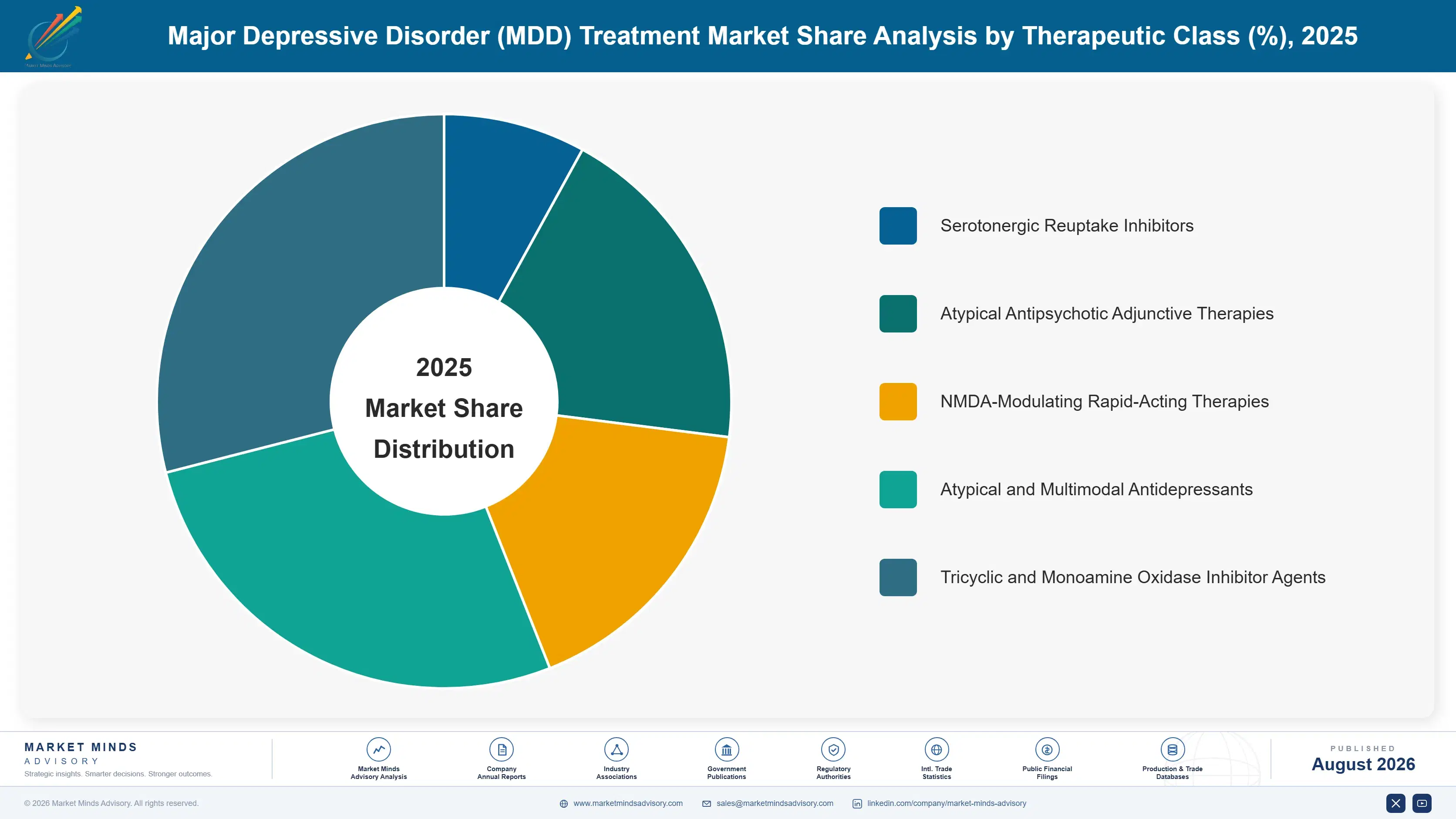
Five therapeutic classes divide this market, and the division tracks exactly where value has migrated. Two classes hold nearly all the prescriptions and almost none of the revenue, while the newest carries a small share of volume against pricing that reflects a population with genuinely limited alternatives. Patent status explains this market's economics better than any clinical property does.
major-depressive-disorder-mdd-treatment-market-share-analysis-1787305744022

NMDA-Modulating Rapid-Acting Therapies

Compounding at 15.0%, a full 1.50x the market rate, this class covers esketamine delivered under supervision and the oral dextromethorphan-bupropion combination approved in 2022. The two reach different patients through entirely different routes: one through a certified clinic network of roughly 6,000 sites, the other through any prescriber willing to write it. Onset within days rather than weeks is the shared clinical argument, and it matters most in patients at acute risk. Pricing reflects a population with limited alternatives rather than any comparison against generics. Class growth depends more on site expansion and prescriber familiarity than on further approvals. Neither route cannibalises the other cleanly, since the patients each reaches differ in how far they will travel for treatment.
CAGR 15.0%

Atypical Antipsychotic Adjunctive Therapies

Growing at 7.4%, this class attaches to an existing antidepressant rather than replacing it, which makes its addressable population a function of prescribing convention rather than of diagnosis. Aripiprazole, brexpiprazole, quetiapine and cariprazine all hold adjunctive positions, and guideline movement toward earlier addition after a single inadequate response has expanded use considerably. Metabolic effects, sedation and movement disorder risk restrain enthusiasm, and prescriber caution differs sharply between psychiatry and primary care. Loss of exclusivity on the largest branded agents represents the principal value risk over the forecast period, and it arrives inside it. Prescriber habit protects the incumbents more than any formulary position does, though habit transfers readily to a generic version of the same molecule once one exists.
CAGR 7.4%
Full segment breakdown across 5 segments available in the complete report.

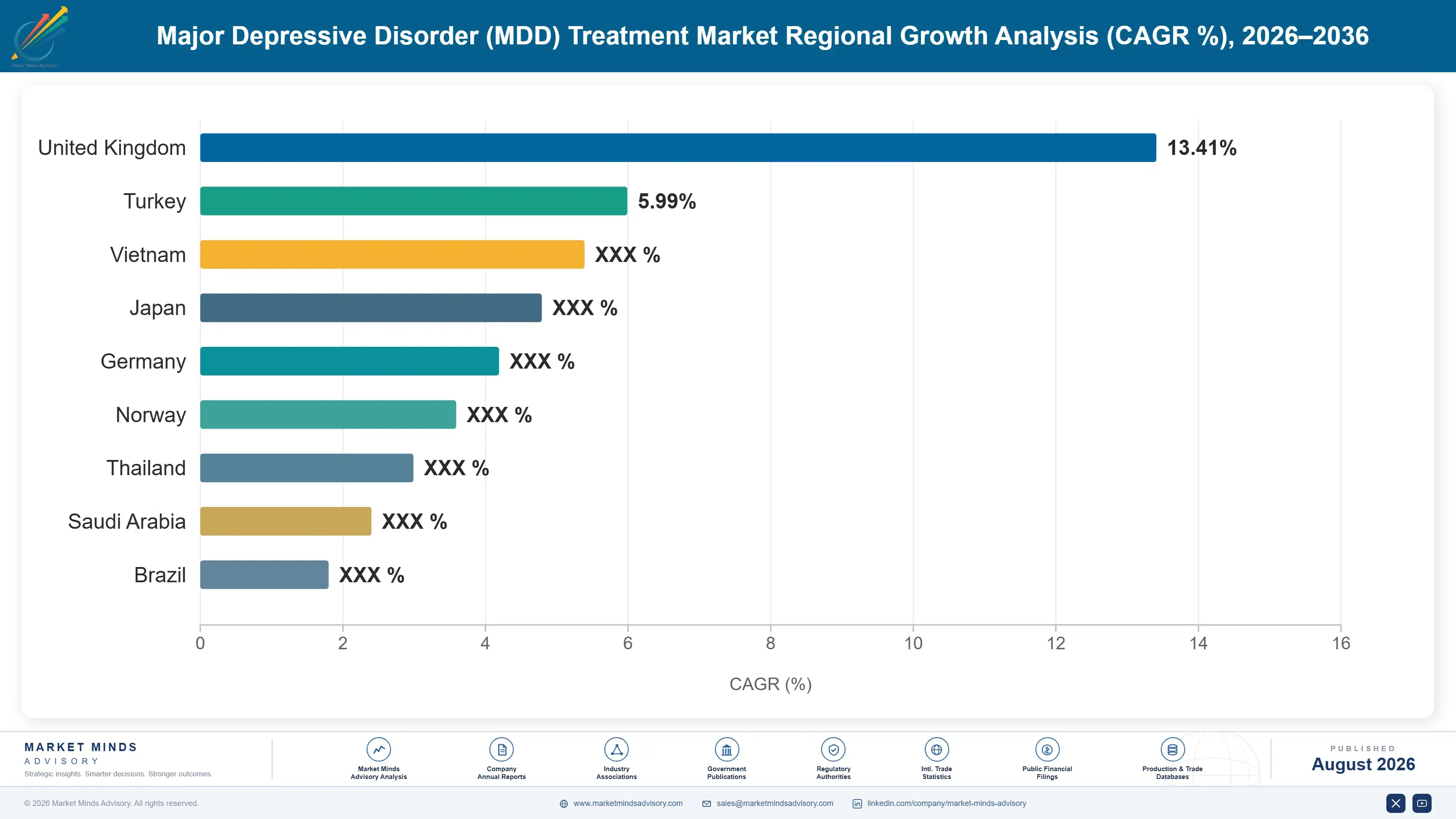
Regional Architecture and Country Demand Map

Regional value distribution follows branded pricing and diagnosis rates rather than prevalence, which is broadly similar worldwide. Where depression goes undiagnosed or is treated exclusively with genericised agents, a large patient population generates almost no commercial value at all. Diagnosis rate and willingness to pay explain the map.

North America

Forty-four per cent of global value sits here against nothing like that share of patients. Note: this exceeds the 22 to 32% band because United States net prices for branded psychiatric products run several times European levels, and the certified clinic network for supervised administration is overwhelmingly American. Around 6,000 certified sites operate, built over six years of commercial effort that no other market has replicated. Commercial insurance covers branded agents more readily than most single-payer systems, though step therapy is near universal. Canada's contribution is modest and reflects provincial formulary decisions that favour genericised agents strongly. Prior authorisation requirements for branded agents have tightened over the period without materially slowing value growth.
Share: 44% | CAGR: 10.8% (2026 to 2036)

Western Europe

Twenty per cent of value, and prescribing here is more conservative than the North American pattern in ways that matter commercially. Health technology assessment bodies evaluate branded antidepressants against generics that cost almost nothing, which produces restricted labels and narrow eligibility rather than outright rejection. Germany and the United Kingdom account for the largest single positions. Esketamine reimbursement has proceeded country by country with differing observation and site requirements, so the clinic network is fragmented rather than national. Growth at 8.4% reflects tight pricing more than any shortage of patients needing treatment. France, Italy and Spain apply reference pricing that holds branded prices near the lowest comparable European level. The Nordics treat at higher rates than the regional average.
Share: 20% | CAGR: 8.4% (2026 to 2036)
Regional intelligence for 5 additional markets available in the complete report: East Asia, South Asia and Pacific, Latin America, Middle East and Africa, Eastern Europe. Contact sales@marketmindsadvisory.com.
major-depressive-disorder-mdd-treatment-country-cagr-analysis-1787305744550

Where Depression Therapy Value Concentrates

Value in this market is not won by treating depression, which generic molecules already do adequately for most patients. It is won by defining, reaching and holding the minority those molecules fail, and by controlling the infrastructure through which supervised therapy reaches them at all. Both are commercial problems rather than clinical ones. Neither is solved clinically.

Own the certified administration network before competitors arrive

Supervised rapid-acting therapy needs a certified site, and roughly 6,000 now exist after six years of building. A site already committed to one product will not readily add a second with overlapping protocols, staffing demands and observation requirements. That makes the network an asset with genuine exclusion value, not merely a distribution channel. Manufacturers entering with a supervised product later face a build cost that MMA interviews put at 3 to 4 years before national coverage, during which an incumbent compounds volume. Site relationships also survive competitive launches better than prescriber relationships do.
Market Impact: Network build costing 3 to 4 full y

Sell against hospitalisation cost, not against generic pricing

A branded agent compared against sertraline loses on price every time and cannot win that argument on any evidence. Compared against an inpatient psychiatric admission, which costs a payer several thousand dollars in the United States and drives most of the total cost of severe depression, the calculation reverses entirely. Real-world evidence linking rapid onset to reduced admission and emergency presentation supports payer conversations that efficacy scales alone cannot. Manufacturers building this evidence report formulary decisions moving 20% to 30% faster than those relying on registrational data. The evidence takes two years to accumulate and cannot be shortcut.
Market Impact: Formulary decisions moving 20% to 3

Move adjunctive positioning earlier in the treatment sequence

An adjunctive antipsychotic used only after several failures reaches a small population. Used after one inadequate response, it reaches a multiple of that, and the class compounds at 7.4% largely on this movement rather than on any new molecule. Guideline engagement, partial-responder trial data and prescriber education in primary care rather than psychiatry are the working tools. Tolerability evidence is the gate, since metabolic and movement-disorder concerns are what keep prescribers waiting. Every step earlier in the sequence roughly doubles the eligible patient count at that point. That arithmetic favours tolerability investment over efficacy investment.
Market Impact: Eligible population roughly 2x with

Build the diagnostic definition, then the reimbursed population

Treatment-resistant depression became commercially real when two failed adequate trials hardened into a working definition regulators and payers accept. That definitional work made roughly 30% of diagnosed patients addressable with branded pricing, and it created the registrational pathway every rapid-acting approval since has used. The same play remains open in adjacent phenotypes: anhedonic depression, depression with prominent suicidal ideation, and perimenopausal presentations. Sponsors who fund the definitional and measurement work early own the population when a product eventually arrives to treat it. The work is slow and non-clinical, which is why few sponsors fund it.
Market Impact: Definitional work creating a 30% ad

Who Controls the Margin Pool

The top five hold 41% of the market measured on revenue from products carrying a major depressive disorder indication, the basis used throughout this section. Concentration is low because generic manufacturers supply most prescriptions while branded innovators hold most value, so the two groups barely compete. Among branded participants the gap is wide: Johnson and Johnson's esketamine franchise and its certified site network sit well ahead of any single competing asset.
Competitive activity runs along three lines currently. Innovators are acquiring late-stage central nervous system mechanisms rather than developing them internally, on the view that the failure rate makes external validation worth paying for. Adjunctive antipsychotic holders are competing on tolerability evidence and sequence position rather than on efficacy. And oral rapid-acting entrants are positioning explicitly against the site-of-care requirement that supervised products carry.

Pressure is building from two directions. Loss of exclusivity on the largest branded adjunctive agents arrives within the forecast period and will move considerable value to generic manufacturers. And psilocybin-assisted therapy, if it completes phase three, creates a second supervised category that would compete for the same certified clinic capacity. Rankings shift on which participants hold site infrastructure, not on molecule count.
major-depressive-disorder-mdd-treatment-company-positioning-matrix-1787305745081

Competitive Moat and Risk Dimensions

JOHNSON AND JOHNSON

Moat: Certified clinic network built

Esketamine's supervised administration requirement forced the company to build a network of roughly 6,000 certified sites over six years, handling staffing, observation protocols and reimbursement mechanics at each one. That network is a distribution asset with exclusion value, since a site already running one supervised protocol adds a second reluctantly, and rebuilding it takes a competitor years rather than quarters.
JOHNSON AND JOHNSON

Risk: Site requirement caps reach

The same requirement that built the moat limits the addressable population to patients willing and able to attend a clinic and remain under observation afterwards. Oral rapid-acting agents reach patients through ordinary prescribing with none of that friction, and prescribers who will not make a clinic referral will still write a prescription for a comparable clinical argument.
OTSUKA PHARMACEUTICAL

Moat: Adjunctive franchise and partnership

The aripiprazole and brexpiprazole franchise, developed and commercialised in alliance with Lundbeck, holds the deepest position in adjunctive therapy and the longest prescriber familiarity in a class where habit matters considerably. That familiarity is worth more than it appears, because prescribers adding an antipsychotic to an antidepressant are managing tolerability risk they already understand with these agents.
OTSUKA PHARMACEUTICAL

Risk: Exclusivity loss approaching directly

Patent protection on the largest branded adjunctive agents expires within the forecast period, and generic entry in this class historically moves volume quickly because prescribers switch molecules they already know without hesitation. Replacing that revenue requires either a differentiated successor or expansion into indications where the adjunctive argument does not depend on branded pricing.

Players Tracked

Prominent Players

Johnson and Johnson
Otsuka Pharmaceutical
AbbVie
Lundbeck
Axsome Therapeutics

Other Key Players

Takeda
Teva Pharmaceutical Industries
Viatris
Sandoz
Sun Pharmaceutical Industries
Eli Lilly
Pfizer
GSK
Sage Therapeutics
Biogen
Servier
Alkermes
Compass Pathways
Neurocrine Biosciences
Dr. Reddy's Laboratories

Recent Developments

AUGUST 2022

Oral rapid-acting agent approved without site requirement

The United States Food and Drug Administration approved dextromethorphan-bupropion for major depressive disorder, delivering rapid onset through ordinary prescribing rather than supervised administration. The approval separated rapid onset from clinic infrastructure, opening the mechanism to community psychiatry and primary care prescribers who would not refer patients onward.
Signal: Rapid onset stopped requiring any infrastr
AUGUST 2023

Zuranolone approved narrowly, rejected for depression

Zuranolone received approval for a narrower depressive indication while the Food and Drug Administration issued a complete response letter for major depressive disorder, requesting additional efficacy data. The split outcome cost the sponsors the far larger indication and reset expectations across the neuroactive steroid class considerably.
Signal: Depression trial replication remains diffi
JANUARY 2025

Johnson and Johnson agrees Intra-Cellular Therapies acquisition

Johnson and Johnson agreed to acquire Intra-Cellular Therapies for approximately $14.6 billion, adding lumateperone and its adjunctive depression programme to a portfolio already anchored by esketamine. The transaction was an acquisition rather than a partnership, and it valued a late-stage central nervous system asset at a considerable premium.
Signal: Innovators are now buying validated late-s

What Actually Costs Money Here

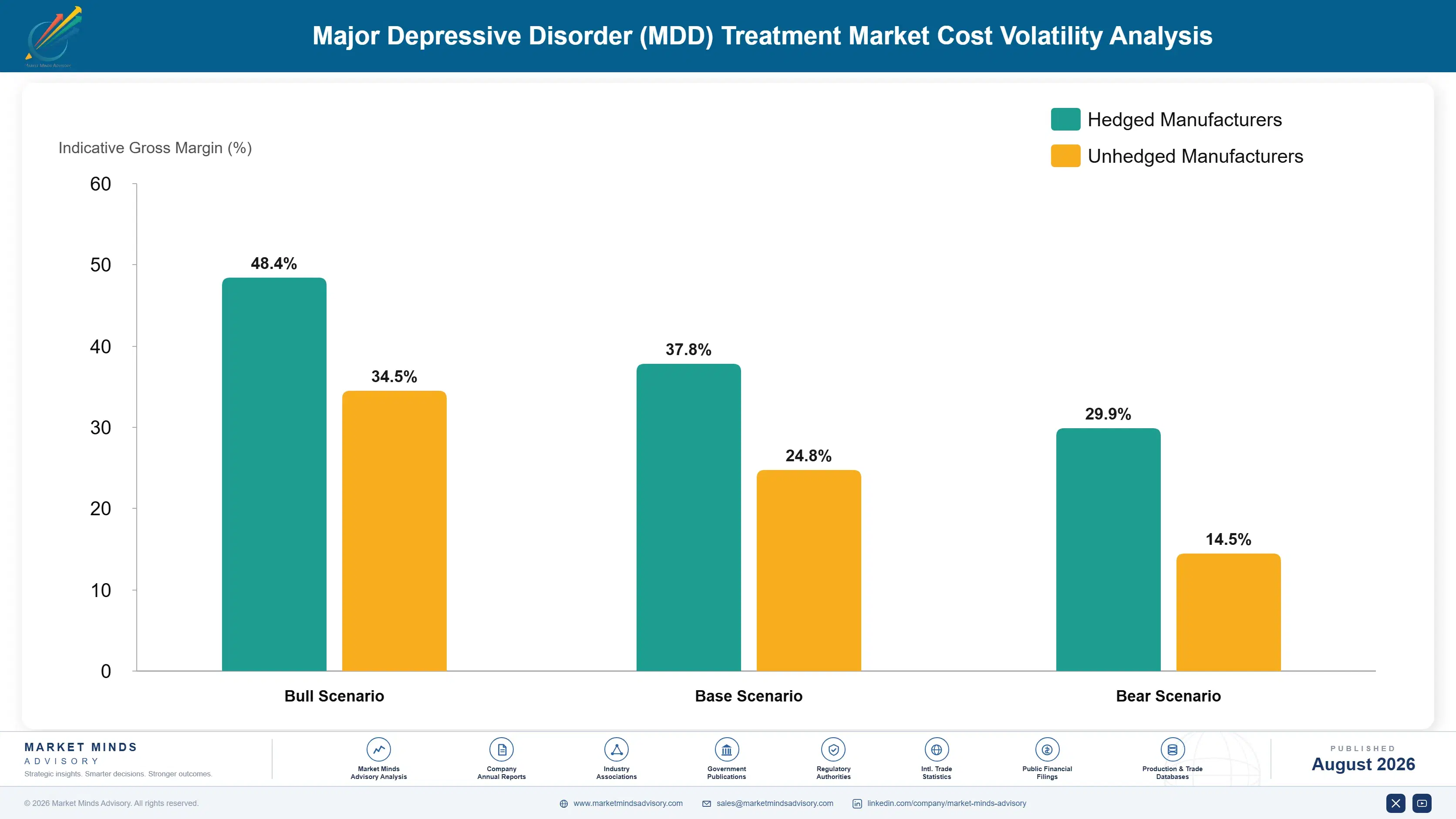
Small molecule manufacturing is not the cost problem in this market. Active ingredient and formulation account for roughly 9% of branded cost of goods, with most active ingredient sourced from India and China. Clinical development carries the real burden: depression trials need large samples to overcome placebo response, and phase three programmes routinely run above 1,000 patients across multiple studies before a filing is possible.
Site network operation is the distinctive cost here. Certifying, training and supporting roughly 6,000 administration sites carries continuing expense that no conventional oral product incurs, covering protocol training, reimbursement support and monitoring compliance. Company filings across the period show central nervous system commercial spending well above comparable therapeutic areas for this reason. Active ingredient price volatility from Asian suppliers has affected generic manufacturers considerably more than branded ones.

Exposure separates sharply by business model. Generic manufacturers competing on serotonergic agents at low single-digit dollar pricing carry almost no margin buffer against active ingredient movement or regulatory inspection findings at supplier sites. Branded innovators are exposed instead to development cost and trial failure, where a single phase three readout can absorb several hundred million dollars. Supervised products carry a third exposure neither group faces.
major-depressive-disorder-mdd-treatment-cost-volatility-analysis-1787305745284

Enriched enrolment reduces placebo response burden

Selecting patients with documented prior treatment failure and confirmed diagnostic severity lowers placebo response and cuts the sample size a trial needs to show separation. It narrows the eventual label, which is a genuine commercial trade, but it materially reduces the cost and the probability of an ambiguous readout that forces a repeat study.

Dual sourcing of active ingredient across regions

Qualifying suppliers in more than one country removes single-source exposure to regulatory inspection findings and export restrictions, both of which have interrupted antidepressant supply before. Qualification takes time and regulatory filing work, so generic manufacturers running thin margins frequently defer it until an interruption forces the issue expensively. Branded manufacturers generally qualify second sources as a matter of course.

Site network cost shared through partnership models

Partnering with established clinic operators rather than certifying sites individually spreads training and support cost across a partner already carrying the overhead. It reduces control over protocol consistency and patient experience, so the choice depends on whether network breadth or execution quality matters more at that point in a product's commercial life. Most participants use both models.

Portfolio Architecture for Margin Defence

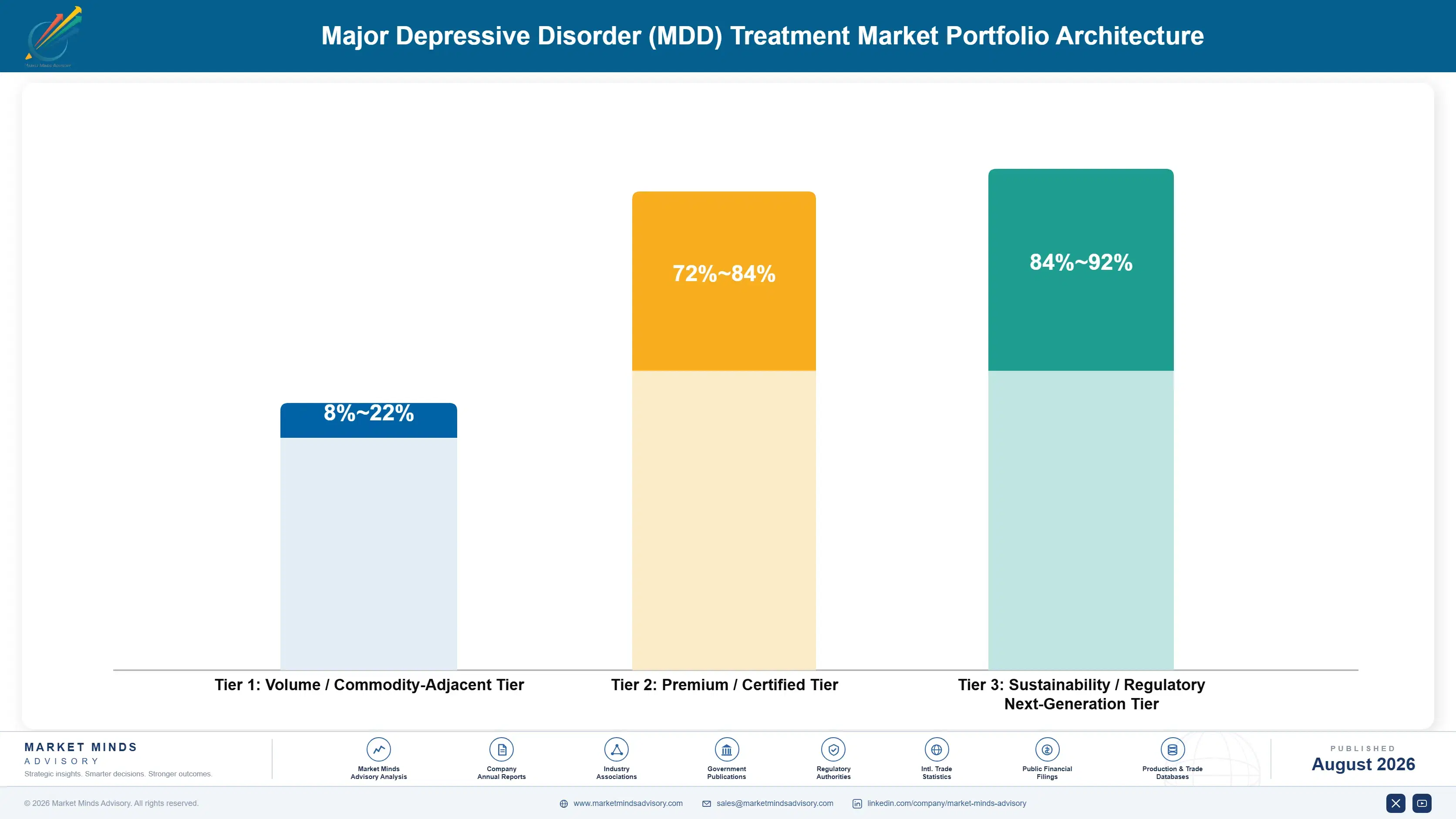
Margin architecture in this market is dictated almost entirely by patent status rather than by cost structure. Genericised serotonergic agents sell at low single-digit dollar prices against manufacturing costs that leave a few points of gross margin at best, which is why generic manufacturers pursue volume across whole portfolios rather than depth in any one molecule. Branded agents in protected indications clear well above eighty per cent.
The tension sits between reach and price. Genericised agents reach virtually every treated patient and generate almost nothing per patient. Branded rapid-acting therapy reaches a small fraction and generates a very large multiple of it. No participant has found a workable middle, and attempts to price branded agents near generic levels to win volume have consistently failed to move step therapy requirements.

High-value pools concentrate where a patient has documented failure on cheap alternatives, because that documentation is what opens reimbursement at branded pricing. Supervised rapid-acting therapy, adjunctive antipsychotics in protected form and multimodal agents with differentiated tolerability all sit in that pool. Everything treating first-line depression competes against molecules that cost less than the pharmacy dispensing fee.

Volume / Commodity-Adjacent Tier

Genericised serotonergic and legacy agents filling most prescriptions worldwide at low single-digit dollar pricing, where manufacturing scale and regulatory compliance rather than clinical differentiation determine which manufacturers survive. Differentiation is essentially impossible at this layer.
Gross Margin: 8-22%

Premium / Certified Tier

Branded adjunctive antipsychotics and multimodal antidepressants sold into documented partial or inadequate response, priced against clinical need in a defined population rather than against generic alternatives. Exclusivity rather than clinical profile holds the pricing.
Gross Margin: 72-84%

Sustainability / Regulatory / Next-Generation Tier

Rapid-acting NMDA-modulating therapies serving treatment-resistant patients, defended by regulatory designation, certified site infrastructure and a population with genuinely limited alternatives rather than by manufacturing advantage. Site infrastructure is the durable part of that defence.
Gross Margin: 84-92%
major-depressive-disorder-mdd-treatment-portfolio-architecture-1787305745782

Who Prescribes and What Persists

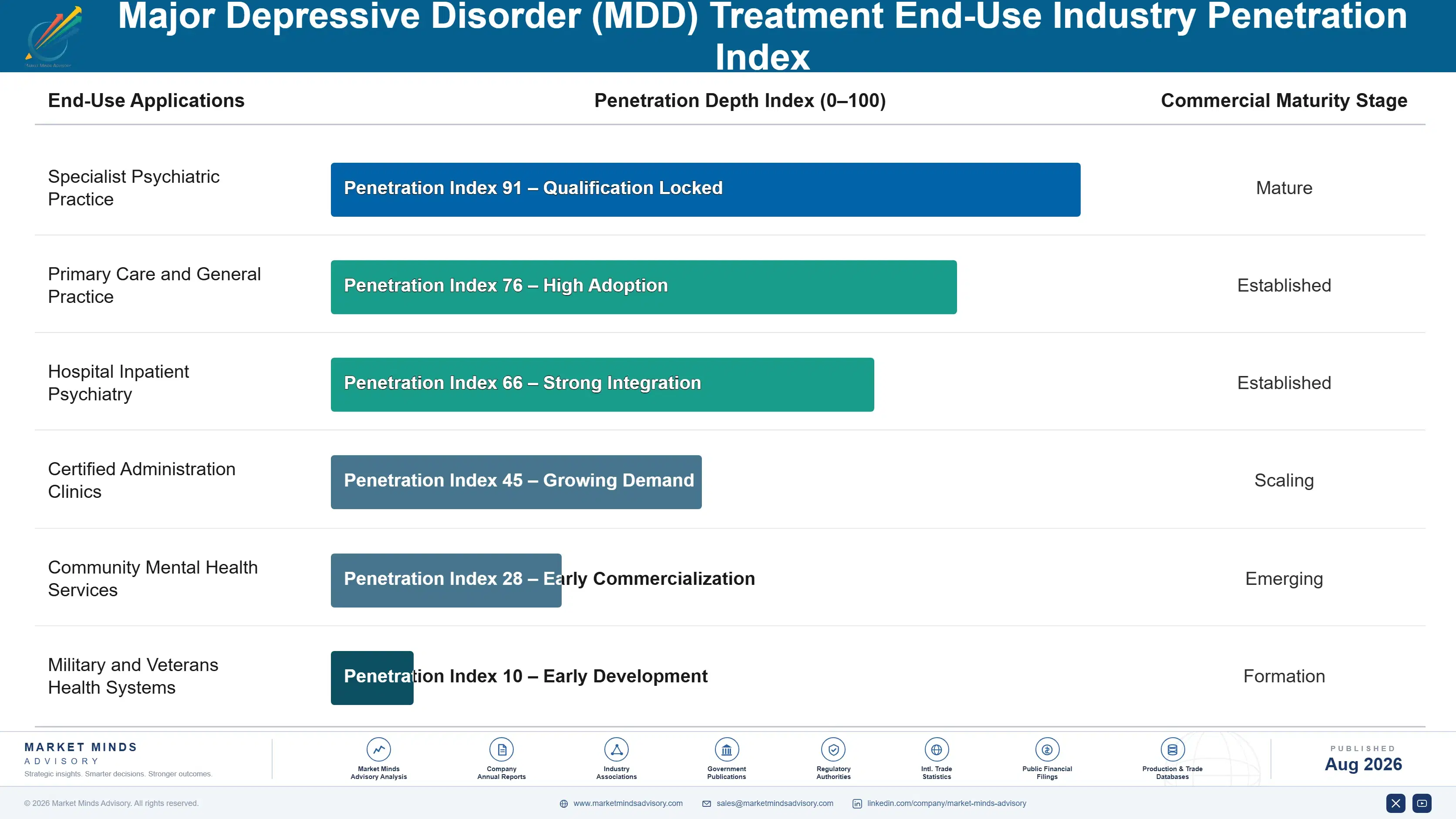
Depression treatment produces recurring revenue only where patients persist, and roughly 45% stop within six months. That discontinuation rate is the single most important economic fact in the category, because a therapy generating twelve months of revenue is worth more than twice one generating five, and tolerability drives the difference more than efficacy does. Cleaner side effect profiles earn their premium through duration, not response rates.
Persistence and depth vary sharply by treatment setting. Patients under specialist psychiatric care, particularly those on supervised rapid-acting therapy where each administration requires attendance, persist substantially longer than those managed in primary care with a repeat prescription. Adjunctive antipsychotic use sits in between, with tolerability driving most attrition. Primary care manages the majority of diagnosed patients worldwide and produces the shortest treatment courses by a wide margin.

Buyer profiles are shifting generationally in ways that matter commercially. Younger patients present earlier, carry less stigma about psychiatric diagnosis and are considerably more willing to discuss medication options they have researched independently. That raises diagnosis rates in markets where treatment gaps have been widest, particularly across urban China and Southeast Asia, and it makes patient-facing evidence more influential in prescribing than it has historically been.
major-depressive-disorder-mdd-treatment-end-use-penetration-index-1787305746276

Where Value Actually Sits

These are among the four positions where our research anticipates prominent divergence between winners and laggards over the coming forecast period. Each is grounded in the demand model, the regulatory perimeter, and the announced capacity pipeline.
01 / SITE NETWORK OWNERSHIP

Certified capacity is the scarce asset, not the molecule

Supervised rapid-acting therapy reaches patients only through certified sites, and roughly 6,000 exist after six years of deliberate commercial construction that no competitor has matched. A site already running one supervised protocol adds a second only reluctantly, given the staffing demands, observation space and separate reimbursement mechanics that every additional protocol carries with it. Any entrant with a supervised product faces a three to four year build before national coverage, during which the incumbent compounds volume on that network essentially unopposed.
02 / PAYER ARGUMENT FRAMING

Compare against admission cost, never against generics

A branded antidepressant measured directly against sertraline loses on price under every possible evidence package, because the generic molecule genuinely works for most patients at almost no cost to anyone. Measured instead against an inpatient psychiatric admission, which drives most of the total cost of severe depression for any payer, the arithmetic reverses completely and favours rapid onset heavily. Manufacturers building real-world admission-avoidance evidence report formulary decisions moving 20% to 30% faster than registrational efficacy data alone has ever achieved.
03 / SEQUENCE POSITION ADVANCEMENT

Every step earlier doubles the eligible population

Adjunctive antipsychotics reached a small population when convention reserved them for patients failing several trials, and a considerably larger one now that adding an agent after a single inadequate antidepressant response has become routine practice in both psychiatry and primary care. The class compounds at 7.4% largely on that sequence movement rather than on any new molecule reaching the market at all. Tolerability evidence rather than efficacy data is the gate, since metabolic and movement-disorder concerns are what keep prescribers waiting.
04 / POPULATION DEFINITION INVESTMENT

Define the phenotype before the product needs it

Treatment-resistant depression became commercially real only when two failed adequate trials hardened into a working definition that both regulators and payers would accept, verify in a claims record and reimburse against. That unglamorous definitional work made roughly 30% of diagnosed patients addressable at branded pricing, and it created the registrational pathway that every subsequent rapid-acting approval has relied upon since. The same opportunity remains wide open in anhedonic, suicidal-ideation and perimenopausal presentations that nobody has yet defined properly enough to study.

Engagement Snapshot From the Field

A live engagement with an industry participant carrying material or product regulatory and market exposure ahead of a defining policy shift, showing how our research translates into a defensible multi-year portfolio strategy.
MARKET MINDS ADVISORY · CLIENT ENGAGEMENT SUMMARY
Major Depressive Disorder (MDD) Treatment Producer Strategic Portfolio Review and Transition Roadmap 2026·Investment Scenario on Major Depressive Disorder (MDD) Treatment Exposure Evaluation 2025-26
CLIENT PROFILE
A specialty pharmaceutical company with annual revenue near $1.1 billion (client-reported, unverified by MMA), holding two marketed psychiatric products and a late-stage rapid-acting antidepressant approaching filing. The company had no experience with supervised administration products and was weighing whether its candidate's clinical profile justified pursuing a certified site model or argued for positioning as an ordinary oral prescription instead.
STRATEGIC CHALLENGE
The candidate showed rapid onset comparable to supervised agents but carried a tolerability signal that regulators might address through an observation requirement. Leadership needed to know what a site network would cost, how long it would take to reach meaningful coverage, and whether existing certified clinics would take on a second supervised protocol at all.
MMA APPROACH
We surveyed 140 certified administration sites on capacity, staffing constraints and willingness to add a second protocol, and interviewed 31 psychiatrists on referral behaviour. Payer coverage pathways were mapped across eight markets. We then modelled network build cost and timeline against an oral positioning scenario with a narrower label. Both scenarios were tested against payer coverage assumptions.
KEY FINDINGS
  1. Only 38% of surveyed certified sites would consider adding a second supervised protocol within two years, citing staffing rather than reimbursement as the binding constraint on capacity.
  2. Reaching national coverage on a self-built network modelled at three to four years and a cost the client's launch budget could not absorb without deferring other programmes.
  3. Psychiatrists reported referring roughly one patient in five who met supervised therapy criteria, with clinic distance and appointment burden the dominant reasons for not referring at all.
  4. An oral positioning with a narrower treatment-resistant label reached a larger treated population in years one and two despite lower per-patient pricing and weaker competitive defensibility.
CLIENT PROFILE
A specialty pharmaceutical company with annual revenue near $1.1 billion (client-reported, unverified by MMA), holding two marketed psychiatric products and a late-stage rapid-acting antidepressant approaching filing. The company had no experience with supervised administration products and was weighing whether its candidate's clinical profile justified pursuing a certified site model or argued for positioning as an ordinary oral prescription instead.
STRATEGIC CHALLENGE
The candidate showed rapid onset comparable to supervised agents but carried a tolerability signal that regulators might address through an observation requirement. Leadership needed to know what a site network would cost, how long it would take to reach meaningful coverage, and whether existing certified clinics would take on a second supervised protocol at all.
MMA APPROACH
We surveyed 140 certified administration sites on capacity, staffing constraints and willingness to add a second protocol, and interviewed 31 psychiatrists on referral behaviour. Payer coverage pathways were mapped across eight markets. We then modelled network build cost and timeline against an oral positioning scenario with a narrower label. Both scenarios were tested against payer coverage assumptions.
KEY FINDINGS
  1. Only 38% of surveyed certified sites would consider adding a second supervised protocol within two years, citing staffing rather than reimbursement as the binding constraint on capacity.
  2. Reaching national coverage on a self-built network modelled at three to four years and a cost the client's launch budget could not absorb without deferring other programmes.
  3. Psychiatrists reported referring roughly one patient in five who met supervised therapy criteria, with clinic distance and appointment burden the dominant reasons for not referring at all.
  4. An oral positioning with a narrower treatment-resistant label reached a larger treated population in years one and two despite lower per-patient pricing and weaker competitive defensibility.
RECOMMENDED STRATEGY
Phase 1: Phase one: pursue the oral positioning with a treatment-resistant label, accepting narrower indication in exchange for prescriber reach without infrastructure dependency. Phase 2: Phase two: build real-world evidence on admission avoidance during the first eighteen months, targeting the payer argument rather than the prescriber argument. Phase 3: Phase three: partner with an established clinic operator if a supervised line extension becomes attractive, rather than certifying individual sites directly.
OUTCOME
The company filed on the oral positioning and secured a treatment-resistant label without an observation requirement. First-year prescriber breadth exceeded internal projections by roughly 40% (client-reported, unverified by MMA). A partnership discussion with a national clinic operator opened during the second year on materially better terms than a self-build would have allowed.

Frequently Asked Questions

Foundational context covering the market sizes, CAGR, scope, country, region and competition that inform every finding below. This section is provided to cover basics and most often pre-purchase conversations, answered from the MMA Primary Research Dataset.

What is the current size of the Major Depressive Disorder (MDD) Treatment Market?

The global market is valued at $18.0 billion in 2025, rising to $19.8 billion in 2026. Branded products hold roughly 71% of that value while filling only about 8% of prescriptions.

How large will the Major Depressive Disorder (MDD) Treatment Market be by 2036?

MMA forecasts $51.36 billion by 2036, an increase of $31.56 billion over the 2026 base and an expansion multiple of 2.59x. The bull case depends on psilocybin-assisted therapy reaching approval within the period.

What is the CAGR for the Major Depressive Disorder (MDD) Treatment Market 2026 to 2036?

The base case compound annual growth rate is 10.0%, with a bull case at 11.2% and a bear case at 8.8%. Historical growth from 2020 to 2025 ran near 8.6%, driven by branded franchises rather than volume.

Which segment is growing fastest?

NMDA-modulating rapid-acting therapies compound at 15.0%, a full 1.50x the market rate. The class covers supervised esketamine administration and the oral dextromethorphan-bupropion combination, which reach different patients through entirely different routes.

Who are the major companies in the Major Depressive Disorder (MDD) Treatment Market?

Johnson and Johnson, Otsuka Pharmaceutical, AbbVie, Lundbeck and Axsome Therapeutics together hold 41% of value measured on revenue from products carrying a depression indication. Concentration is low because generic manufacturers supply most prescriptions.

Which country is growing fastest?

China compounds at 12.6%, faster than any other country covered, as national reimbursement listings admit newer agents and psychiatric care carries less stigma among younger urban patients. Treated share of the depressed population stays under one in ten.

Report Segmentation Architecture

The full report scope spans multiple orthogonal segmentation dimensions, with cross-tabulated demand data provided for each dimension pair. Coverage extends further to regional breakdowns, trend trajectories, and the competitive detail needed to support segment-level decision-making.

By Therapeutic Class

  • Serotonergic Reuptake Inhibitors
  • Atypical Antipsychotic Adjunctive Therapies
  • NMDA-Modulating Rapid-Acting Therapies
  • Atypical and Multimodal Antidepressants
  • Tricyclic and Monoamine Oxidase Inhibitor Agents

By End-Use Industry

  • Specialist Psychiatric Practice
  • Primary Care and General Practice
  • Hospital Inpatient Psychiatry
  • Certified Administration Clinics
  • Community Mental Health Services
  • Military and Veterans Health Systems

By Commercial Dimension

  • Retail Pharmacy Dispensing
  • Specialty Pharmacy Distribution
  • Hospital and Institutional Supply
  • Public Reimbursement Channels
  • Private Insurance Coverage
  • Direct Patient-Pay Channels

By Region

  • East Asia
  • North America
  • Western Europe
  • South Asia and Pacific
  • Latin America
  • Middle East and Africa
  • Eastern Europe

Scope, Methodology, and Coverage

Every figure in this report is reproducible from documented input assumptions. The scope below maps the historical period, the forecast horizon, the segmentation dimensions, and the countries covered, alongside the underlying primary and qualitative methodology.
Historical Period
2020 to 2025
Forecast Period
2026 to 2036
Base Year
2025 (USD billions; MMA Primary Research Dataset, August 2026)
Market Definition
This market comprises pharmacological therapy prescribed for major depressive disorder in adults and adolescents, measured at manufacturer net revenue across retail pharmacy dispensing, specialty pharmacy distribution, hospital and institutional supply, public reimbursement channels, private insurance coverage and direct patient-pay purchase. Coverage spans serotonergic reuptake inhibitors including selective and serotonin-norepinephrine agents, atypical antipsychotics carrying adjunctive depression indications, NMDA-modulating rapid-acting therapies delivered through both supervised administration and ordinary oral prescribing, atypical and multimodal antidepressants, and legacy tricyclic and monoamine oxidase inhibitor agents. Neuromodulation devices including transcranial magnetic stimulation, electroconvulsive therapy and vagus nerve stimulation, psychotherapy and counselling services, prescription digital therapeutics, bipolar depression, postpartum depression, seasonal affective disorder treated exclusively with light therapy, and anxiety disorders without a depressive indication fall outside scope.
Quantitative Units
USD millions (manufacturer net revenue); prescriptions dispensed by class; treated patient population; branded versus genericised value share; certified administration sites; six-month persistence rate; average annual therapy cost
Segmentation Dimensions
By Therapeutic Class; By End-Use Industry; By Commercial Dimension; By Region
Regions Covered
East Asia, North America, Western Europe, South Asia and Pacific, Latin America, Middle East and Africa, Eastern Europe
Countries Covered
United States, Canada, Germany, United Kingdom, France, Italy, Spain, Netherlands, Sweden, Switzerland, Japan, China, South Korea, Taiwan, Australia, India, Singapore, Thailand, Malaysia, Brazil, Mexico, Argentina, Chile, Colombia, Saudi Arabia, United Arab Emirates, South Africa, Israel, Poland, Czechia, Hungary, Russia, Turkey, and additional markets relevant to psychiatric therapeutics analysis
Key Companies Profiled
Johnson and Johnson, Otsuka Pharmaceutical, AbbVie, Lundbeck, Axsome Therapeutics, Takeda, Teva Pharmaceutical Industries, Viatris, Sandoz, Sun Pharmaceutical Industries, Eli Lilly, Pfizer, GSK, Sage Therapeutics, Biogen, Servier, Alkermes, Compass Pathways, Neurocrine Biosciences, Dr. Reddy's Laboratories
Quantitative Methodology
Primary survey, n=3,800 respondents, Q4 2025, six countries; demand-side model with trade association cross-validation
Qualitative Methodology
47 expert interviews, Q4 2025; applied to validate demand model assumptions, identify emerging dynamics, and assess competitive positioning
Report Format
PDF and XLSX data workbook (Word format preview document)
Publisher
Market Minds Advisory
Report Code
MMA-2026-HLT-430
Published
August 2026
Contact
sales@marketmindsadvisory.com | www.marketmindsadvisory.com

Purchase the full Major Depressive Disorder (MDD) Treatment Market Report (2026 to 2036).

The full MMA report separates the prescription market from the value market, showing why 92% of antidepressant volume generates almost none of the revenue and where the remainder actually sits. It sizes five therapeutic classes and seven regions to 2036, modelling treated population, branded and genericised value share, certified administration capacity, persistence and annual therapy cost separately. Competitive assessment covers twenty participants on one consistent revenue basis. Cost exposure is traced through development, active ingredient supply and site network operation. Four commercial levers and a strategic verdict close the report, grounded in 47 expert interviews and a 3,800-respondent survey.
Five therapeutic classes sized separately through 2036
Certified administration site capacity mapped across covered markets
Treatment-resistant population quantified against branded reimbursement pathways
Twenty participants assessed on one consistent revenue basis
Persistence and discontinuation modelled by treatment setting
Anonymised launch engagement with tested positioning recommendations

Built For The People Who Decide

From boardroom strategy to bench-side execution, this report is read cover-to-cover by leaders shaping the next decade of their industry, turning demand scenarios, market dynamics and valuation benchmarks into decisions.
CXOs/ Presidents/ VPs/ Managers
M&A and Corporate Development
Strategy Teams and R&D Heads
Procurement and Product Directors
Regulatory and Compliance Leaders
Investor Relations and Equity Analysts