
Market Minds Advisory
Lung Cancer PCR Panel Market

Lung Cancer PCR Panel Market: Turnaround, Tissue Economy, and Holding Ground Against Sequencing

Sequencing finds more targets but takes about three weeks, and a patient with metastatic disease and a failing performance status does not always have three weeks to wait for it.

Lead Analyst

Alice Ballenger

Published

August 2026

Make Smarter Decisions with Customized Research Insights

Request a free sample report and evaluate market opportunities, growth trends, and competitive dynamics relevant to your business needs.

2025 MARKET VALUE$1.4BMarket Size 2025
2036 FORECAST VALUE$3.8BBase Case , 2026 to 2036
CAGR 2026 TO 20369.4 %Bull 10.6% / Bear 8.2%
INCREMENTAL OPPORTUNITY$2.2BNet 10- year value creation
EXPANSION MULTIPLE2.46x2036 value over 2026 base
Strategic Levers
M&A Pipeline
Regional Outlook
Country Rankings
Competitive Intelligence
Segmental Deep-dive
Call-Us : 91 93563 13602

Executive Snapshot and Market Trajectory

Sequencing was supposed to end this category. It has not, because a broad panel returns in about three weeks and a targeted assay returns in two days, and oncologists treating metastatic disease weigh that difference against a patient who is deteriorating. Speed still beats breadth surprisingly often.
Liquid biopsy ctDNA panels compound at 14.1%, a full 1.50x the market rate, because plasma testing reaches patients whose biopsy tissue was exhausted by pathology. East Asia holds the largest share at 36%, and the reason is biological: EGFR driver mutations appear in roughly half of East Asian lung adenocarcinoma patients against about 15% of Western ones, which makes targeted assays far more productive there. Sequencing has never displaced that.
Concentration is moderate at 56%, with Roche and Thermo Fisher holding approved companion diagnostic positions and Amoy Diagnostics dominant in China. Displacement pressure is real but uneven: sequencing takes share wherever it is reimbursed and takes almost none where it is not. That single reimbursement question decides this market's trajectory in every geography. Chinese procurement has meanwhile extended volume-based purchasing into molecular reagents, compressing pricing in the largest-volume market simultaneously. Single-indication participants absorb both.
Market Definition
This market covers polymerase chain reaction based assays detecting actionable genomic alterations in lung cancer, spanning single-gene and hotspot assays, multiplex tissue panels, liquid biopsy circulating tumour DNA panels, rapid cartridge-based panels, and resistance mutation monitoring assays. Coverage includes reagents, kits and assay-specific consumables. Next-generation sequencing panels, immunohistochemistry and fluorescence in situ hybridisation testing, PD-L1 expression assays, thermal cycler and extraction instrument hardware, and research-use-only assays are excluded.
Base Year Value
$1.4B in 2025 (MMA Primary Research Dataset, August 2026)
Forecast Period
2026 to 2036, eleven discrete annual values
CAGR
9.4% base case. Bull 10.6%. Bear 8.2%.
Fastest Growth Segment
Liquid Biopsy ctDNA PCR Panels: 14.1% CAGR
Fastest Growth Country
India: 12.8% CAGR
Fastest Growth Region
South Asia and Pacific: 11.6% CAGR
Largest Region
East Asia: 36% of 2025 global value
Market Leaders
Roche Diagnostics, Thermo Fisher Scientific, Amoy Diagnostics, QIAGEN, and Bio-Rad Laboratories. Source: MMA Primary Research Dataset, July 2026.
Primary Survey
n=3,800 procurement and R&D decision-makers, Q4 2025, six countries
Methodology
Demand-side build-up, cross-validated against public data, 47 expert interviews

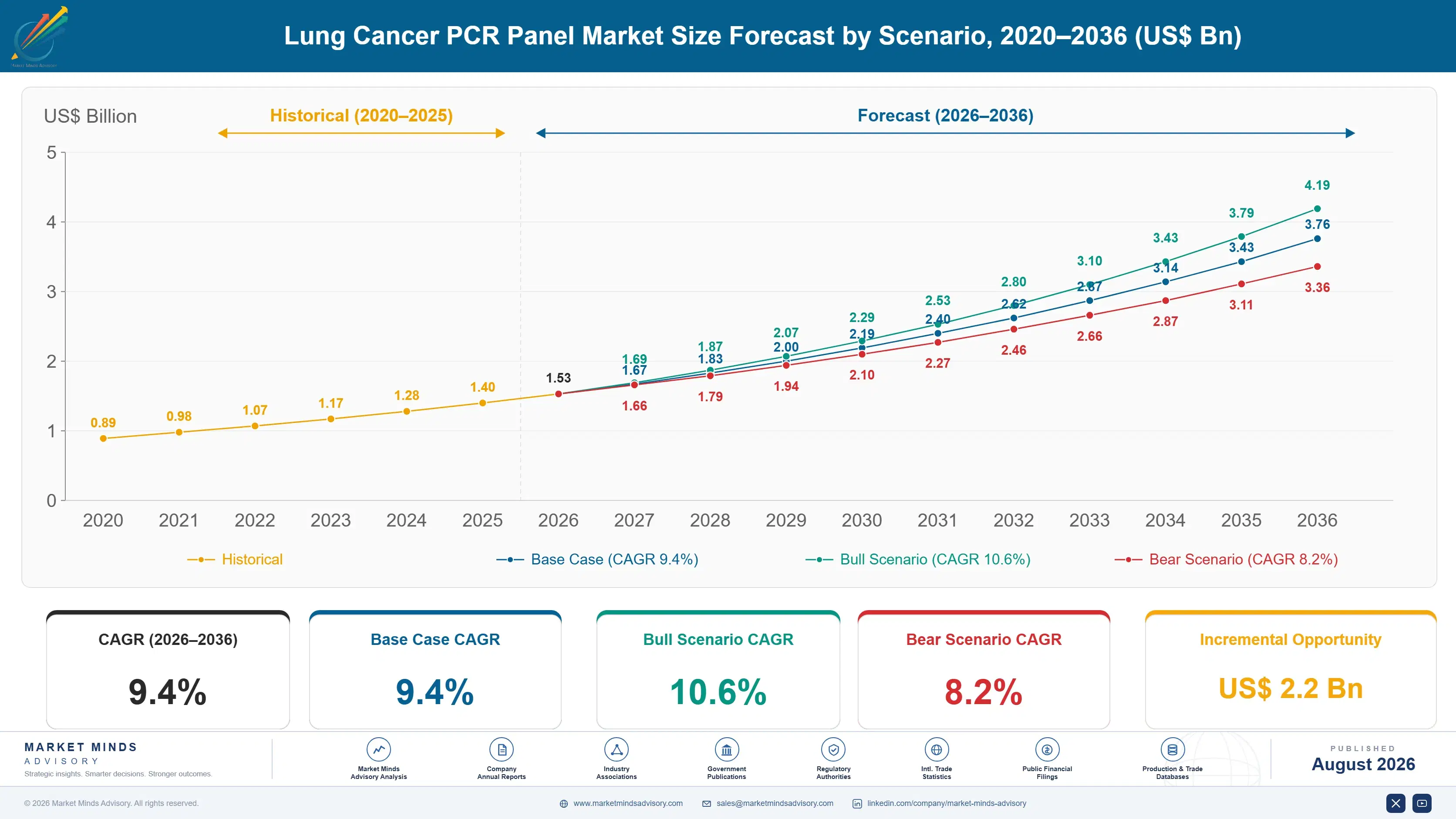
Lung Cancer PCR Panel Market Forecast Scenarios

lung-cancer-pcr-panel-market-size-forecast-scenario-1787305736186
Growth ran near 8.2% from 2020 to 2025 while two forces pulled in opposite directions. Guideline bodies moved toward recommending broad molecular profiling, which favoured sequencing and took share from targeted assays in well-reimbursed markets. At the same time the number of actionable targets kept expanding and liquid biopsy testing grew quickly, and both of those added volume that sequencing did not capture.
Base case growth of 9.4% rests on three mechanisms. Liquid biopsy plasma testing keeps reaching patients whose tissue was exhausted, which is a genuine addition rather than a substitution. Reflex workflows testing common alterations first and sequencing afterward have become standard practice in many centres. And markets without sequencing reimbursement continue expanding molecular testing coverage using targeted assays because nothing else is funded. None of the three depends on a new assay technology reaching the market.
The bull case at 10.6% assumes rapid cartridge platforms reach community oncology settings that currently send specimens away, which would add volume in a setting nobody serves well today. The bear case at 8.2% reflects sequencing reimbursement broadening into markets that presently lack it, which would compress targeted assay volume in exactly the geographies now driving growth.

Targeted Assays: Speed, Tissue and Reimbursement

Every argument in this market comes down to a trade between breadth and time. A sequencing panel interrogates hundreds of genes and reports in around three weeks. A targeted panel interrogates the alterations that actually have approved drugs behind them and reports in two or three days. For a patient with metastatic disease and an oncologist deciding whether to start chemotherapy now, those nine days are not an abstraction.
TOP FIVE CONCENTRATION56%Concentrated among diagnostics majors and Chinese molecular specialists
TURNAROUND ADVANTAGE9 daysDays faster than sequencing panels return an actionable result
ACTIONABLE ALTERATION RATE62%Advanced patients with a targetable alteration identified through testing
TISSUE INPUT REQUIREMENT40 nanogramsNucleic acid needed against what sequencing panels typically demand
PRE-TREATMENT TESTING RATE71%Advanced patients tested before first-line therapy actually begins
REFLEX SEQUENCING SHARE44%Cases where sequencing follows a negative targeted panel result
Tissue is the second constraint and it is underappreciated. A transbronchial biopsy yields very little material, pathology consumes much of it establishing the diagnosis, and what remains is frequently insufficient for a sequencing panel's input requirement. Targeted assays run on roughly 40 nanograms, considerably less than broad panels demand. That is why the two approaches coexist in practice rather than one replacing the other outright.
The result is a reflex workflow that has become standard in a great many centres: test the common alterations first, treat immediately if something is found, and send for sequencing only if nothing is. Roughly 44% of cases proceed to sequencing after a negative targeted result. That workflow is not a compromise anybody designed; it emerged because turnaround, tissue and reimbursement all pointed the same way.
"The sequencing companies keep announcing that this category is finished, and oncologists keep ordering targeted assays because the patient in front of them is deteriorating. Breadth is a wonderful property when you have time and tissue. Quite often nobody has either, and that is the whole reason this market still exists."
Principal Analyst, Molecular Oncology Diagnostics Practice · MMA Healthcare Prac

Market Trends

Reflex workflows preserve targeted testing inside sequencing-first guidelines

Guideline movement toward broad molecular profiling looked like an extinction event for targeted assays, and the practical response has been a workflow rather than a surrender. Centres test common alterations first, start therapy immediately when one is found, and send the remainder for sequencing. Roughly 44% of cases proceed that way, which means targeted testing happens on close to every patient while sequencing happens on rather fewer. The workflow was not designed; it emerged because turnaround, tissue quantity and reimbursement all pushed clinicians toward it independently. It also means targeted volume is far more durable than displacement forecasts assumed.
Market Impact: Actionable alterations reaching 62%
Plasma testing reaches patients whose tissue ran out

A meaningful share of advanced lung cancer patients never yield enough biopsy material for molecular testing after pathology has established the diagnosis, and re-biopsy is invasive, slow and sometimes impossible. Circulating tumour DNA assays run on a blood draw and reach those patients directly, which makes them additive volume rather than substitution. The segment compounds at 14.1% against a market rate of 9.4%. Sensitivity limitations mean a negative plasma result still requires tissue confirmation, so the two sample types complement each other rather than competing. Serial sampling during therapy creates repeat testing episodes that a tissue biopsy could never support.
Market Impact: Pre-treatment testing reaching 71%

Market Opportunities and Growth Drivers

Approved target count keeps expanding the panel content

Actionable alterations in non-small cell lung cancer now include EGFR, ALK, ROS1, BRAF, KRAS G12C, MET exon 14 skipping, RET, NTRK and HER2, and each addition brought an approved therapy that makes testing for it mandatory rather than optional. Roughly 62% of advanced patients now carry an alteration with a treatment behind it. Every new approval expands panel content and raises the clinical cost of not testing, which sustains volume even where sequencing competes for the same specimen. Panels are revised on drug approval timelines rather than any development cycle a manufacturer controls.
Market Impact: Single-gene assays growing near 3.6

Markets without sequencing reimbursement expand using targeted assays

Broad sequencing is reimbursed in a minority of health systems worldwide, and in the rest a molecular testing programme means targeted assays or it means nothing. China, India, most of Latin America and much of Eastern Europe fall into that category, and all are expanding biomarker testing coverage rapidly as targeted therapies reach their formularies. Growth in those geographies is therefore additive to the category rather than contested. Reimbursement policy rather than clinical preference determines which technology serves each market. Growth there is additive rather than contested, which makes it worth more per unit of effort.
Market Impact: Procurement covering 36% share regi

Market Restraints and Challenges

Sequencing takes share wherever it becomes reimbursed

In markets funding broad molecular profiling, targeted panels lose first-line position and retreat toward reflex and confirmatory roles. The root cause is that sequencing genuinely finds more, and a guideline body weighing comprehensiveness against turnaround will generally favour comprehensiveness when both are funded. Commercial impact concentrates in North America and Western Europe, where single-gene assay volume is declining outright. Participants respond by positioning on turnaround and tissue economy, developing rapid cartridge formats, and expanding into geographies where sequencing reimbursement is not on the horizon. Nothing reverses the displacement where funding exists.
Market Impact: Reflex sequencing following 44% of

Volume-based procurement compresses pricing in the largest market

Chinese provincial procurement alliances have extended volume-based purchasing from chemistry reagents into molecular diagnostics, with price reductions that reset category economics across affected provinces. The root cause is a purchasing mechanism designed explicitly to convert clinical adoption into price leverage once volumes are established. Commercial impact falls hardest on participants concentrated in the region holding the largest share of global volume. Participants respond by pursuing menu breadth that procurement lots do not cover, export registration, and manufacturing cost positions that survive tender pricing. Clinical adoption is precisely what triggers procurement attention.
Market Impact: Plasma segment compounding at 14.1%
3 additional market trends, 4 additional growth drivers, and 2 additional restraints and challenges are covered in the full report. Contact sales@marketmindsadvisory.com to access the complete intelligence.

Segment CAGR and Growth Architecture

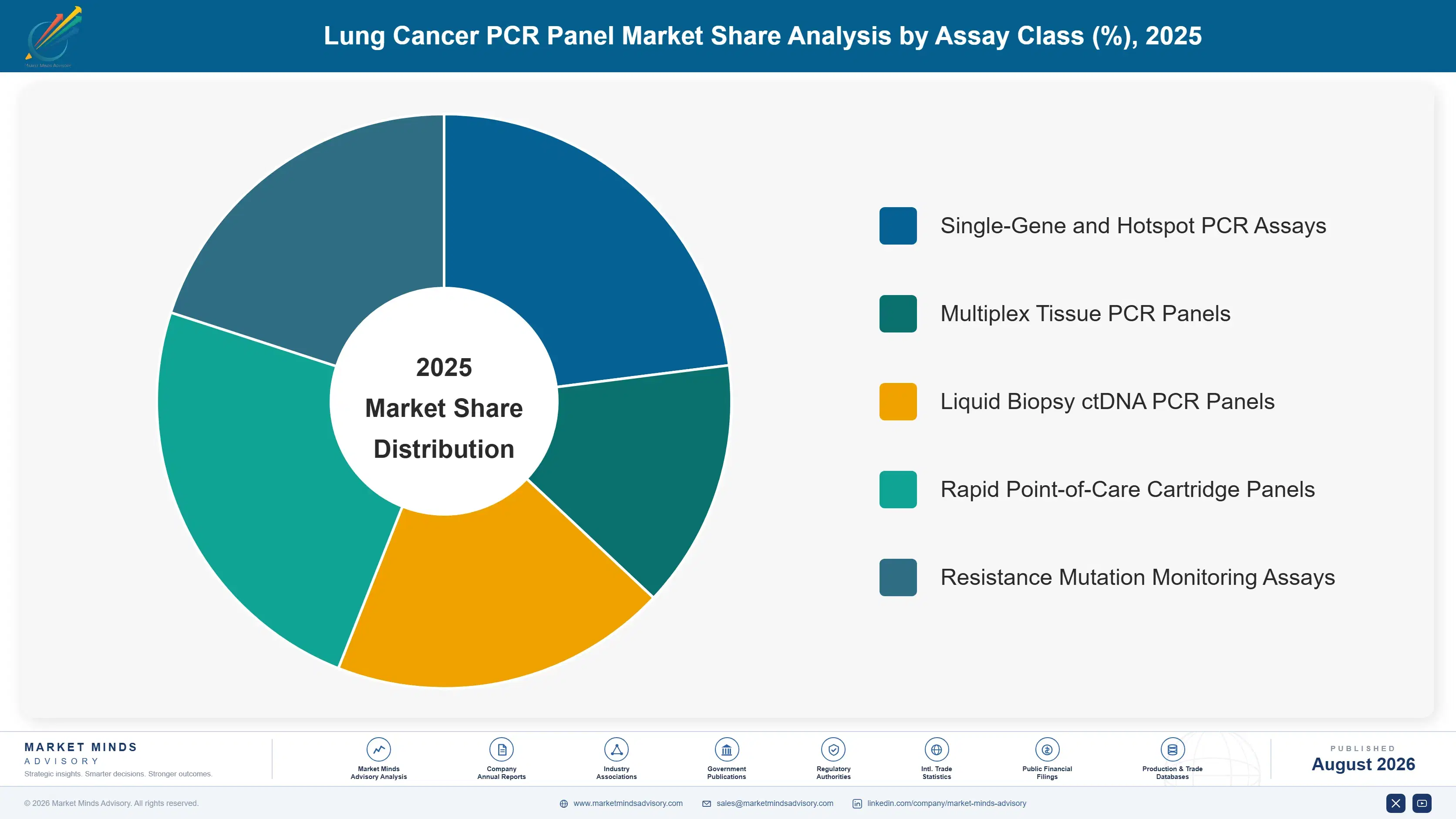
Five assay classes divide this market, separated by sample type and by how much of the actionable genome each interrogates. The classification matters commercially because sequencing competes directly with two of the five, complements a third and does not reach the remaining two at all in current practice. Sample type decides where sequencing competes.
lung-cancer-pcr-panel-market-market-share-analysis-1787305736719

Liquid Biopsy ctDNA PCR Panels

Compounding at 14.1%, a full 1.50x the market rate, plasma-based assays reach patients whose biopsy tissue was exhausted during diagnosis and those for whom re-biopsy is impractical or unsafe. That makes the segment additive to category volume rather than a substitute for tissue testing. Sensitivity below tissue methods means a negative plasma result still requires tissue confirmation where material exists, which preserves both workflows. Resistance monitoring during therapy is the second use, since serial blood draws are feasible in a way serial biopsies never are. Regulatory approval as companion diagnostics has followed drug approvals closely. Pricing sits above tissue panels because the clinical alternative is frequently no molecular result at all.
CAGR 14.1%

Rapid Point-of-Care Cartridge Panels

Growing at 12.4%, cartridge-based systems perform targeted detection in under an hour with minimal hands-on time, which places molecular testing inside hospitals that currently send specimens to reference laboratories. The commercial argument is turnaround measured in hours rather than days, and it matters most in community oncology settings where the alternative involves shipping, queuing and a wait long enough to influence treatment decisions. Menu breadth is the constraint, since cartridges cover fewer alterations than laboratory panels. Instrument placement economics rather than assay pricing decide competitive outcomes in this segment. A practice will not purchase an analyser for lung cancer volume alone, so menu breadth across other tumour types is what makes the placement arithmetic work at all.
CAGR 12.4%
Full segment breakdown across 5 segments available in the complete report.

Regional Architecture and Country Demand Map

Regional distribution here is driven by mutation prevalence and reimbursement design rather than by lung cancer incidence, which is high almost everywhere. Populations with more actionable alterations make targeted testing more productive, and health systems without sequencing funding use targeted assays by necessity. Prevalence and funding together explain the map.

East Asia

Thirty-six per cent of global value, and biology explains most of it. Note: this share exceeds the 22 to 30% band because EGFR driver mutations occur in roughly half of East Asian lung adenocarcinoma patients against about 15% of Western patients, which makes targeted assays far more clinically productive across the region. China carries most of that volume with a domestic industry led by Amoy Diagnostics, Burning Rock and Genetron holding approved companion diagnostic status. Broad sequencing reimbursement is limited, so targeted panels remain first-line rather than reflex. Volume-based procurement is now compressing pricing across affected provinces. Japan and South Korea run comprehensive testing programmes with higher pricing and earlier sequencing adoption than China.
Share: 36% | CAGR: 10.2% (2026 to 2036)

North America

Twenty per cent of value, and displacement is further advanced here than anywhere else. Note: this share falls below the 22 to 32% band because broad sequencing is reimbursed across most of the United States, which has pushed targeted panels from first-line testing into reflex and confirmatory positions. Single-gene assay volume is declining outright. What holds the category are turnaround-critical cases, patients with insufficient tissue for a sequencing panel, and plasma testing where re-biopsy is impractical. Community oncology practices without on-site molecular capability represent the clearest remaining opportunity for rapid cartridge formats. Interviewed oncologists described starting therapy without molecular results in roughly one advanced case in nine when turnaround threatened a deteriorating patient.
Share: 20% | CAGR: 8.2% (2026 to 2036)
Regional intelligence for 5 additional markets available in the complete report: Western Europe, South Asia and Pacific, Latin America, Middle East and Africa, Eastern Europe. Contact sales@marketmindsadvisory.com.
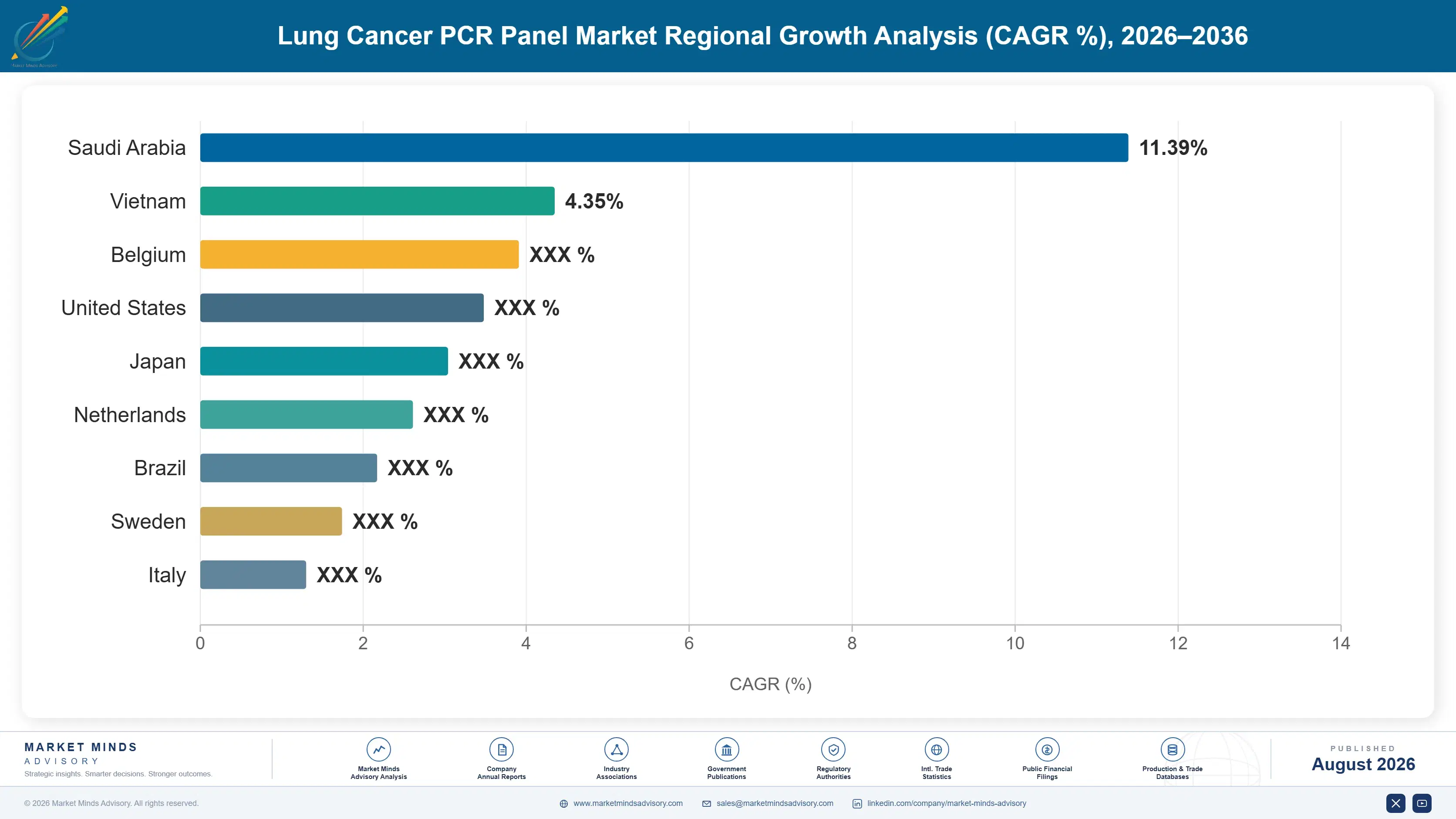
lung-cancer-pcr-panel-market-country-cagr-analysis-1787305737237

Where Targeted Assay Value Holds

Competing with sequencing on breadth is a contest nobody wins, because sequencing genuinely interrogates more. Value in this category comes from the three things sequencing does badly: returning a result quickly, running on very little material, and reaching patients in health systems that have never funded a broad panel. All three grounds are commercial rather than technical.

Sell turnaround to the oncologist, not breadth to the pathologist

A pathologist evaluating assays compares content and will prefer the broader one every time. An oncologist deciding whether to start chemotherapy this week compares waiting nine days against treating now, and that comparison favours the targeted assay decisively. Centres where oncology rather than pathology drives molecular test selection order targeted panels at roughly 35% higher rates. Commercial engagement aimed at the wrong specialty concedes an argument that was winnable, and most participants still route their entire clinical effort through laboratory stakeholders by default. The argument has to reach the person making the treatment decision.
Market Impact: Ordering rates roughly 35% higher i

Build the tissue-insufficient pathway into pathology protocol

Many advanced lung cancer patients yield too little material for a sequencing panel once pathology has completed diagnosis, and those patients currently face re-biopsy, delay or no molecular testing at all. Targeted assays run on roughly 40 nanograms and plasma assays need no tissue whatsoever. Positioning explicitly around specimen adequacy, with pathology protocols that flag insufficient samples toward the appropriate assay, captures volume that would otherwise disappear. Interviewed laboratories estimated 18% to 24% of cases fall into this category and are handled inconsistently everywhere. Protocol rather than persuasion is what converts that volume.
Market Impact: Between 18% and 24% of all advanced

Expand where sequencing reimbursement will not arrive

Health systems funding broad molecular profiling are a minority, and in the remainder targeted assays are the only route to a treatment decision that anybody pays for. Those markets are expanding biomarker testing quickly as targeted therapies reach their formularies, and growth there is additive rather than contested. India compounds at 12.8% on exactly this dynamic. Commercial resource allocated to defending share in sequencing-funded markets frequently earns less than the same resource deployed where no displacement pressure exists at all. Displacement pressure in those markets is not merely low; it does not exist.
Market Impact: India compounding at 12.8% every si

Place rapid cartridge platforms in community oncology

Community practices without molecular capability send specimens away and wait, which adds days to a decision that turnaround-sensitive patients cannot always afford. Cartridge systems returning results in under an hour put testing inside those practices, and the segment compounds at 12.4% on that argument. Instrument placement economics rather than assay pricing decide outcomes, since a practice will not buy an analyser for lung cancer volume alone. Menu breadth across other tumour types and indications is what makes the placement arithmetic work commercially. Community oncology is the largest genuinely unserved volume in this market.
Market Impact: Cartridge segment compounding at 12

Who Controls the Margin Pool

The top five hold 56% of the market measured on revenue from lung cancer targeted assay products, the basis used throughout this section. Roche and Thermo Fisher lead on approved companion diagnostic positions tied to specific targeted therapies, which is a regulatory asset rather than a commercial one and takes years to assemble. Amoy Diagnostics holds a comparable position in China, where patient volume and mutation prevalence make it the largest single national market by some distance.
Competitive activity runs along three lines. Participants are pursuing companion diagnostic approvals alongside each new targeted therapy, since approval status determines whether an assay can be used to select patients for the drug. Several are developing rapid cartridge formats aimed at settings that currently send specimens away. And Chinese participants are pursuing export registration, having built scale domestically under conditions that produced very competitive manufacturing costs.

Pressure comes from two directions that pull differently. Sequencing displaces targeted panels wherever it is reimbursed, which affects the highest-priced markets first. Volume-based procurement compresses pricing in the largest-volume market. Rankings will shift toward participants with menu breadth beyond lung cancer, since single-indication positions are exposed to both pressures simultaneously with no offsetting business.
lung-cancer-pcr-panel-market-company-positioning-matrix-1787305737763

Competitive Moat and Risk Dimensions

ROCHE DIAGNOSTICS

Moat: Approved companion diagnostic positions

Assays approved as companion diagnostics alongside specific targeted therapies carry regulatory standing that competitors cannot assert without running equivalent clinical work, and drug labels frequently reference the approved test directly. A large installed platform base running other assays makes the lung cancer menu an extension of an existing relationship rather than a standalone purchase.
ROCHE DIAGNOSTICS

Risk: Sequencing displacement in premium markets

The company's strongest geographic positions sit in health systems where broad sequencing is reimbursed and targeted panels are retreating toward reflex use. Its own sequencing ambitions also mean the two approaches compete internally for development and commercial attention, which rarely resolves in favour of the technology being displaced regardless of its current profitability.
AMOY DIAGNOSTICS

Moat: Position in largest patient population

Approved companion diagnostic status across a broad lung cancer menu in the country with the world's largest EGFR-mutant patient population gives the company scale that no competitor can reach through any other single market. Domestic manufacturing cost and regulatory familiarity compound the advantage, and hospital relationships built over years of molecular pathology supply are difficult for imported alternatives to displace.
AMOY DIAGNOSTICS

Risk: Single procurement environment concentration

Revenue concentrates in one national reimbursement and procurement environment where volume-based purchasing has already extended into molecular diagnostics and compressed pricing materially. Export registration reduces the exposure but proceeds slowly against established participants in each destination market, and the domestic cost advantage translates imperfectly once regulatory and distribution costs are added.

Players Tracked

Prominent Players

Roche Diagnostics
Thermo Fisher Scientific
Amoy Diagnostics
QIAGEN
Bio-Rad Laboratories

Other Key Players

Agilent Technologies
Abbott
Sysmex
Burning Rock Biotech
Genetron Health
Guardant Health
Biocartis
EntroGen
Sacace Biotechnologies
Daan Gene
BGI Genomics
Illumina
Myriad Genetics
ELITechGroup
Seegene

Recent Developments

AUGUST 2020

European guidance recommends routine sequencing in advanced disease

The European Society for Medical Oncology issued recommendations supporting routine next-generation sequencing in advanced non-squamous non-small cell lung cancer. The guidance did not withdraw support for targeted assays, but it established comprehensive profiling as the reference standard and set the displacement pressure that has shaped this category since.
Signal: Guideline preference moved toward breadth
MAY 2021

Companion diagnostic approved alongside first KRAS inhibitor

A tissue-based targeted assay received approval as a companion diagnostic alongside the first inhibitor for KRAS G12C, an alteration long considered undruggable. The approval added a target that no existing panel had commercial reason to include, and every subsequent panel revision has carried it. Panel content now tracks approvals closely.
Signal: Each drug approval expands panel content a
MARCH 2024

Chinese procurement alliances extend to molecular reagents

Provincial procurement alliances in China extended volume-based purchasing from clinical chemistry reagents into molecular diagnostic products, producing substantial price reductions across participating provinces. This was a government purchasing mechanism rather than any commercial transaction between companies, and it reset category economics in the largest volume market.
Signal: Established clinical adoption converts dir

What Actually Costs Money Here

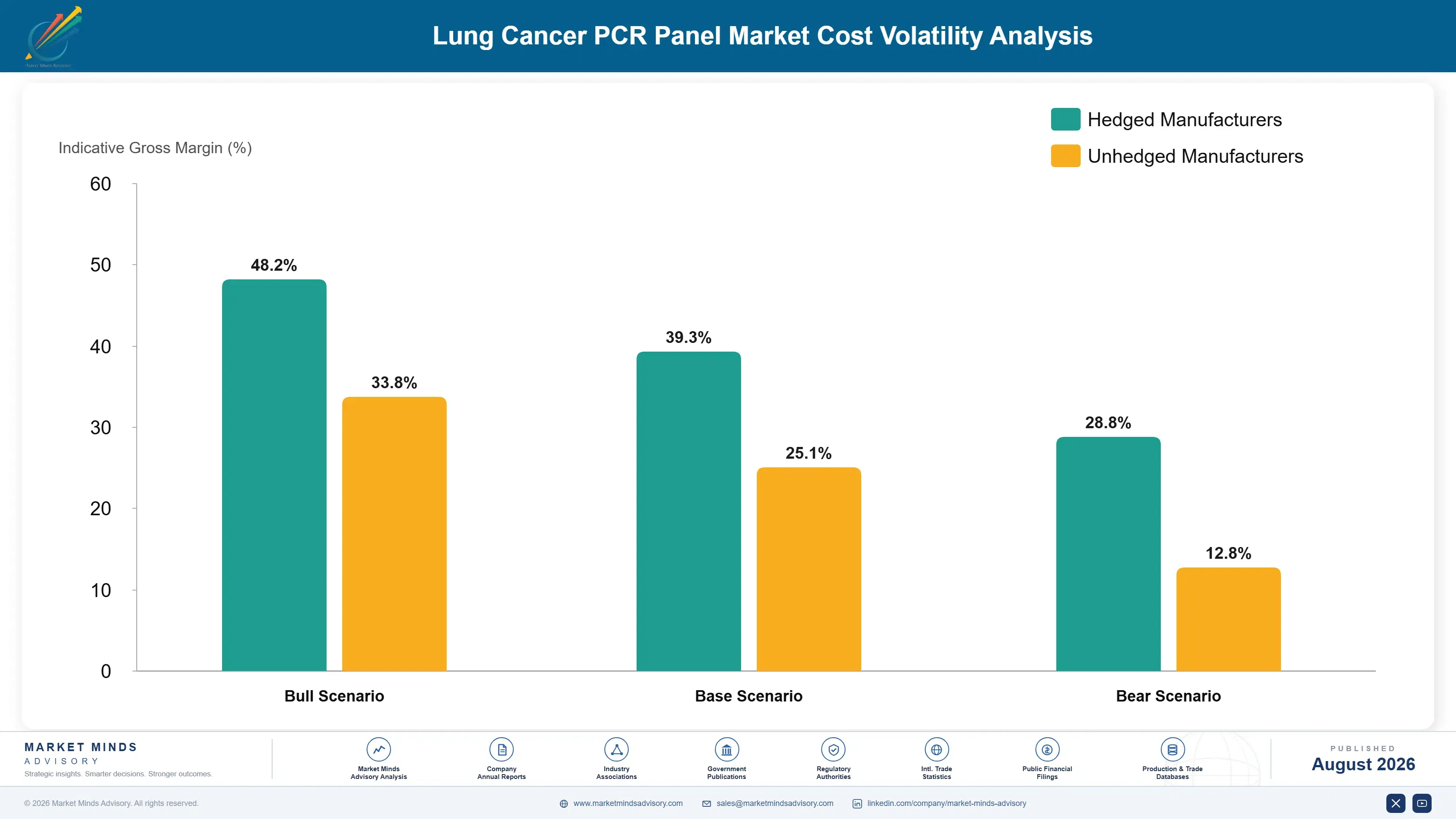
Reagent manufacturing is cheaper than the pricing suggests, and the cost that matters sits elsewhere. Enzymes, oligonucleotide primers and probes, and controls account for roughly 23% of cost of goods, sourced from a concentrated group of specialty biochemical suppliers in the United States, Europe and increasingly China. Clinical validation and companion diagnostic regulatory work absorb far more over a product lifetime than materials ever do.
Enzyme and oligonucleotide supply tightened sharply through 2021 and 2022 as pandemic testing demand consumed capacity, and molecular diagnostics manufacturers across the sector documented allocation constraints and extended lead times in their annual reporting. Capacity has since normalised, but several participants reset supplier arrangements permanently as a result. Cold chain distribution and shelf life management remain persistent cost lines that plate-based competitors and cartridge formats carry very differently.

Exposure varies by regulatory strategy and by manufacturing base. Participants pursuing companion diagnostic approval carry clinical trial costs alongside each drug programme, which is expensive but produces a regulatory position competitors cannot copy quickly. Those selling laboratory-developed or research-grade products avoid that cost and forfeit the position. Chinese manufacturers carry lower production and regulatory costs domestically, and that advantage narrows once export registration and distribution are added.
lung-cancer-pcr-panel-market-cost-volatility-analysis-1787305737958

Dual sourcing of enzymes and oligonucleotides

Pandemic-era allocation demonstrated how concentrated the specialty biochemical supply base is, and single-sourced participants lost production windows they could not recover. Qualifying alternative suppliers requires performance verification across the full assay menu, which is slow and expensive, so most participants completed it only after the interruption had already cost them. Most completed it only after losing production.

Amortise regulatory work across a broader menu

Companion diagnostic clinical work is costly per approval and largely fixed regardless of assay volume. Participants running a broad oncology menu spread the regulatory and quality system overhead across many products, while single-indication participants carry the full weight against one revenue line and struggle to justify the next approval. Breadth is a cost argument here.

Design assays for ambient shipping stability

Cold chain distribution costs and constrains reach into markets without reliable refrigerated logistics, which are precisely the growth geographies. Lyophilised and ambient-stable formulations remove that constraint at some development cost, and they also reduce wastage from excursion events that laboratories in warmer climates report frequently. Growth geographies are precisely where cold chain is least reliable.

Portfolio Architecture for Margin Defence

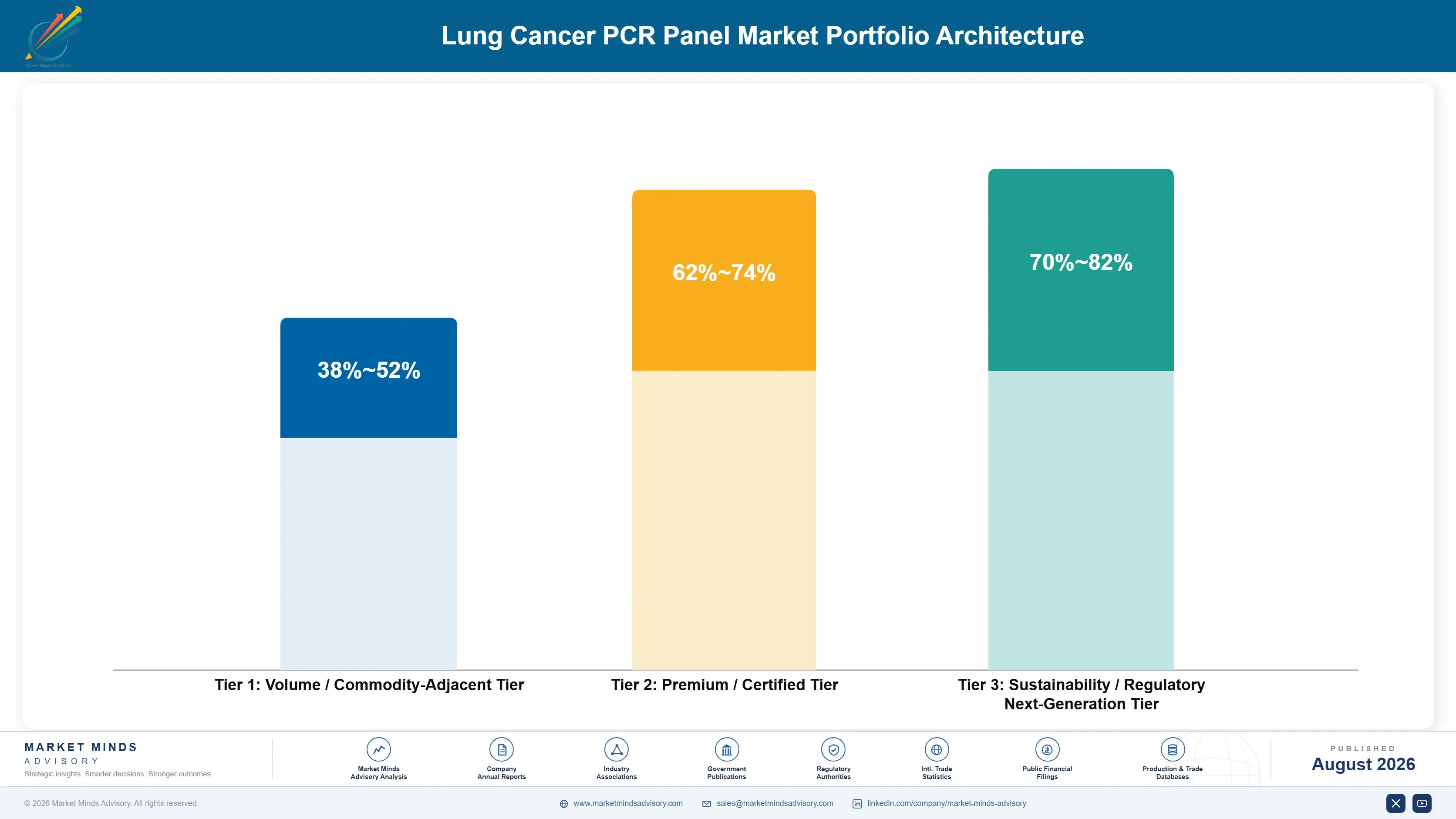
Margin architecture separates by regulatory status rather than by technology. Assays approved as companion diagnostics carry pricing supported by a drug label reference and a competitive position that requires equivalent clinical work to challenge, which holds gross margin above seventy per cent. Laboratory-developed and general research-grade equivalents compete on price against very similar chemistry and clear far less, particularly where tender purchasing dominates.
The tension is between volume geography and value geography. The largest volumes sit in East Asia and South Asia, where pricing is lowest and procurement mechanisms are actively compressing it. The highest prices sit in North America and Western Europe, where sequencing is taking share and volume is shrinking. Nobody has a position that captures both, and portfolio strategy in this category is largely about how to trade between them.

High-value pools concentrate where an assay is required to select a patient for a specific drug. Companion diagnostic status, resistance monitoring during therapy and plasma testing for patients without adequate tissue all sit there, because the alternative is not a cheaper test but no treatment decision at all. Everything competing purely on chemistry and price faces manufacturers whose cost base is different in kind.

Volume / Commodity-Adjacent Tier

Single-gene and hotspot assays sold through laboratory tender and centralised procurement, where chemistry is comparable across suppliers and delivered price decides awards, particularly across Asian and Eastern European markets. Volumes here are declining across developed markets.
Gross Margin: 38-52%

Premium / Certified Tier

Multiplex tissue panels holding companion diagnostic approval tied to specific targeted therapies, protected by regulatory standing that competitors must earn through equivalent clinical work rather than replicate technically. Drug labels frequently name the approved test directly.
Gross Margin: 62-74%

Sustainability / Regulatory / Next-Generation Tier

Plasma circulating tumour DNA panels and rapid cartridge formats reaching patients and settings that tissue-based laboratory testing cannot serve, defended by sample handling capability and platform placement rather than chemistry.
Gross Margin: 70-82%
lung-cancer-pcr-panel-market-portfolio-architecture-1787305738451

Who Orders and What Repeats

Revenue arrives per patient tested rather than as a subscription, and the volume follows targeted therapy access with a short lag. A laboratory adds an assay when a drug for that alteration becomes available and reimbursed in its market, not when the assay itself becomes available. Roughly 71% of advanced patients are tested before first-line therapy begins, and closing that gap is worth more than new assay content.
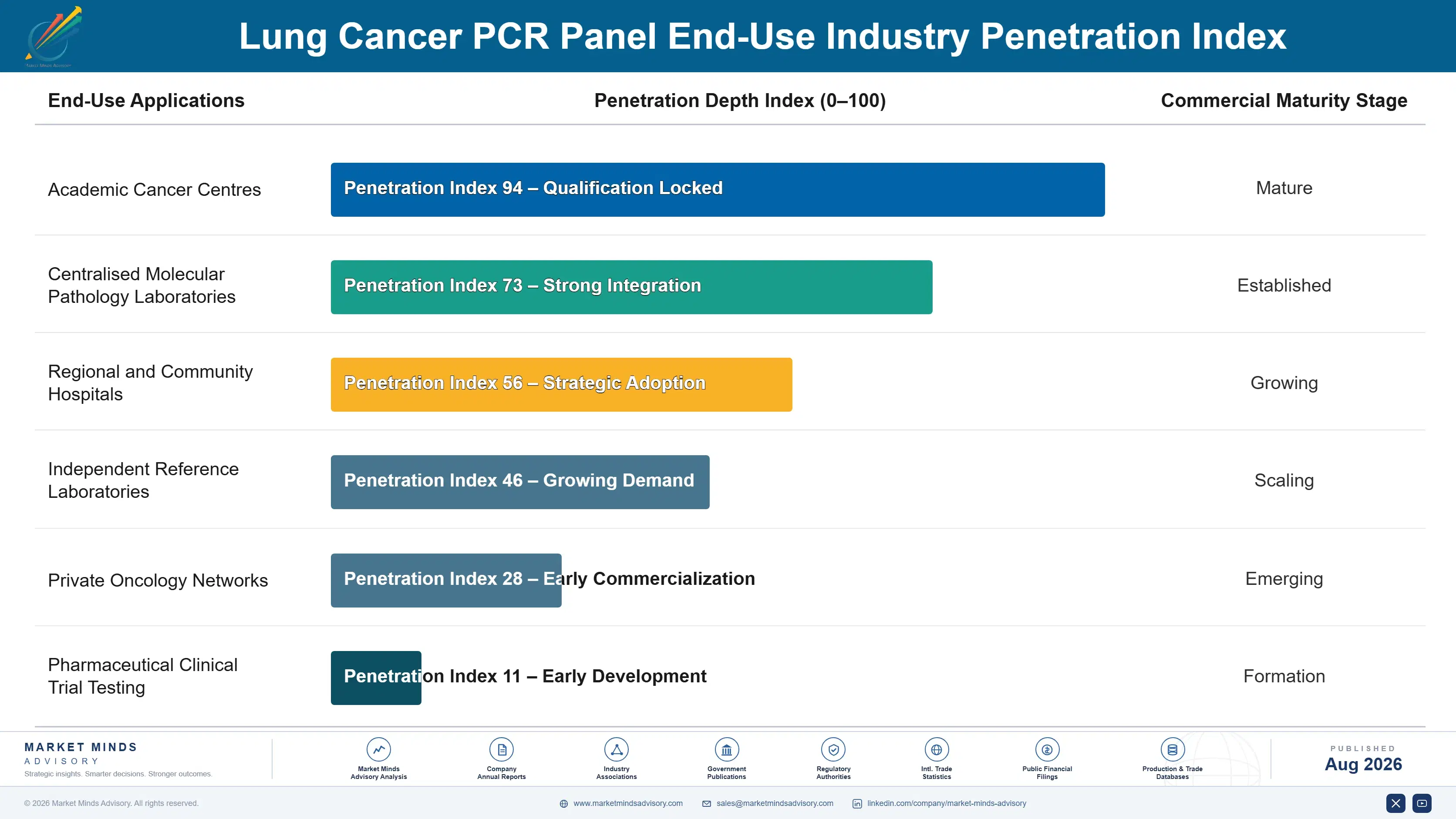
Depth of adoption varies sharply by care setting rather than by geography. Academic cancer centres test comprehensively, run reflex workflows and repeat testing at progression, which produces two or three episodes per patient. Regional hospitals test once at diagnosis. Community oncology practices frequently send specimens away and sometimes proceed to treatment without molecular results at all when turnaround threatens a deteriorating patient. That group is the largest unserved volume here.

Ordering behaviour is also shifting between specialties. Molecular test selection historically sat with pathology, which compares assay content and prefers breadth. Oncologists increasingly specify what they want ordered, weighing turnaround against comprehensiveness for the patient in front of them, and centres where oncology drives selection order targeted assays at materially higher rates. Commercial engagement has not caught up in most organisations.
lung-cancer-pcr-panel-market-end-use-penetration-index-1787305738937

Where Value Actually Sits

These are among the four positions where our research anticipates prominent divergence between winners and laggards over the coming forecast period. Each is grounded in the demand model, the regulatory perimeter, and the announced capacity pipeline.
01 / TURNAROUND ARGUMENT OWNERSHIP

Sell speed to oncology, not content to pathology

A pathologist comparing assays evaluates content alone and will select the broader panel almost every single time, which is a contest targeted assays cannot win on any evidence package. An oncologist weighing a nine-day wait against starting therapy now for a visibly deteriorating patient reaches the opposite conclusion almost routinely. Centres where oncology rather than pathology drives molecular test selection order targeted panels at roughly 35% higher rates, yet most participants still route their entire clinical effort through laboratory stakeholders.
02 / SPECIMEN ADEQUACY POSITIONING

Own the patients whose tissue ran out

Between 18% and 24% of advanced lung cancer cases yield insufficient material for a sequencing panel once pathology has completed all of the diagnostic work, and each of those patients then faces re-biopsy, delay or no molecular testing whatsoever. Targeted assays run on roughly 40 nanograms of nucleic acid and plasma assays require no tissue whatsoever. Building pathology protocols that route inadequate specimens toward the appropriate assay format captures volume that currently disappears from the system entirely, unmeasured and unbilled by anybody.
03 / UNREIMBURSED GEOGRAPHY FOCUS

Grow where sequencing funding will not arrive

Broad molecular profiling is reimbursed in only a minority of health systems worldwide, and everywhere else targeted assays remain the only route to a treatment decision that any payer will actually fund. Those markets are expanding biomarker coverage quickly as targeted therapies reach their formularies, and India compounds at 12.8% on precisely that dynamic. Commercial resource spent defending share against sequencing in funded markets usually earns considerably less than the same resource deployed where no displacement pressure exists at all.
04 / MENU BREADTH DEFENCE

Single-indication positions face both pressures at once

Sequencing displacement compresses volume in the highest-priced markets while volume-based procurement compresses pricing in the largest-volume one, and a participant present only in lung cancer absorbs both of those pressures without any offsetting business elsewhere. Companion diagnostic regulatory work is also largely fixed per approval regardless of eventual assay volume, so a broad oncology menu spreads that overhead in a way a single indication never can. Breadth in this category is a cost structure argument rather than a marketing one.

Engagement Snapshot From the Field

A live engagement with an industry participant carrying material or product regulatory and market exposure ahead of a defining policy shift, showing how our research translates into a defensible multi-year portfolio strategy.
MARKET MINDS ADVISORY · CLIENT ENGAGEMENT SUMMARY
Lung Cancer PCR Panel Producer Strategic Portfolio Review and Transition Roadmap 2026·Investment Scenario on Lung Cancer PCR Panel Exposure Evaluation 2025-26
CLIENT PROFILE
A molecular diagnostics manufacturer with annual revenue near $340 million (client-reported, unverified by MMA), holding a lung cancer targeted panel menu sold across Western Europe and selected export markets. Volume in its two largest European markets had been flat for three years while sequencing adoption advanced, and leadership needed to decide whether to defend those positions or redirect investment toward geographies and formats where displacement was not occurring.
STRATEGIC CHALLENGE
Defending developed market share meant competing against sequencing on comprehensiveness, an argument the company could not win, while redirecting effort meant accepting lower prices in markets where tender purchasing dominates. Leadership also needed to know whether a rapid cartridge format justified the development investment, and which customer setting would actually place the instruments.
MMA APPROACH
We interviewed 44 oncologists and 27 molecular pathologists across seven markets on ordering behaviour, turnaround tolerance and specimen adequacy handling. Reimbursement status for broad sequencing was mapped across 22 countries against targeted therapy availability. We modelled a developed market defence against redirection toward unreimbursed geographies and a cartridge development programme.
KEY FINDINGS
  1. Oncologists reported starting therapy without molecular results in roughly one advanced case in nine when turnaround threatened a deteriorating patient, a scenario pathologists had not identified at all.
  2. Specimen inadequacy affected 18% to 24% of cases across interviewed laboratories and was handled by ad hoc practice rather than protocol in every institution examined.
  3. Sequencing reimbursement existed in only six of the 22 countries mapped, and the remaining sixteen were expanding biomarker testing coverage using targeted assays exclusively.
  4. Community oncology practices would place a cartridge instrument only where menu breadth spanned several tumour types, since lung cancer volume alone could not justify the capital or the maintenance.
CLIENT PROFILE
A molecular diagnostics manufacturer with annual revenue near $340 million (client-reported, unverified by MMA), holding a lung cancer targeted panel menu sold across Western Europe and selected export markets. Volume in its two largest European markets had been flat for three years while sequencing adoption advanced, and leadership needed to decide whether to defend those positions or redirect investment toward geographies and formats where displacement was not occurring.
STRATEGIC CHALLENGE
Defending developed market share meant competing against sequencing on comprehensiveness, an argument the company could not win, while redirecting effort meant accepting lower prices in markets where tender purchasing dominates. Leadership also needed to know whether a rapid cartridge format justified the development investment, and which customer setting would actually place the instruments.
MMA APPROACH
We interviewed 44 oncologists and 27 molecular pathologists across seven markets on ordering behaviour, turnaround tolerance and specimen adequacy handling. Reimbursement status for broad sequencing was mapped across 22 countries against targeted therapy availability. We modelled a developed market defence against redirection toward unreimbursed geographies and a cartridge development programme.
KEY FINDINGS
  1. Oncologists reported starting therapy without molecular results in roughly one advanced case in nine when turnaround threatened a deteriorating patient, a scenario pathologists had not identified at all.
  2. Specimen inadequacy affected 18% to 24% of cases across interviewed laboratories and was handled by ad hoc practice rather than protocol in every institution examined.
  3. Sequencing reimbursement existed in only six of the 22 countries mapped, and the remaining sixteen were expanding biomarker testing coverage using targeted assays exclusively.
  4. Community oncology practices would place a cartridge instrument only where menu breadth spanned several tumour types, since lung cancer volume alone could not justify the capital or the maintenance.
RECOMMENDED STRATEGY
Phase 1: Phase one: redirect commercial resource from the two flat European markets toward unreimbursed geographies where targeted assays face no displacement pressure at all. Phase 2: Phase two: build oncology-facing engagement on turnaround and specimen adequacy, moving the argument away from pathology comparisons the company cannot win. Phase 3: Phase three: develop the cartridge format only alongside a multi-tumour menu, since single-indication placement economics do not support the instrument.
OUTCOME
Redirected commercial effort produced growth above 20% in three unreimbursed markets within the first year (client-reported, unverified by MMA). Oncology-facing engagement raised ordering rates measurably at pilot centres. Cartridge development was rescoped as a multi-tumour programme, which delayed launch but changed the placement economics entirely.

Frequently Asked Questions

Foundational context covering the market sizes, CAGR, scope, country, region and competition that inform every finding below. This section is provided to cover basics and most often pre-purchase conversations, answered from the MMA Primary Research Dataset.

What is the current size of the Lung Cancer PCR Panel Market?

The global market is valued at $1.4 billion in 2025, rising to $1.53 billion in 2026. East Asia holds the largest share at 36%, reflecting EGFR mutation prevalence roughly three times Western rates.

How large will the Lung Cancer PCR Panel Market be by 2036?

MMA forecasts $3.76 billion by 2036, an increase of $2.23 billion over the 2026 base and an expansion multiple of 2.46x. Plasma testing and unreimbursed geographies carry most of that growth.

What is the CAGR for the Lung Cancer PCR Panel Market 2026 to 2036?

The base case compound annual growth rate is 9.4%, with a bull case at 10.6% and a bear case at 8.2%. Historical growth from 2020 to 2025 ran near 8.2% despite sequencing displacement in developed markets.

Which segment is growing fastest?

Liquid biopsy circulating tumour DNA panels compound at 14.1%, a full 1.50x the market rate. Plasma assays reach patients whose biopsy tissue was exhausted during diagnosis, making the volume additive rather than substitutional.

Who are the major companies in the Lung Cancer PCR Panel Market?

Roche Diagnostics, Thermo Fisher Scientific, Amoy Diagnostics, QIAGEN and Bio-Rad Laboratories together hold 56% of revenue from lung cancer targeted assay products. Approved companion diagnostic status rather than chemistry separates them.

Which country is growing fastest?

India compounds at 12.8%, faster than any other country covered, as its private oncology sector expands biomarker testing using targeted assays. Broad sequencing remains unfunded and largely unaffordable for most patients there.

Report Segmentation Architecture

The full report scope spans multiple orthogonal segmentation dimensions, with cross-tabulated demand data provided for each dimension pair. Coverage extends further to regional breakdowns, trend trajectories, and the competitive detail needed to support segment-level decision-making.

By Assay Class

  • Single-Gene and Hotspot PCR Assays
  • Multiplex Tissue PCR Panels
  • Liquid Biopsy ctDNA PCR Panels
  • Rapid Point-of-Care Cartridge Panels
  • Resistance Mutation Monitoring Assays

By End-Use Industry

  • Academic Cancer Centres
  • Centralised Molecular Pathology Laboratories
  • Regional and Community Hospitals
  • Independent Reference Laboratories
  • Private Oncology Networks
  • Pharmaceutical Clinical Trial Testing

By Commercial Dimension

  • Hospital and Laboratory Tender
  • Centralised National Procurement
  • Specialty Distributor Supply
  • Direct Laboratory Contracting
  • Companion Diagnostic Drug Partnerships
  • Export and Registration Markets

By Region

  • East Asia
  • North America
  • Western Europe
  • South Asia and Pacific
  • Latin America
  • Middle East and Africa
  • Eastern Europe

Scope, Methodology, and Coverage

Every figure in this report is reproducible from documented input assumptions. The scope below maps the historical period, the forecast horizon, the segmentation dimensions, and the countries covered, alongside the underlying primary and qualitative methodology.
Historical Period
2020 to 2025
Forecast Period
2026 to 2036
Base Year
2025 (USD billions; MMA Primary Research Dataset, August 2026)
Market Definition
This market comprises polymerase chain reaction based assays detecting actionable genomic alterations in lung cancer, measured at manufacturer revenue across hospital and laboratory tender, centralised national procurement, specialty distributor supply, direct laboratory contracting, companion diagnostic partnerships with pharmaceutical sponsors, and export registration markets. Coverage spans single-gene and hotspot assays targeting individual alterations, multiplex tissue panels interrogating several actionable alterations from one specimen, liquid biopsy circulating tumour DNA panels performed on plasma, rapid cartridge-based panels returning results within an hour at the point of care, and resistance mutation monitoring assays used during therapy. Reagents, kits, controls and assay-specific consumables are included. Next-generation sequencing panels of every configuration, immunohistochemistry and fluorescence in situ hybridisation testing, PD-L1 and other protein expression assays, thermal cycler and nucleic acid extraction instrument hardware sold separately from assays, research-use-only products not intended for clinical decision making, and laboratory information or interpretation software fall outside scope.
Quantitative Units
USD millions (current prices); tests performed by assay class; patients tested before first-line therapy; reflex sequencing rate; average selling price per test; specimen adequacy failure rate; companion diagnostic approvals held
Segmentation Dimensions
By Assay Class; By End-Use Industry; By Commercial Dimension; By Region
Regions Covered
East Asia, North America, Western Europe, South Asia and Pacific, Latin America, Middle East and Africa, Eastern Europe
Countries Covered
China, Japan, South Korea, Taiwan, United States, Canada, Germany, France, Italy, Spain, United Kingdom, Netherlands, Belgium, Sweden, Switzerland, India, Australia, Singapore, Thailand, Malaysia, Indonesia, Brazil, Mexico, Argentina, Chile, Colombia, Saudi Arabia, United Arab Emirates, Israel, Egypt, South Africa, Poland, Czechia, Hungary, Romania, Turkey, and additional markets relevant to molecular oncology analysis
Key Companies Profiled
Roche Diagnostics, Thermo Fisher Scientific, Amoy Diagnostics, QIAGEN, Bio-Rad Laboratories, Agilent Technologies, Abbott, Sysmex, Burning Rock Biotech, Genetron Health, Guardant Health, Biocartis, EntroGen, Sacace Biotechnologies, Daan Gene, BGI Genomics, Illumina, Myriad Genetics, ELITechGroup, Seegene
Quantitative Methodology
Primary survey, n=3,800 respondents, Q4 2025, six countries; demand-side model with trade association cross-validation
Qualitative Methodology
47 expert interviews, Q4 2025; applied to validate demand model assumptions, identify emerging dynamics, and assess competitive positioning
Report Format
PDF and XLSX data workbook (Word format preview document)
Publisher
Market Minds Advisory
Report Code
MMA-2026-HLT-465
Published
August 2026
Contact
sales@marketmindsadvisory.com | www.marketmindsadvisory.com

Purchase the full Lung Cancer PCR Panel Market Report (2026 to 2036).

The full MMA report explains why sequencing has not ended this category and quantifies the three grounds on which targeted assays still hold: turnaround, specimen economy and reimbursement geography. It sizes five assay classes and seven regions to 2036, modelling tests performed, pre-treatment testing rates, reflex sequencing share, pricing by class and specimen adequacy failure separately. Competitive assessment covers twenty participants on one consistent revenue basis. Cost exposure is traced through enzyme supply, regulatory work and cold chain. Four commercial levers and a strategic verdict close the report, grounded in 47 expert interviews and a 3,800-respondent survey.
Five assay classes sized separately through 2036
Sequencing reimbursement status mapped across all covered countries
Specimen adequacy failure rates quantified across interviewed laboratories
Twenty participants assessed on one consistent revenue basis
Mutation prevalence differences modelled against regional testing productivity
Anonymised manufacturer engagement with tested portfolio recommendations

Built For The People Who Decide

From boardroom strategy to bench-side execution, this report is read cover-to-cover by leaders shaping the next decade of their industry, turning demand scenarios, market dynamics and valuation benchmarks into decisions.
CXOs/ Presidents/ VPs/ Managers
M&A and Corporate Development
Strategy Teams and R&D Heads
Procurement and Product Directors
Regulatory and Compliance Leaders
Investor Relations and Equity Analysts