
Market Minds Advisory
Compostable Plastic Packaging Market

Compostable Plastic Packaging Market: Regulatory Displacement of Conventional Film and Rigid Formats

Extended producer responsibility fees and organic waste diversion mandates are forcing brand owners across Europe and North America to qualify certified compostable film and rigid formats faster than testing capacity can currently absorb.

Lead Analyst

Bilal Shaikh

Published

August 2026

Make Smarter Decisions with Customized Research Insights

Request a free sample report and evaluate market opportunities, growth trends, and competitive dynamics relevant to your business needs.

2025 MARKET VALUE$7.2BMarket Size 2025
2036 FORECAST VALUE$23.1BBase Case , 2026 to 2036
CAGR 2026 TO 203611.2 %Bull 12.5% / Bear 9.9%
INCREMENTAL OPPORTUNITY$15.1BNet 10- year value creation
EXPANSION MULTIPLE2.89x2036 value over 2026 base
Strategic Levers
M&A Pipeline
Regional Outlook
Country Rankings
Competitive Intelligence
Segmental Deep-dive
Call-Us : 91 93563 13602

Executive Snapshot and Market Trajectory

Extended producer responsibility fees are quietly repricing conventional flexible packaging across Europe, pushing brand owners toward certified compostable film faster than most converters can currently qualify new supply relationships against, with several major retailers already committing meaningful budget ahead of schedule this fiscal year.
PHA-based resin and bio-based multilayer barrier film are pulling ahead of legacy PLA and starch blends as food-contact and marine-degradability requirements tighten across regulated markets, with East Asia now anchoring the largest share of global production capacity behind China's rapid PBAT and PLA buildout across multiple provincial manufacturing hubs and export terminals serving customers worldwide. Demand is concentrating fastest in food service, grocery, and produce packaging applications this decade and beyond it entirely.
Competitive structure remains genuinely fragmented behind a handful of scaled resin producers, leaving certification timelines and feedstock security as the dominant near-term battlegrounds separating winners from laggards across nearly every served market and buyer category. EU Packaging and Packaging Waste Regulation compliance deadlines are compressing supplier qualification windows across the entire converter base at once, rewarding whoever moves first and punishing hesitation severely this cycle and the next.
Market Definition
The compostable plastic packaging market covers packaging films, rigid containers, and flexible pouches manufactured from certified industrially or home compostable polymers including PLA, PHA, PBAT, PBS, and starch blends. It excludes conventional recyclable plastics, oxo-degradable additives, and non-packaging compostable products such as agricultural mulch film.
Base Year Value
$7.2B in 2025 (MMA Primary Research Dataset, August 2026)
Forecast Period
2026 to 2036, eleven discrete annual values
CAGR
11.2% base case. Bull 12.5%. Bear 9.9%.
Fastest Growth Segment
PHA-Based Compostable Packaging: 15.5% CAGR
Fastest Growth Country
India: 14.5% CAGR
Fastest Growth Region
South Asia and Pacific: 13.2% CAGR
Largest Region
East Asia: 29% of 2025 global value
Market Leaders
NatureWorks LLC, TotalEnergies Corbion, BASF SE, Novamont SpA, Kingfa Sci and Tech Co Ltd. Source: MMA Analysis based on company annual reports and disclosures.
Primary Survey
n=3,800 procurement and R&D decision-makers, Q4 2025, six countries
Methodology
Demand-side build-up, cross-validated against public data, 47 expert interviews

Compostable Plastic Packaging Market Forecast Scenarios

compostable-plastic-packaging-market-size-forecast-scenario-1787301271299
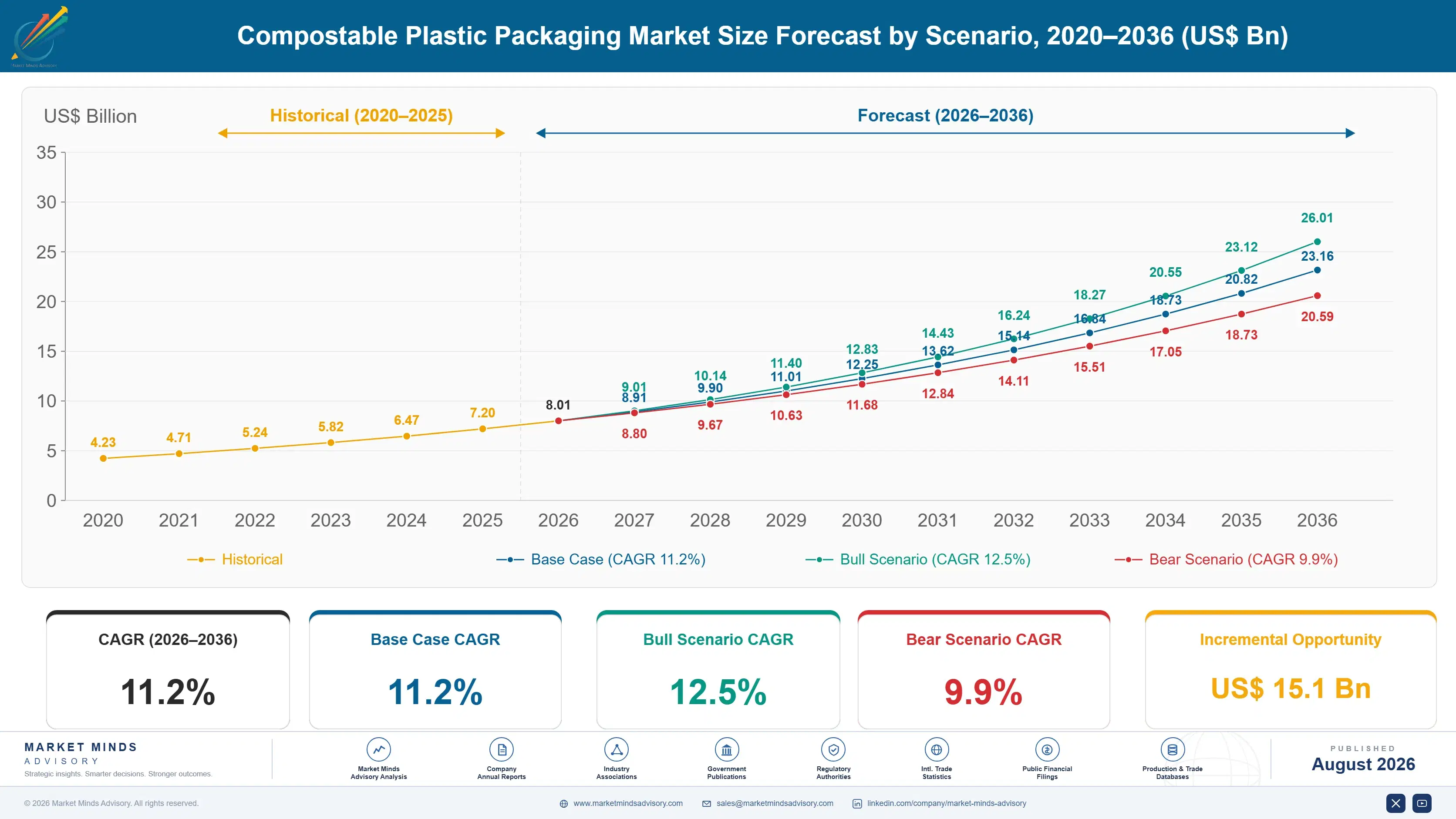
Between 2020 and 2025 the market expanded at a steady 10.1 percent pace as early single-use plastic bans across Europe and select US states created the first genuine commercial-scale demand for certified compostable substitutes beyond niche organic retail channels serving a narrow customer base, with growth accelerating meaningfully in the final two years of the period as regulation broadened.
The base case rests on three mechanisms sustaining above-historical growth through 2036: EU Packaging and Packaging Waste Regulation compliance deadlines forcing converter qualification across every member state, continued PHA and PBAT capacity buildout gradually lowering resin cost premiums toward parity with conventional film, and expanding municipal organic waste collection infrastructure that makes industrial composting logistically viable at scale across a widening share of served metropolitan populations worldwide each passing year of the forecast.
A bull scenario depends on municipal composting infrastructure scaling faster than currently permitted, opening mainstream grocery and food service adoption well ahead of forecast timelines across every major regulated market. The bear case centers on certification bottlenecks and feedstock cost spikes that stall converter qualification, pushing cautious brand owners back toward recyclable-format compromises they had already begun phasing out entirely.

Certification Bottlenecks and the Compostability Premium

Three forces are converging on this category at once. European regulation is compressing converter qualification timelines into months rather than years, PHA and bio-based multilayer film are opening food-contact applications legacy PLA could never reliably serve, and Chinese capacity expansion is simultaneously lowering resin cost while intensifying price competition across nearly every export market tracked closely by industry participants and analysts alike this cycle.
MARKET CONCENTRATIONCR5 38%moderately fragmented behind five scaled resin producers today
AVERAGE SELLING PRICE$3.80 per kg resinpremium reflects certification cost and feedstock scarcity pressure
TOP PRODUCING COUNTRY SHAREChina 31% of capacityanchored by several large scale PLA and PBAT plants
CAPACITY UTILISATION71% averageconstrained by certification queues and long-term feedstock contracts
TRADE INTENSITY39% exportedresin flows heavily toward regulated European converters and buyers
FEEDSTOCK COST SHARE52% of COGScorn dextrose and lactic acid pricing drives margin swings
Commercially, the market splits between commodity-grade PLA film competing mostly on unit price and certified PHA and multilayer barrier grades commanding a genuine specification premium from brand owners who cannot risk compostability certification failure once a product reaches retail shelves at scale nationwide. Converters increasingly qualify multiple resin sources simultaneously to manage growing supply risk across their entire portfolio of formats, applications, and geographies served.
The next decade will be defined by how fast municipal composting infrastructure scales relative to packaging mandates, and by whether PHA cost curves fall quickly enough to displace PLA as the default certified resin across most mainstream food packaging formats sold today across grocery, food service, and cosmetics retail channels alike across every region this report tracks in detail.
"Every brand owner we interview says the same thing: certification lead time, not resin price, is now the binding constraint on their compostable packaging rollout."
Director, Packaging and Materials Practice · MMA Packaging / Bio-Based and Compo

Market Trends

EU Packaging and Packaging Waste Regulation Compliance Deadlines

The recast EU Packaging and Packaging Waste Regulation sets binding recyclability and compostability criteria that take effect in phases through 2030, requiring certified compostable status for specific formats including tea bags, produce stickers, coffee capsules, and lightweight carrier bags across all twenty seven member states simultaneously and without exception for smaller domestic converters. Converters serving European retailers must requalify existing supply chains against EN 13432 industrial compostability standards well ahead of each enforcement milestone, creating a compressed certification bottleneck that consistently favors resin producers with established third-party testing relationships and capacity already reserved for compliant grades across the region.
Market Impact: Covers 60 jurisdictions and climbin
PHA Capacity Buildout Beyond Pilot Scale

Polyhydroxyalkanoate producers are commissioning genuinely commercial-scale fermentation capacity for the first time, moving the resin beyond a decade of pilot-plant economics into direct competition with PLA on cost for food-contact and marine-sensitive applications across multiple end markets. Multiple producers across the United States, China, and Europe have announced capacity additions exceeding 150,000 tonnes combined through 2028, a threshold industry participants consider necessary to bring per-kilogram pricing within reach of mainstream flexible packaging budgets rather than remaining confined to premium niche applications only the largest brand owners could previously afford to absorb at scale.
Market Impact: Reaches 190 million residents newly

Market Opportunities and Growth Drivers

Single-Use Plastic Bans Now Expanding Well Beyond Bags

More than sixty national and sub-national jurisdictions have extended single-use plastic restrictions beyond carrier bags into cutlery, straws, produce packaging, and food service containers since 2023, each new restriction creating a discrete qualification event for compostable substitutes across affected supply chains. India's expanded ban on identified single-use plastic items, covering items down to specified micron thresholds, has forced rapid domestic capacity investment as importers face customs delays and quality inconsistency at the border. The cumulative effect is a steadily widening set of format categories where compostable packaging is the only currently compliant alternative available to converters and brand owners alike.
Market Impact: Delays entry by 9 months

Organic Waste Collection Infrastructure Now Expands

Municipal organic waste collection programmes have expanded substantially across Western Europe and parts of North America since 2022, giving industrially compostable packaging a genuine end-of-life pathway rather than the theoretical one regulators previously struggled to justify mandating without supporting infrastructure already built out. France's generalized food waste sorting obligation and similar programmes across Italy and several US states now route certified compostable packaging directly into industrial composting streams rather than landfill or incineration facilities lacking proper sorting equipment. This infrastructure buildout removes the single biggest practical objection brand owners historically raised against switching packaging formats entirely.
Market Impact: Raises COGS by 18 percent

Market Restraints and Challenges

Certification Backlogs Delaying Market Entry Broadly

Third-party compostability certification bodies including TUV Austria and BPI are facing application backlogs stretching six to nine months as converter demand for EN 13432 and ASTM D6400 testing has outpaced laboratory capacity, delaying market entry for otherwise fully qualified products. The root cause is chronic underinvestment in accredited testing infrastructure relative to the pace of regulatory-driven demand, since certification bodies operate on multi-year capital planning cycles that cannot flex quickly to policy-driven demand spikes arriving with little advance warning. Several producers are now pursuing pre-certification partnerships to mitigate the delay, while regional bodies expand accreditation capacity gradually.
Market Impact: Requalifies 2.4 million tonnes year

Feedstock Cost Volatility Tied to Agricultural Cycles

PLA and PHA production remains heavily dependent on corn dextrose and sugarcane-derived feedstocks, exposing resin producers to agricultural commodity price swings that conventional petrochemical-based plastics simply do not experience to the same degree or frequency. The underlying cause is limited feedstock diversification across the industry, with most large-scale capacity still concentrated on a narrow set of first-generation crop inputs rather than lignocellulosic or waste-stream alternatives that remain commercially unproven at scale. Producers are increasingly exploring second-generation feedstocks including agricultural residue and food waste streams as a mitigation pathway, though conversion economics remain unproven at the volumes converters need.
Market Impact: Adds 150000 tonnes capacity soon
3 additional market trends, 3 additional growth drivers, and 4 additional restraints and challenges are covered in the full report. Contact sales@marketmindsadvisory.com to access the complete intelligence.

Segment CAGR and Growth Architecture

Segmentation follows polymer chemistry and feedstock type, the classification converters and certification bodies both use to qualify new supply, since compostability performance, certification pathway, and overall cost structure differ fundamentally by resin family rather than by downstream application format, end market, or distribution channel ultimately served across the wider economy and its many buyer segments.
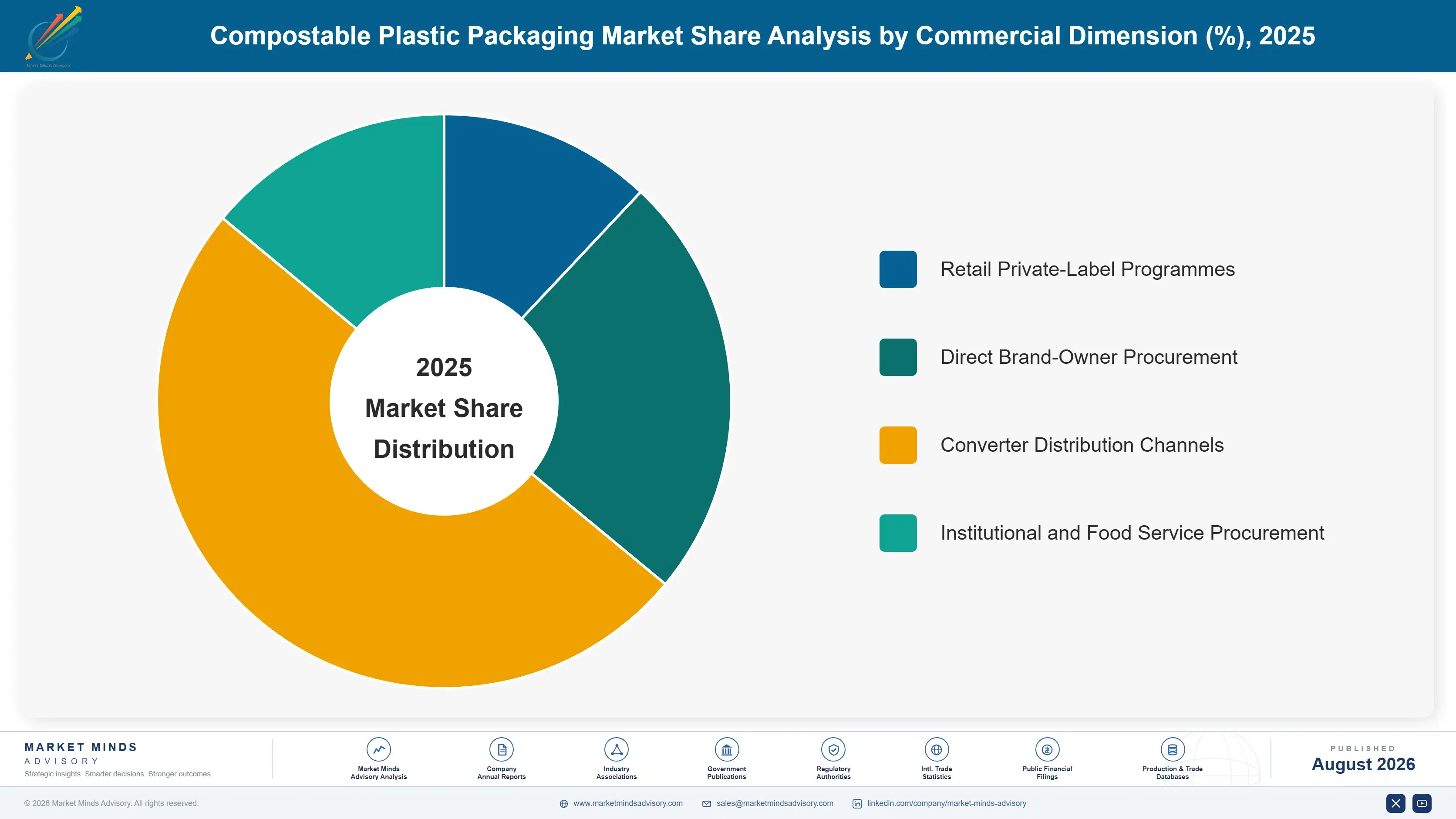
compostable-plastic-packaging-market-market-share-analysis-1787301271873

PHA-Based Compostable Packaging

Polyhydroxyalkanoate resin is scaling past a decade of pilot-plant economics into genuine commercial competitiveness, driven by marine-degradability performance that PLA cannot match and food-contact approval across a widening set of jurisdictions worldwide. Fermentation-based production using bacterial cultures converts sugar or waste-stream feedstocks directly into polymer, avoiding several processing steps PLA requires along its longer production pathway. Brand owners in cosmetics packaging and food service are qualifying PHA specifically for applications where accidental marine or freshwater leakage carries meaningful reputational risk, willingly paying a substantial premium over PLA for that assurance and certification depth. Capacity remains concentrated among a small number of producers, keeping supply tight and pricing elevated even as demand accelerates across food service, cosmetics, and agricultural applications.
CAGR 15.5%

Bio-Based Multilayer Barrier Film

Multilayer film combining compostable polymers with bio-based barrier coatings is opening food-contact applications that single-resin PLA or starch blends could never reliably serve, particularly for moisture-sensitive and oxygen-sensitive products like fresh produce, baked goods, and prepared meals. Engineering these laminates to remain fully industrially compostable while matching conventional multilayer barrier performance has required years of formulation work, and several producers have only recently cleared certification for genuinely commercial-scale production runs at meaningful volume. Food service and grocery private-label programmes are the fastest-adopting channel, since these buyers face the most direct regulatory pressure to eliminate non-compostable flexible packaging formats currently in wide daily circulation across most major retail chains operating today across the region.
CAGR 13.8%
Full segment breakdown across 6 segments available in the complete report.

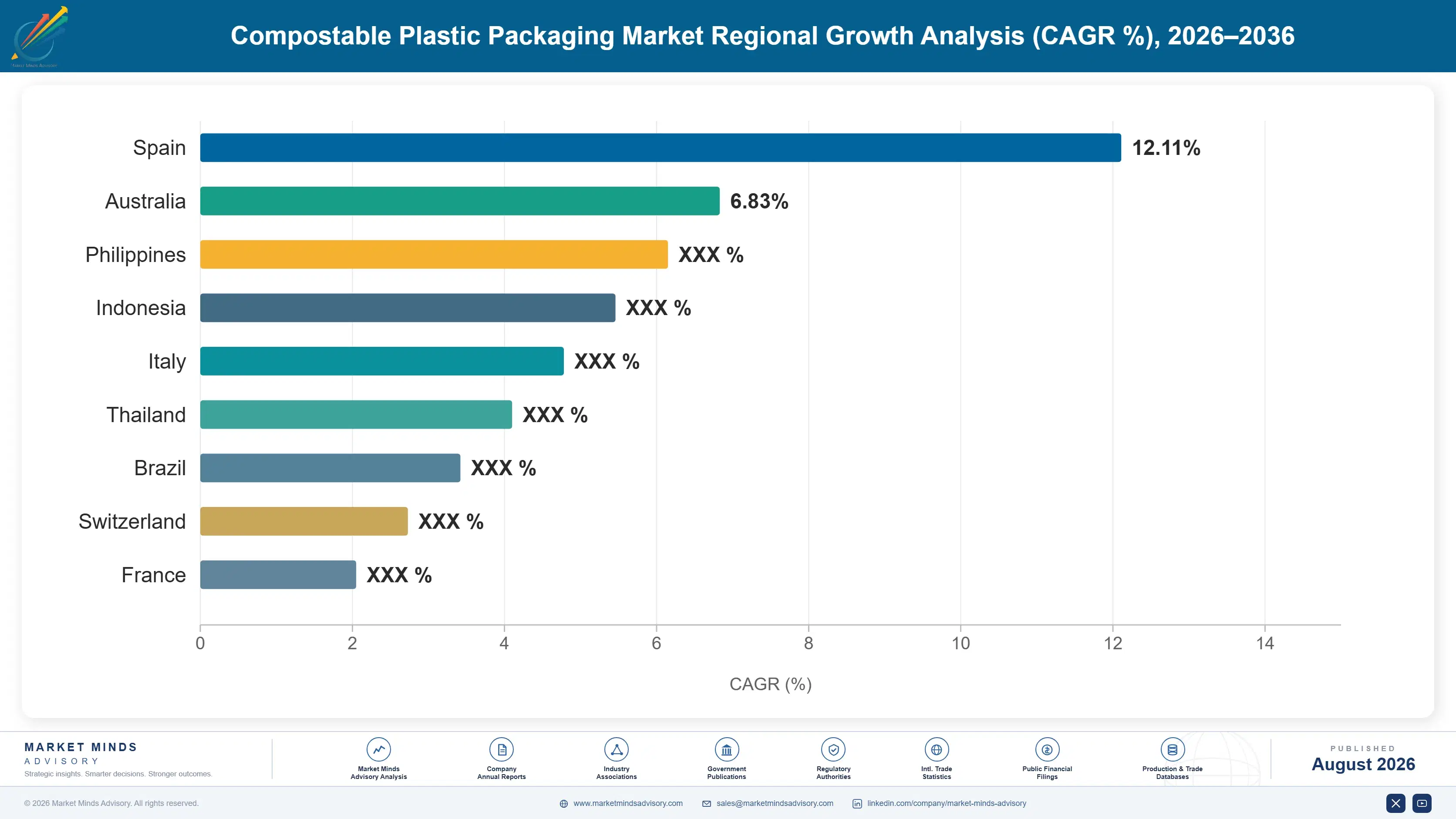
Regional Architecture and Country Demand Map

East Asia leads on production capacity concentration, Western Europe leads on regulatory-driven adoption intensity, and North America follows a slower but steadily broadening state-level mandate pathway across the decade, with the remaining four regions all growing from smaller bases at a faster relative pace overall.

North America

State-level organic waste bans in California, Washington, and Vermont are the principal demand driver in this region, requiring food service operators and grocers in covered jurisdictions to source certified compostable packaging for direct co-collection with food scraps at municipal facilities. Corporate sustainability commitments among major quick-service restaurant chains add a second demand layer entirely independent of regulation, as several large operators have pledged full transition timelines for take-out packaging regardless of which state mandate coverage applies to their specific locations. Domestic PHA and PLA capacity has expanded meaningfully since 2023, gradually reducing historical reliance on imported resin, though certification backlog remains the binding constraint across most regional converters currently attempting to qualify new supply relationships this cycle.
Share: 23% | CAGR: 10.8% (2026 to 2036)

Western Europe

The EU Packaging and Packaging Waste Regulation is the dominant regional force here, mandating compostable status for specific lightweight and food-contact formats across all member states on a phased enforcement schedule running through 2030 without meaningful exception for smaller domestic converters. Italy's decade-old mandate requiring compostable bags for organic waste collection created the region's earliest mature market and remains its highest per-capita consumption base today by a wide margin over every neighboring country. Germany and France are following with expanded municipal composting infrastructure that gives certified packaging a genuine end-of-life pathway, while Nordic markets lead on premium multilayer barrier film adoption among grocery private-label programmes across the wider region and its many affluent urban centers today.
Share: 24% | CAGR: 9.8% (2026 to 2036)
Regional intelligence for 5 additional markets available in the complete report: East Asia, South Asia and Pacific, Latin America, Middle East and Africa, Eastern Europe. Contact sales@marketmindsadvisory.com.
compostable-plastic-packaging-market-country-cagr-analysis-1787301272385

Certification Speed and Feedstock Security

Converters and resin producers extract the most value not from resin chemistry alone but from how fast they can qualify new formats and secure feedstock against agricultural price cycles that conventional plastics never have to face at any point along their much longer and more established global supply chain network of contracted vendors and long-term partners.

Reserved Pre-Certification Testing Capacity Ahead of Deadlines

Resin producers and converters are forming direct partnerships with accredited testing bodies to reserve laboratory capacity years in advance, cutting effective certification lead time from 9 months to as little as 10 weeks for participating supply chains across the category. This matters increasingly as EU Packaging and Packaging Waste Regulation deadlines compress the qualification window available to converters serving multiple national markets at the same time. Producers who secure reserved testing slots gain first-mover access to newly regulated format categories well ahead of competitors still queued behind the standard application backlog affecting most of the industry today across the region.
Market Impact: Cuts certification lead time by rou

Second-Generation Feedstock Sourcing to Reduce Exposure

Shifting a portion of PLA and PHA production toward agricultural residue and food waste-derived feedstocks reduces exposure to corn and sugarcane price cycles that currently drive over half of total resin production cost across the industry. Early movers piloting these second-generation feedstock pathways report meaningful cost stabilization even during periods when first-generation crop prices spiked more than 20 percent year over year across major growing regions. The economics remain unproven at full commercial scale, but producers securing long-term waste-stream supply agreements now are positioning for a durable cost advantage once conversion technology matures further across the wider industry landscape ahead.
Market Impact: Stabilizes feedstock cost within a

Multilayer Barrier Film Premium Pricing Capture

Producers who successfully certify bio-based multilayer barrier film for food-contact applications command pricing 30 to 40 percent above commodity PLA film, reflecting both the engineering difficulty of matching conventional barrier performance and the narrower set of qualified suppliers currently able to deliver it reliably at scale. Grocery private-label and food service buyers facing the most direct regulatory pressure are the fastest channel to convert, since they cannot risk certification failure once a product reaches retail shelves. This premium tier is where the category's genuine margin pool concentrates today, well ahead of commodity film.
Market Impact: Commands a 35 percent pricing premi

Municipal Composting Partnerships for Verified Compostability

Packaging producers partnering directly with municipal composting operators to guarantee end-of-life processing capacity are differentiating on a dimension regulation alone cannot solve: proof that certified compostable packaging actually completes its intended lifecycle at meaningful scale across served markets. These partnerships give brand owners defensible sustainability claims backed by verified processing volume rather than certification paperwork alone, a distinction increasingly scrutinized by regulators pursuing greenwashing enforcement across multiple jurisdictions simultaneously this year. Producers with established municipal relationships are winning multi-year supply contracts specifically because they can demonstrate closed-loop performance across more than 12 partner cities already operating successfully today.
Market Impact: Secures multi-year contracts across

Who Controls the Margin Pool

Competition sits at a moderately fragmented 38 percent five-firm share, with NatureWorks and TotalEnergies Corbion holding the clearest scale advantage in PLA and PBAT resin production while a long tail of regional PHA specialists and smaller converters compete mainly on certification speed rather than volume alone.
Current competitive activity concentrates on three dimensions: capacity expansion to meet EU Packaging and Packaging Waste Regulation demand, certification partnership formation to shorten qualification timelines meaningfully, and feedstock security secured through long-term agricultural supply agreements spanning multiple growing regions. Several mid-sized producers are also pursuing multilayer barrier film development specifically to capture food-contact premium pricing ahead of larger incumbents still focused on commodity volume.

Emerging pressure comes from Chinese PBAT and PLA producers scaling domestic capacity fast enough to compress export pricing globally across nearly every market, and from PHA specialists whose fermentation-based production could displace incumbent PLA leaders if cost curves fall as currently projected. Rankings among the top five are likely to shift meaningfully within three years as PHA capacity commercializes at scale across several producers simultaneously worldwide, reshaping the competitive order investors have grown used to.
compostable-plastic-packaging-market-company-positioning-matrix-1787301272908

Competitive Moat and Risk Dimensions

NATUREWORKS LLC

Moat: Ingeo PLA Production Scale

Decades of integrated corn-to-polymer process refinement give NatureWorks a cost and quality position few PLA competitors can realistically match, reinforced by long-standing brand-owner relationships built through its Ingeo resin platform across food service and rigid packaging applications sold globally across many national markets and retail formats today.
NATUREWORKS LLC

Risk: Single Feedstock Corn Exposure

Heavy reliance on corn dextrose feedstock ties cost structure directly to US agricultural commodity cycles, leaving margins exposed during years when crop prices spike well above historical averages regardless of downstream packaging demand strength or converter order volume booked that particular quarter across most served regions and channels.
TOTALENERGIES CORBION

Moat: Joint Venture Capital Backing

Backing from TotalEnergies' balance sheet combined with Corbion's decades of lactic acid expertise enables continued PLA capacity expansion at a pace few standalone bioplastics producers could realistically self-fund, particularly across new production facilities located well outside its established European manufacturing base and existing supply network.
TOTALENERGIES CORBION

Risk: Parent Capital Allocation Conflict

TotalEnergies' core petrochemical business creates ongoing tension over capital allocation priorities, since bioplastics scale-up competes for investment against the parent company's much larger conventional energy and chemicals operations across every annual budget cycle the group reviews closely with shareholders and board members before final sign-off.

Players Tracked

Prominent Players

NatureWorks LLC
TotalEnergies Corbion
BASF SE
Novamont SpA
Kingfa Sci and Tech Co Ltd

Other Key Players

Biome Bioplastics Ltd
Green Dot Bioplastics Inc
FKuR Kunststoff GmbH
Plantic Technologies Ltd
Danimer Scientific Inc
Futerro SA
Synbra Technology BV
Hisun Biomaterials Co Ltd
BioBag International AS
Cardia Bioplastics Ltd
Mitsubishi Chemical Corporation
Eastman Chemical Company
Braskem SA
Tianan Biologic Materials Co Ltd
Full Cycle Bioplastics Inc

Recent Developments

MARCH 2025

NatureWorks Confirms Nebraska Capacity Expansion

NatureWorks announced a multi-year expansion of its Blair, Nebraska Ingeo PLA facility, adding fermentation and polymerization capacity to meet growing food service and rigid packaging demand across North American and export markets simultaneously. The expansion follows several years of utilisation running consistently above eighty percent at the existing facility.
Signal: Signals an established incumbent scaling c
SEPTEMBER 2025

TotalEnergies Corbion Commissions Thailand PLA Facility

TotalEnergies Corbion brought online additional PLA polymerization capacity at its Rayong, Thailand facility, expanding regional supply for Asian food packaging converters and reducing lead times for customers previously served primarily from European production sites. The facility draws heavily on regional sugarcane feedstock supply chains located nearby.
Signal: Confirms that East Asia is quickly becomin
JANUARY 2026

Novamont Signs Multi-Year European Retailer Supply Agreement

Novamont signed a multi-year supply agreement with a major European grocery retailer to provide certified compostable produce bags and multilayer film across the retailer's private-label packaging programme, covering several thousand stores nationwide across the country served. The agreement includes dedicated capacity reservation terms through 2029.
Signal: Shows retailer-level demand steadily conso

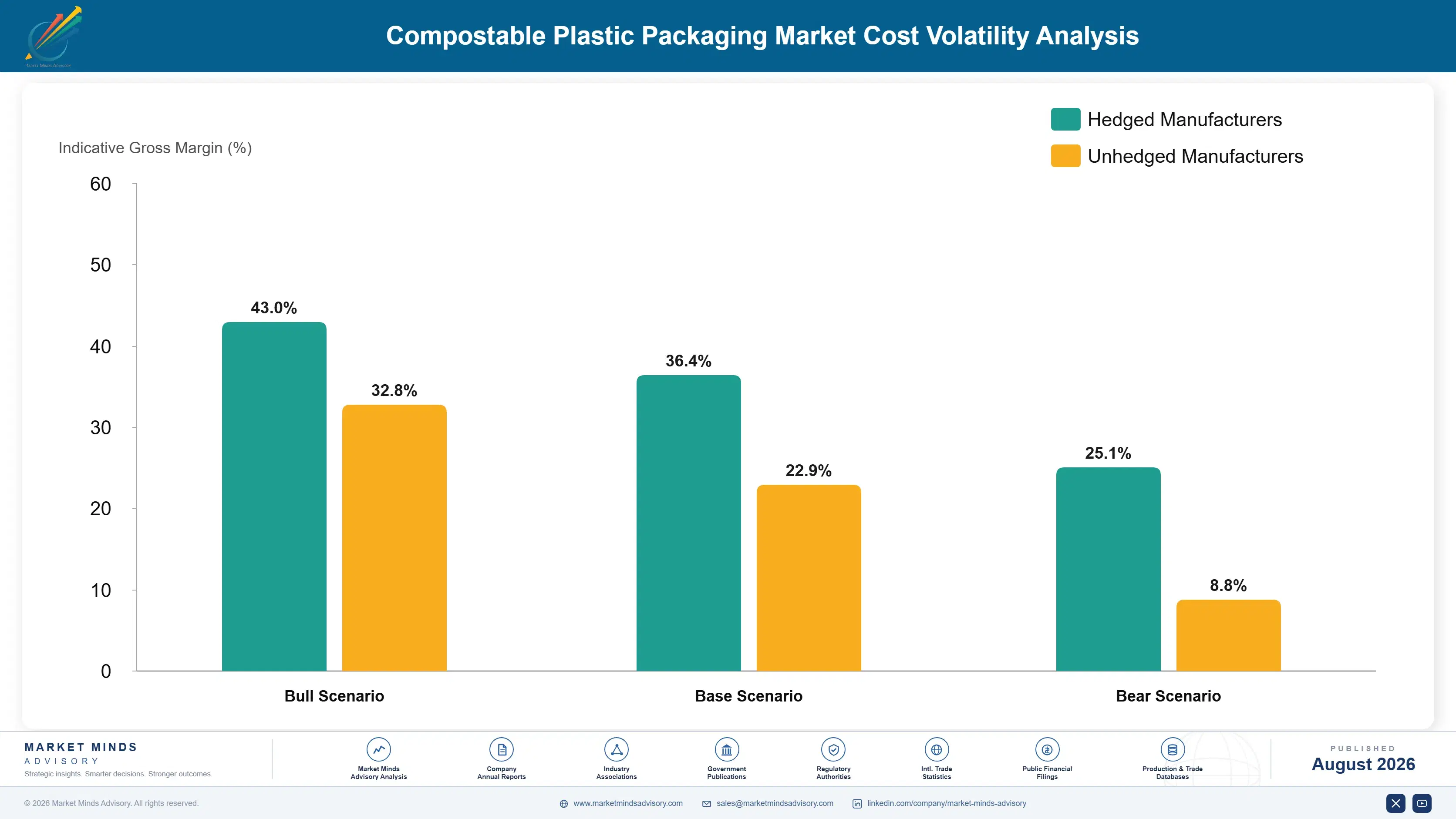
Feedstock and Certification Cost Exposure

Corn dextrose and sugarcane-derived lactic acid together represent roughly 52 percent of resin production cost, sourced predominantly from the US Midwest corn belt and from Southeast Asian and Brazilian sugarcane growing regions respectively. Certification and third-party testing fees add a smaller but steadily rising cost layer as regulatory scope continues widening across additional format categories each year.
US corn prices rose sharply during the 2022 to 2023 growing season disruption, with USDA data showing season-average prices climbing more than 15 percent year over year, directly compressing PLA producer margins during a period when converter demand was simultaneously accelerating due to early European regulatory deadlines taking effect across multiple format categories at once and without much advance warning to smaller producers operating on thinner reserves.

Smaller regional converters carry disproportionate feedstock cost exposure since they lack the long-term supply contracts larger producers like NatureWorks and TotalEnergies Corbion have already secured, forcing them to purchase resin at spot pricing during volatility spikes that larger rivals can simply absorb. This competitive disadvantage is most acute among converters serving price-sensitive private-label programmes that cannot easily pass cost increases through to retail customers without losing shelf space.
compostable-plastic-packaging-market-cost-volatility-analysis-1787301273103

Long-Term Agricultural Supply Contracts

Locking multi-year feedstock pricing directly with agricultural cooperatives reduces exposure to seasonal spot market volatility significantly, a strategy the largest resin producers have used for years while smaller converters are only now beginning to adopt through newly formed shared purchasing consortiums organized across several regional markets simultaneously this year and next as adoption spreads.

Second-Generation Waste Feedstock Piloting

Several producers are piloting agricultural residue and food waste-derived feedstock streams specifically to reduce dependency on corn and sugarcane pricing cycles, though commercial-scale economics remain unproven at the volumes major converters currently require across most served markets today across the wider industry landscape this cycle and well into the next several years still ahead of the category.

Regional Feedstock Sourcing Diversification

Sourcing lactic acid from multiple sugarcane-growing regions simultaneously, rather than concentrating purchases in a single country or supplier relationship, reduces exposure to any single harvest disruption or export policy change affecting overall feedstock availability and pricing stability across the entire supplier base each growing season worldwide, year after year without fail or major interruption.

Portfolio Architecture for Margin Defence

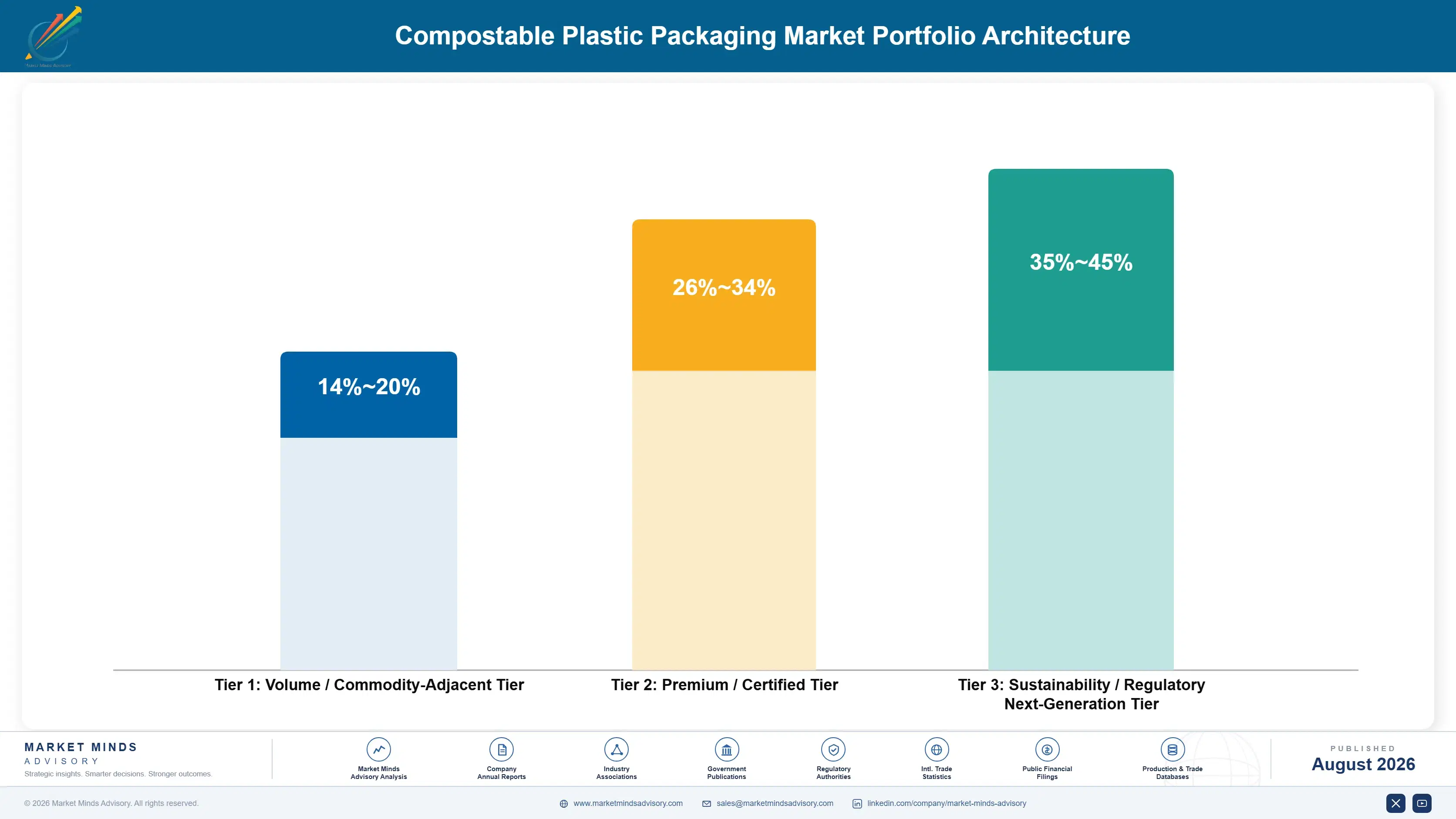
The category splits across three tiers with meaningfully different margin economics behind each one. Commodity PLA film competes mostly on unit price with thin gross margins, certified PHA and multilayer barrier grades command a substantial premium reflecting engineering and certification difficulty, and next-generation formats built on second-generation feedstocks remain margin-accretive but volume-constrained for now across most markets and buyer categories tracked in this report and its under
The volume versus premium tension is sharpest in food service packaging, where large chains want commodity pricing at certified-compostable performance levels, a combination current cost curves cannot yet deliver without a producer subsidy or long-term contract commitment absorbing the difference somewhere along the chain between resin producer and final retail buyer facing consumer-driven price sensitivity every single day of the year.

High-value margin pools concentrate in multilayer barrier film and PHA-based cosmetics and food-contact packaging, where certification scarcity and marine-degradability performance justify premium pricing few competitors can currently match at comparable quality, consistency, and volume across the wider category this year and likely for several more years to come as capacity slowly catches up with qualified demand.

Volume / Commodity-Adjacent Tier

Commodity PLA and starch-blend film sold primarily on unit price into cost-sensitive food service and retail bag applications with limited brand differentiation available across most channels served today by converters large and small.
Gross Margin: 14-20%

Premium / Certified Tier

Certified multilayer barrier film and specialty PBAT blends serving food-contact and grocery private-label programmes that require verified compostability performance and full third-party testing documentation before qualification proceeds at any retailer.
Gross Margin: 26-34%

Sustainability / Regulatory / Next-Generation Tier

PHA-based and second-generation feedstock formats serving marine-sensitive and premium cosmetics applications where certification scarcity supports the strongest available pricing anywhere in the category today, across every region tracked and every buyer segment served.
Gross Margin: 35-45%
compostable-plastic-packaging-market-portfolio-architecture-1787301273597

Regulatory Renewal and Format Stickiness

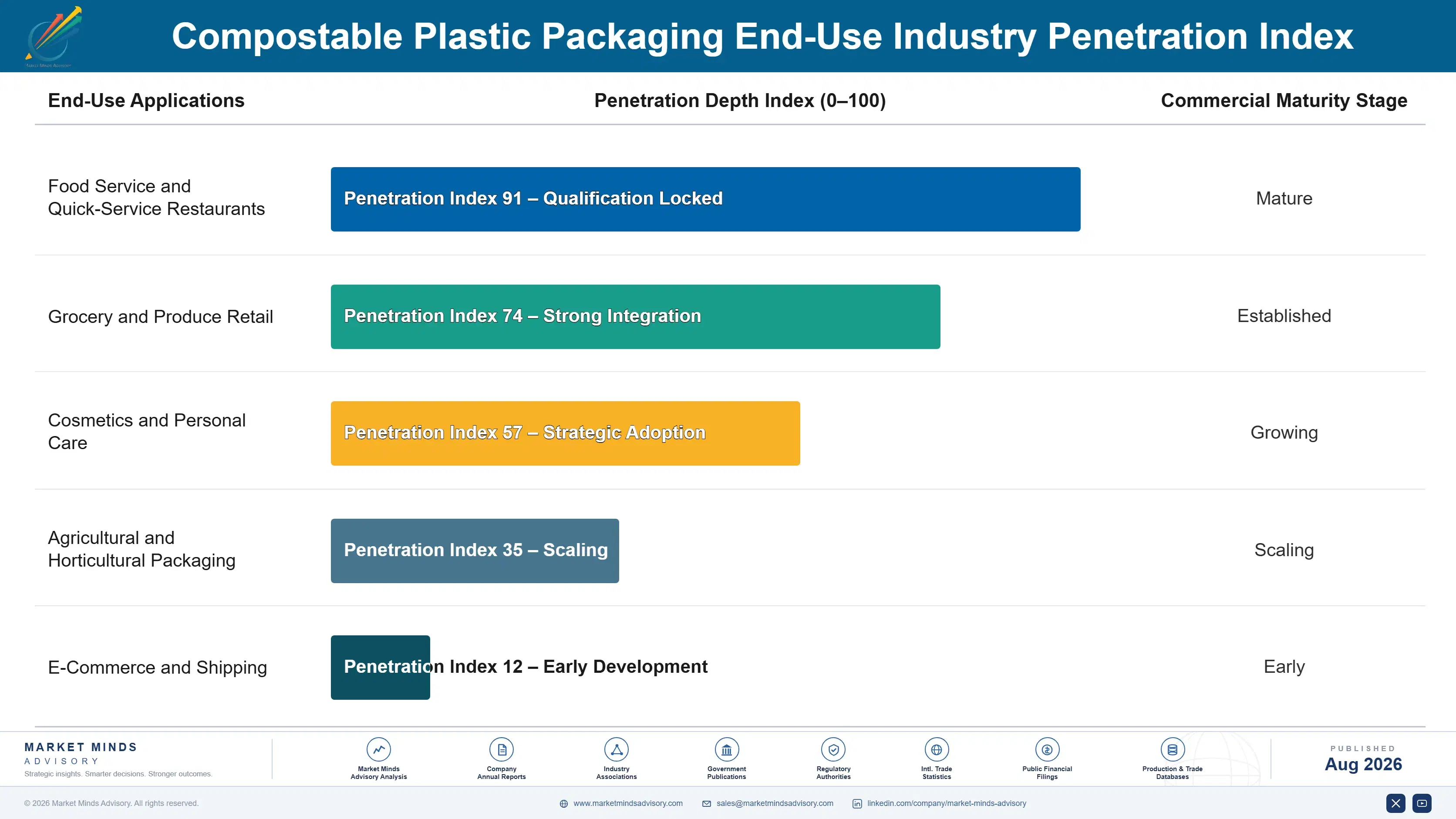
Demand behaves less like a discretionary purchase and more like a compliance annuity once a converter qualifies a certified format against a specific retailer or regulatory requirement, since requalification costs and lengthy certification lead times discourage frequent supplier switching once a working relationship is properly established between the two parties involved in the underlying supply contract and its renewal terms.
Adoption depth varies sharply by vertical across the category, and the gap is widening rather than closing over time. Food service and grocery private-label programmes have moved furthest, driven by direct regulatory exposure, while industrial and e-commerce shipping packaging remains largely unconverted since compostability offers less clear practical value where products travel long distances before final disposal at their eventual destination market far from the point of sale.

A generational shift is underway among procurement buyers themselves, as sustainability officers with dedicated compostable packaging mandates increasingly hold direct budget authority that previously sat with cost-focused procurement teams answering only to unit price targets set by finance leadership each fiscal year across the organization, a change reshaping how supplier contracts get negotiated and renewed going forward.
compostable-plastic-packaging-market-end-use-penetration-index-1787301274085

Where the Category Is Actually Heading

These are among the four positions where our research anticipates prominent divergence between winners and laggards over the coming forecast period. Each is grounded in the demand model, the regulatory perimeter, and the announced capacity pipeline.
01 / CAPACITY INVESTMENT POSITIONING

Back PHA and multilayer film capacity ahead of commodity PLA expansion

Commodity PLA capacity is expanding fastest in China, compressing pricing for producers without a differentiated grade to fall back on when margins tighten unexpectedly. PHA and certified multilayer barrier film face a genuine supply shortage relative to qualified demand through at least 2029, according to converter surveys conducted this year across multiple regions. Producers who commit capital to these higher-value grades now capture premium pricing well before broader capacity catches up across the wider industry landscape, competitive set, and export markets served today.
02 / TESTING CERTIFICATION STRATEGY

Reserve accredited testing capacity years ahead of regulatory deadlines

Certification backlogs are the single most common reason converters miss regulatory compliance windows, not resin availability or unit cost as many assume going into the process. Producers securing pre-certification partnerships with accredited testing bodies are converting that lead time advantage directly into new customer wins across multiple regions and formats. Waiting until a deadline is imminent all but guarantees that a competitor with reserved laboratory capacity gets there first and locks in the resulting contract before anyone else can respond.
03 / FEEDSTOCK SUPPLY SECURITY

Diversify feedstock sourcing before the next agricultural price spike

Corn and sugarcane price volatility has already compressed margins twice within five years, and current feedstock concentration leaves most producers exposed to a repeat episode arriving without warning. Second-generation waste-stream feedstocks remain unproven at commercial scale but offer a credible hedge worth piloting now while capital and management attention are both available. Producers who wait for fully proven economics before diversifying will face the next price spike carrying the same exposure as today, with none of the preparation done in advance.
04 / MUNICIPAL COMPOSTING PARTNERSHIP

Build direct composting partnerships to defend against greenwashing scrutiny

Regulators pursuing greenwashing enforcement are increasingly skeptical of compostability claims left unsupported by verified end-of-life processing data from an independent third-party source with recognized standing. Producers with direct municipal composting partnerships can demonstrate closed-loop performance that certification paperwork alone simply cannot prove to a skeptical retailer or regulator. This distinction is becoming a genuine competitive differentiator in retailer supplier selection decisions, not merely a marketing talking point buyers can safely ignore going forward into next year and well beyond it.

Engagement Snapshot From the Field

A live engagement with an industry participant carrying material or product regulatory and market exposure ahead of a defining policy shift, showing how our research translates into a defensible multi-year portfolio strategy.
MARKET MINDS ADVISORY · CLIENT ENGAGEMENT SUMMARY
Compostable Plastic Packaging Producer Strategic Portfolio Review and Transition Roadmap 2026·Investment Scenario on Compostable Plastic Packaging Exposure Evaluation 2025-26
CLIENT PROFILE
The client is a multinational grocery retailer operating several thousand stores across Western Europe, facing mounting EU Packaging and Packaging Waste Regulation compliance deadlines across its private-label produce and bakery packaging lines. Annual private-label packaging spend exceeds 400 million euros (client-reported, unverified by MMA), spanning multiple format categories and supplier relationships built over more than a decade of prior sourcing decisions made under different regulatory conditions entirely.
STRATEGIC CHALLENGE
The retailer needed to requalify a substantial share of its flexible packaging supply chain against compostability certification within an eighteen-month regulatory window, while avoiding both certification backlog delays and the unit cost increases that could compress already thin private-label margins across every affected category simultaneously without warning to finance teams.
MMA APPROACH
MMA conducted a supplier capability assessment across the retailer's top twelve packaging vendors, benchmarked certification lead times and feedstock security against 47 expert interviews conducted across the resin producer landscape, and modeled cost exposure under three distinct feedstock volatility scenarios spanning the full eighteen-month compliance window ahead of the enforcement deadline.
KEY FINDINGS
  1. Three of the retailer's top five suppliers lacked reserved certification testing capacity, risking compliance delays for roughly a third of covered packaging volume across formats.
  2. Multilayer barrier film qualified for produce packaging carried a 32 percent cost premium the client had not budgeted for in its original transition plan.
  3. Suppliers with direct municipal composting partnerships offered stronger defensible sustainability claims that meaningfully reduced downstream greenwashing exposure for the retailer's brand and reputation.
  4. Second-generation feedstock pilots underway among two suppliers offered a credible path to margin recovery within twenty four months of full qualification and rollout.
CLIENT PROFILE
The client is a multinational grocery retailer operating several thousand stores across Western Europe, facing mounting EU Packaging and Packaging Waste Regulation compliance deadlines across its private-label produce and bakery packaging lines. Annual private-label packaging spend exceeds 400 million euros (client-reported, unverified by MMA), spanning multiple format categories and supplier relationships built over more than a decade of prior sourcing decisions made under different regulatory conditions entirely.
STRATEGIC CHALLENGE
The retailer needed to requalify a substantial share of its flexible packaging supply chain against compostability certification within an eighteen-month regulatory window, while avoiding both certification backlog delays and the unit cost increases that could compress already thin private-label margins across every affected category simultaneously without warning to finance teams.
MMA APPROACH
MMA conducted a supplier capability assessment across the retailer's top twelve packaging vendors, benchmarked certification lead times and feedstock security against 47 expert interviews conducted across the resin producer landscape, and modeled cost exposure under three distinct feedstock volatility scenarios spanning the full eighteen-month compliance window ahead of the enforcement deadline.
KEY FINDINGS
  1. Three of the retailer's top five suppliers lacked reserved certification testing capacity, risking compliance delays for roughly a third of covered packaging volume across formats.
  2. Multilayer barrier film qualified for produce packaging carried a 32 percent cost premium the client had not budgeted for in its original transition plan.
  3. Suppliers with direct municipal composting partnerships offered stronger defensible sustainability claims that meaningfully reduced downstream greenwashing exposure for the retailer's brand and reputation.
  4. Second-generation feedstock pilots underway among two suppliers offered a credible path to margin recovery within twenty four months of full qualification and rollout.
RECOMMENDED STRATEGY
Phase 1: Phase 1 (Months 1 to 4): Reserve certification testing capacity across all qualified suppliers well ahead of the enforcement deadline. Phase 2: Phase 2 (Months 5 to 12): Requalify produce and bakery packaging formats in priority order based on regulatory exposure and total volume. Phase 3: Phase 3 (Months 13 to 18): Formalize municipal composting partnerships and lock long-term feedstock supply agreements with priority suppliers identified.
OUTCOME
The retailer completed certification requalification across 94 percent of covered packaging volume ahead of the regulatory deadline, avoiding compliance penalties while limiting the private-label cost increase to 11 percent (client-reported, unverified by MMA), well below the client's original 18 percent internal risk estimate going into the engagement.

Frequently Asked Questions

Foundational context covering the market sizes, CAGR, scope, country, region and competition that inform every finding below. This section is provided to cover basics and most often pre-purchase conversations, answered from the MMA Primary Research Dataset.

What is the current size of the Compostable Plastic Packaging Market?

The global compostable plastic packaging market is valued at 7.2 billion US dollars in 2025, the base year used throughout this report's forecast period and methodology.

How large will the Compostable Plastic Packaging Market be by 2036?

The market is projected to reach 23.15 billion US dollars by 2036, roughly 2.89 times its 2026 value under the base case forecast scenario modeled.

What is the CAGR for the Compostable Plastic Packaging Market 2026 to 2036?

The base case compound annual growth rate is 11.2 percent, with a bull case reaching 12.5 percent and a bear case of 9.9 percent through the forecast period.

Which segment is growing fastest?

PHA-based compostable packaging is the fastest-growing segment at a 15.5 percent CAGR, roughly 1.38 times the overall market's base growth rate through the full 2036 forecast horizon.

Who are the major companies in the Compostable Plastic Packaging Market?

NatureWorks LLC, TotalEnergies Corbion, BASF SE, Novamont SpA, and Kingfa Sci and Tech Co Ltd lead the market on a production capacity basis today across most regions.

Which country is growing fastest?

India is the fastest-growing national market at a 14.5 percent CAGR, driven by expanded single-use plastic restrictions and rapid domestic capacity investment currently underway nationwide.

Report Segmentation Architecture

The full report scope spans multiple orthogonal segmentation dimensions, with cross-tabulated demand data provided for each dimension pair. Coverage extends further to regional breakdowns, trend trajectories, and the competitive detail needed to support segment-level decision-making.

By Polymer and Feedstock Type

  • PLA-Based Packaging
  • PHA-Based Packaging
  • Starch-Blend Packaging
  • PBAT and PBS Blends
  • Cellulose-Based Composite Packaging
  • Bio-Based Multilayer Barrier Film

By End-Use Industry

  • Food Service and Quick-Service Restaurants
  • Grocery and Produce Retail
  • Cosmetics and Personal Care
  • Agricultural and Horticultural Packaging
  • E-Commerce and Shipping

By Commercial Dimension

  • Retail Private-Label Programmes
  • Direct Brand-Owner Procurement
  • Converter Distribution Channels
  • Institutional and Food Service Procurement

By Region

  • North America
  • Western Europe
  • East Asia
  • South Asia and Pacific
  • Latin America
  • Middle East and Africa
  • Eastern Europe

Scope, Methodology, and Coverage

Every figure in this report is reproducible from documented input assumptions. The scope below maps the historical period, the forecast horizon, the segmentation dimensions, and the countries covered, alongside the underlying primary and qualitative methodology.
Historical Period
2020 to 2025
Forecast Period
2026 to 2036
Base Year
2025 (USD billions; MMA Primary Research Dataset, August 2026)
Market Definition
The compostable plastic packaging market covers packaging films, rigid containers, and flexible pouches manufactured from certified industrially or home compostable polymers including PLA, PHA, PBAT, PBS, and starch blends. It excludes conventional recyclable plastics, oxo-degradable additives, and non-packaging compostable products such as agricultural mulch film.
Quantitative Units
USD billions (current prices); tonnes of resin capacity where applicable
Segmentation Dimensions
By Polymer and Feedstock Type; By End-Use Industry; By Commercial Dimension; By Region
Regions Covered
North America, Western Europe, East Asia, South Asia and Pacific, Latin America, Middle East and Africa, Eastern Europe
Countries Covered
USA, China, Germany, France, UK, Japan, South Korea, India, Australia, Canada, Brazil, Mexico, Indonesia, Vietnam, Thailand, Malaysia, UAE, Saudi Arabia, South Africa, Nigeria, Turkey, Poland, Netherlands, Italy, Spain, Sweden, Switzerland, Argentina, Colombia, Singapore, and additional markets relevant to this sector
Key Companies Profiled
NatureWorks LLC, TotalEnergies Corbion, BASF SE, Novamont SpA, Kingfa Sci and Tech Co Ltd, Biome Bioplastics Ltd, Green Dot Bioplastics Inc, FKuR Kunststoff GmbH, Plantic Technologies Ltd, Danimer Scientific Inc, Futerro SA, Synbra Technology BV, Hisun Biomaterials Co Ltd, BioBag International AS, Cardia Bioplastics Ltd, Mitsubishi Chemical Corporation, Eastman Chemical Company, Braskem SA, Tianan Biologic Materials Co Ltd, Full Cycle Bioplastics Inc
Quantitative Methodology
Primary survey, n=3,800 respondents, Q4 2025, six countries; demand-side model with trade association cross-validation
Qualitative Methodology
47 expert interviews, Q4 2025; applied to validate demand model assumptions, identify emerging dynamics, and assess competitive positioning
Report Format
PDF and XLSX data workbook (Word format preview document)
Publisher
Market Minds Advisory
Report Code
MMA-2026-PAC-101
Published
August 2026
Contact
sales@marketmindsadvisory.com | www.marketmindsadvisory.com

Purchase the full Compostable Plastic Packaging Market Report (2026 to 2036).

The full MMA report on the compostable plastic packaging market delivers detailed segmentation across all six polymer and feedstock categories tracked in this study. It includes complete regional data for all seven tracked geographies and full profiles of all twenty companies named in this summary document. Buyers receive proprietary primary survey data drawn from 3,800 respondents across six countries alongside 47 expert interviews conducted with resin producers, converters, and regulatory specialists. The deliverable also includes certification timeline benchmarks, feedstock cost sensitivity models, and a five-year capacity expansion tracker updated quarterly throughout the entire forecast period.
Complete seven-region regional data set included fully
All twenty company profiles included in full detail
Certification timeline benchmarking tool provided quarterly
Feedstock cost sensitivity models included with scenarios
Quarterly capacity expansion tracker access included
Primary survey and expert interview data access

Built For The People Who Decide

From boardroom strategy to bench-side execution, this report is read cover-to-cover by leaders shaping the next decade of their industry, turning demand scenarios, market dynamics and valuation benchmarks into decisions.
CXOs/ Presidents/ VPs/ Managers
M&A and Corporate Development
Strategy Teams and R&D Heads
Procurement and Product Directors
Regulatory and Compliance Leaders
Investor Relations and Equity Analysts