
Market Minds Advisory
Anechoic Chamber Market 2025-2035

Anechoic Chamber Market 2025-2035: Anechoic Chamber Market: Sold As Equipment, Delivered As Construction

Roughly 44% of a chamber project is building work rather than chamber, and around 63% of revalidation failures trace to a single door assembly nobody ever thinks about at the point of specifying.

Lead Analyst

Published

August 2026

Make Smarter Decisions with Customized Research Insights

Request a free sample report and evaluate market opportunities, growth trends, and competitive dynamics relevant to your business needs.

2025 MARKET VALUE$0.6BMarket Size 2025
2036 FORECAST VALUE$1.5BBase Case , 2026 to 2036
CAGR 2026 TO 20368.4 %Bull 9.6% / Bear 7.2%
INCREMENTAL OPPORTUNITY$0.8BNet 10- year value creation
EXPANSION MULTIPLE2.25x2036 value over 2026 base
Strategic Levers
M&A Pipeline
Regional Outlook
Country Rankings
Competitive Intelligence
Segmental Deep-dive
Call-Us : 91 93563 13602

Executive Snapshot and Market Trajectory.

One word covers two unrelated products. Acoustic chambers absorb sound with wedge foam on isolated slabs; radio frequency chambers absorb electromagnetic energy inside a welded steel shield. Different physics, different buyers, different suppliers, and a shared name that confuses every market estimate ever published.
East Asia takes 30% of value because device certification, handset and module manufacture and automotive electronics testing all concentrate there, and because Chinese chamber builders now supply well beyond their home market. Over-the-air and millimetre wave chambers grow at 12.6%, half again the market rate of 8.4%, since far-field distance scales with frequency and antenna aperture together. Compliance chambers themselves grow at rather less than half of that same annual pace instead of it.
Concentration reaches 47%. The commercial misunderstanding underneath everything is that buyers procure a chamber as capital equipment while roughly 44% of project spend is site preparation, floor loading, ventilation and access, which is a construction problem that arrives after the purchase order. Projects overrun on the building rather than on the chamber, and the supplier who explained that at the outset is remembered rather fondly long afterwards.
Market Definition
The market covers shielded and absorber-lined test enclosures and their associated materials and services, spanning radio frequency and electromagnetic compatibility compliance chambers, over-the-air and millimetre wave test chambers, full-vehicle automotive chambers, acoustic anechoic and hemi-anechoic chambers, absorber materials and shielding components, and chamber validation calibration and upgrade services. Test instrumentation, antennas and positioners sold independently, reverberation chambers, open area test sites, general acoustic treatment for buildings, and shielded rooms for medical imaging are excluded from scope.
Base Year Value
$0.6B in 2025 (MMA Primary Research Dataset, August 2026)
Forecast Period
2026 to 2036, eleven discrete annual values
CAGR
8.4% base case. Bull 9.6%. Bear 7.2%.
Fastest Growth Segment
Over-the-Air and mmWave Test Chambers: 12.6% CAGR
Fastest Growth Country
India: 10.4% CAGR
Fastest Growth Region
South Asia and Pacific: 10.6% CAGR
Largest Region
East Asia: 30% of 2025 global value
Market Leaders
ETS-Lindgren, Rohde & Schwarz, Frankonia Group, TDK, Comtest Engineering. Source: MMA Analysis based on disclosed shielding and test chamber project revenue, company annual reports 2025.
Primary Survey
n=3,800 procurement and R&D decision-makers, Q4 2025, six countries
Methodology
Demand-side build-up, cross-validated against public data, 47 expert interviews

Anechoic Chamber Market Forecast Scenarios

anechoic-chamber-market-trends-size-forecast-scenario-1787719718725
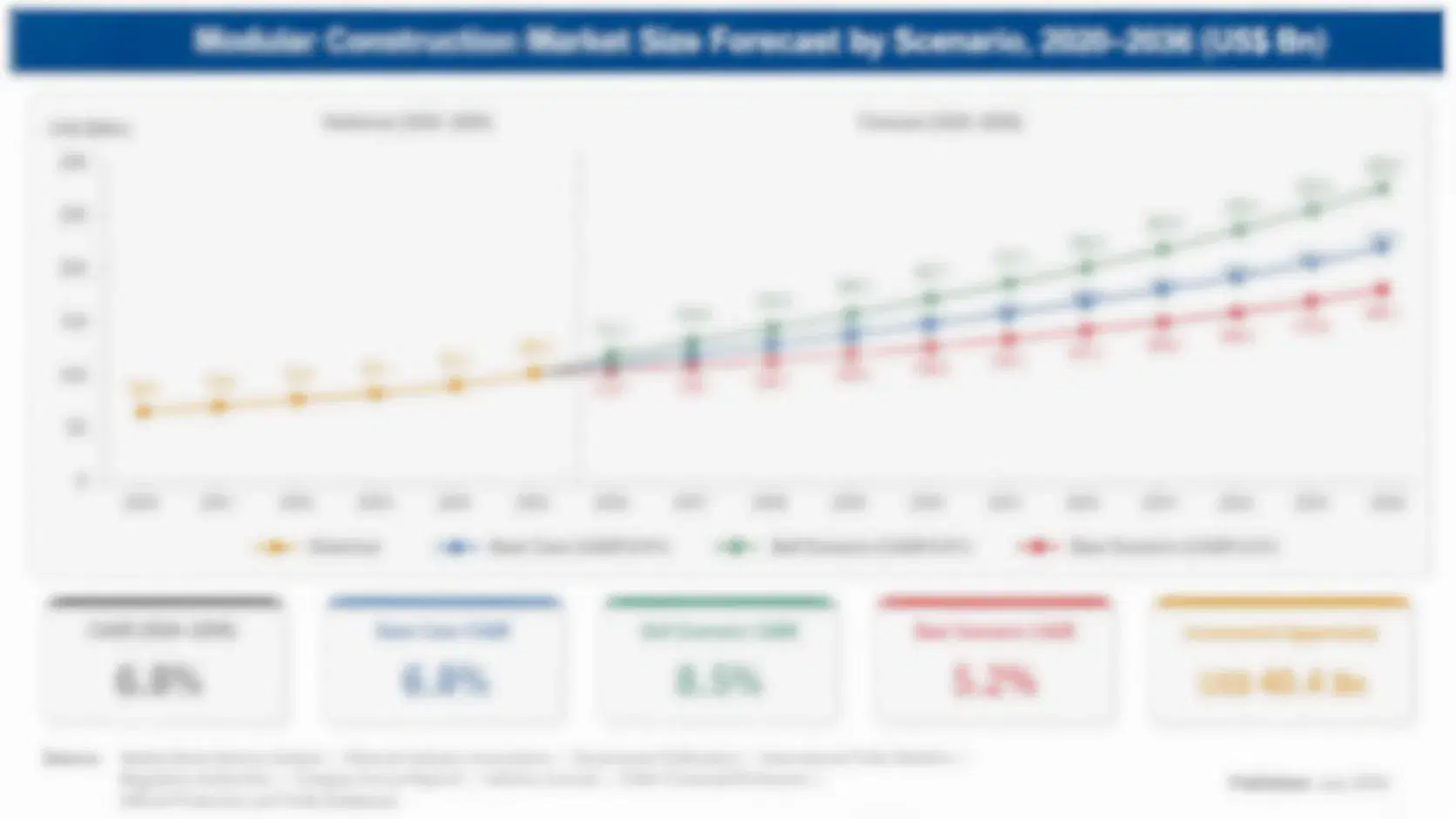
Growth from 2020 to 2025 ran at 7.2% and one technology transition carried most of it. Millimetre wave and massive antenna array testing cannot be performed by conducted measurement, so devices have to be tested radiating, and the distance required to do that properly scales with both frequency and aperture. Chambers therefore had to get larger or acquire reflector-based ranges, and many laboratories discovered their rooms had quietly become inadequate.
The 8.4% base case rests on three mechanisms. Over-the-air testing keeps expanding as more product categories acquire radios that need certifying. Automotive chambers keep growing as electric drivetrains add high-power emissions testing to an already demanding requirement. And Asian and Indian certification laboratory capacity keeps building, since domestic device manufacture without domestic certification capability sends work and fees abroad unnecessarily. None of the three depends on any better absorber at all.
The bull case at 9.6% assumes satellite direct-to-device and further spectrum allocations create test requirements that existing chambers cannot meet, forcing replacement rather than upgrade. The bear case at 7.2% is laboratories extending the life of existing rooms through absorber replacement and door refurbishment, which costs a fraction of a new chamber and defers the capital decision by years.

A Building With Foam Inside

The first thing to understand is that this category is two categories wearing one name. An acoustic chamber absorbs sound using foam wedges over a structure isolated from building vibration. A radio frequency chamber absorbs electromagnetic energy inside a welded steel enclosure that keeps outside signals out. The physics, suppliers, buyers and standards share nothing, and every published estimate adds them together anyway.
FIVE-FIRM CONCENTRATION47%Share of category revenue held by the largest chamber suppliers
SITE WORKS COST SHARE44%Project spend on building preparation rather than the chamber
SHIELDING EFFECTIVENESS TARGET100 dBAttenuation a compliance chamber must demonstrate at commissioning
DOOR FAILURE SHARE63%Revalidation failures traced to the shielded door assembly
CHAMBER SERVICE LIFE24 yearsYears a chamber remains in productive test use
ABSORBER REPLACEMENT CYCLE12 yearsInterval before pyramidal absorber requires wholesale replacement work
The second is that buyers procure a chamber and receive a construction project. Around 44% of total spend goes on site preparation, floor loading capable of carrying a shielded steel structure, ventilation routed through waveguide, power filtering, crane access and building works, none of which appears on the chamber quotation. Projects overrun on the building rather than the chamber.
The third is that shielding is only as good as its weakest penetration, and that is almost always the door. Around 63% of revalidation failures trace to door assemblies where contact finger stock has worn, and a chamber specified at 100 decibels of attenuation degrades quietly across years of use until somebody measures it. Doors are the component buyers scrutinise least and the component that determines whether the room still works.
"Everybody compares absorber performance on a datasheet. The room fails revalidation because a door seal wore out, which nobody asked about, and the specification sheet never mentioned it once."
Director, Test Infrastructure Practice · MMA Test and Measurement Infrastructure Practice · August 2026

Market Trends

Radiating Test Requirements Outgrew Existing Rooms

Millimetre wave and large antenna array devices cannot be tested through a cable, so measurement must be made radiating, and the far-field distance needed scales with both frequency and antenna aperture. Growth at 12.6% follows that geometry rather than any commercial argument. Laboratories either build physically larger chambers or install reflector-based compact ranges that fold the distance optically, and a great many discovered their existing rooms had become inadequate without anything changing inside them. A room that was adequate five years ago can be inadequate now without anything inside it changing.
Market Impact: Requires 100 dB attenuation testing
Electric Drivetrains Made Vehicle Chambers Harder

Full-vehicle chambers already required a dynamometer, enormous absorber volume and floor loading most buildings cannot provide. Electric drivetrains added high-power switching emissions, charging interface testing and battery thermal management inside the chamber, which raised both the electrical and the mechanical specification considerably. Growth at 9.6% follows that. These are multi-million dollar buildings rather than equipment purchases, and the number of organisations able to fund one is genuinely small. A first chamber usually determines who builds the second one, because nobody repeats a procurement of quite that scale casually at all.
Market Impact: Grows India fastest at 10.4%

Market Opportunities and Growth Drivers

Every New Radio Product Needs A Certified Test

Product categories that never contained a transmitter now routinely do, from appliances and lighting through industrial sensors to medical devices, and each requires emissions and immunity testing before it can be sold anywhere. Certification laboratory capacity therefore grows with the number of connected product categories rather than with any single industry. That demand is remarkably insensitive to economic conditions, because a product that cannot be certified cannot be sold at all. A room that cannot certify is a room nobody books, which makes accreditation scope the commercial asset here entirely.
Market Impact: Adds 44% in site works

Asian Certification Capacity Follows Domestic Manufacture

Device manufacture without domestic certification capability sends testing work and fees abroad and adds weeks to every product launch, which governments and manufacturers across Asia have both concluded is unnecessary. India grows fastest of any country at 10.4% as accredited laboratories are commissioned alongside electronics manufacturing investment. Chamber suppliers with local project execution capability win that work, since a chamber is built on site rather than shipped complete. Accredited capacity also attracts testing work from neighbouring markets, which turns a domestic investment into a wider regional service business fairly quickly.
Market Impact: Causes 63% of validation failures

Market Restraints and Challenges

Nearly Half The Project Is Not The Chamber

Around 44% of total project spend goes on site preparation, structural floor loading, ventilation waveguide, power filtering and access works that never appear on a chamber quotation. Root cause is that buyers procure capital equipment and receive construction. Commercial impact is projects overrunning on the building while the supplier is blamed for the chamber. Mitigation runs through site surveys and full project costing before quotation, which lengthens the sale and prevents the argument entirely. Nobody in the buying organisation owns the whole project until it has already gone badly wrong.
Market Impact: Grows radiating test at 12.6%

Doors Fail And Nobody Specifies Them

Around 63% of revalidation failures trace to shielded door assemblies where contact finger stock has worn through repeated opening, so a chamber commissioned at 100 decibels degrades quietly until measurement reveals it. Root cause is a mechanical wear part inside an otherwise static structure. Commercial impact is chambers that fail compliance and laboratories that lose accreditation. Mitigation involves door maintenance programmes and finger stock replacement schedules, which almost nobody sells proactively. A worn door assembly costs a few thousand to replace and an entire laboratory accreditation to ignore it entirely.
Market Impact: Grows vehicle chambers at 9.6%
3 additional market trends, 2 additional growth drivers, and 4 additional restraints and challenges are covered in the full report. Contact sales@marketmindsadvisory.com to access the complete intelligence.

Segment CAGR and Growth Architecture

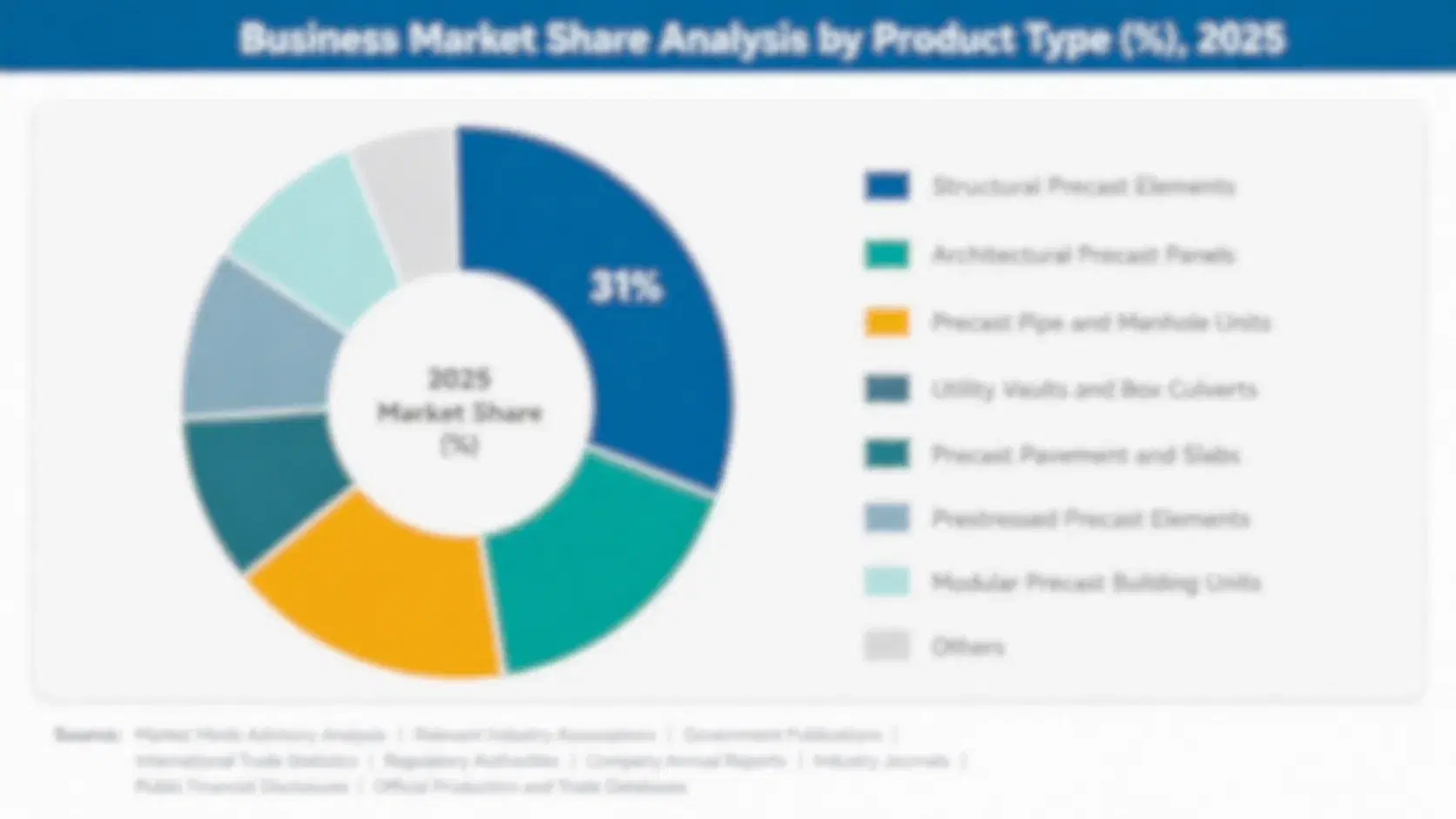
Segmentation follows chamber type and what is being absorbed or supplied, since acoustic and electromagnetic products share only a name. Six categories cover the market without overlap. Test standard, end-use industry and procurement route are treated as separate commercial dimensions throughout this report rather than as segmentation logic in their own right entirely here.
anechoic-chamber-market-trends-market-share-analysis-1787719718981

Over-the-Air and mmWave Test Chambers

Chambers built for radiating measurement of millimetre wave and large antenna array devices grow at 12.6%, half again the market rate of 8.4%, because far-field distance scales with both frequency and aperture and cabled measurement simply cannot substitute. Laboratories either build physically larger rooms or install reflector-based compact ranges that fold that distance optically at considerable cost. Quiet zone specification rather than absorber performance decides these purchases, and the measurement uncertainty budget is argued over in a way no other chamber type experiences at all. A supplier without reflector engineering capability cannot bid for this work at all, which makes it a capability gate rather than a competitive contest at all.
CAGR 12.6%

Full-Vehicle Automotive Chambers

Chambers accommodating a complete vehicle on a dynamometer grow at 9.6% as electric drivetrains add high-power switching emissions, charging interface testing and battery thermal requirements to an already demanding specification. These are buildings rather than equipment, with floor loading, absorber volume and ventilation requirements that most sites cannot meet without major works. The number of organisations able to fund one is small, projects run for years, and the supplier relationship established during a first chamber usually determines who builds the second one. Absorber volume alone runs to many tonnes, and fire performance testing on that quantity of carbon-loaded foam is a genuine engineering requirement rather than a paperwork formality anywhere.
CAGR 9.6%
Full segment breakdown across 6 segments available in the complete report.

Regional Architecture and Country Demand Map

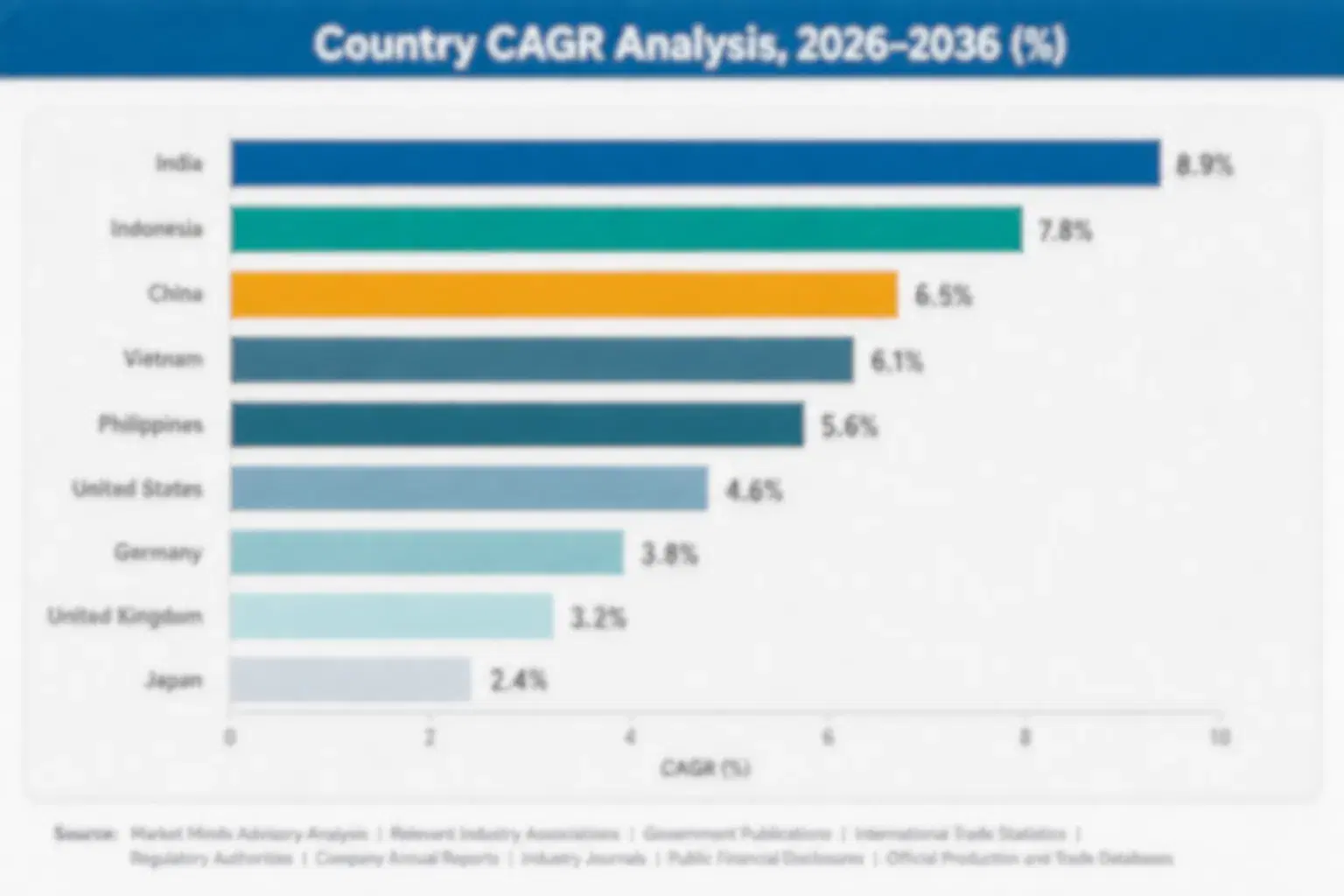
Geography follows device certification volume and manufacturing concentration rather than economy size, since chambers are built where products are tested. East Asia leads on both counts, and India grows fastest. Economy size on its own explains remarkably little about where these rooms actually get built.

North America

Commercial certification laboratories carry a large share of testing volume, competing on turnaround and accreditation scope rather than performing testing in-house at manufacturers as European practice more often does. Defence and aerospace test facilities add a substantial and separately funded demand stream with security requirements that shape supplier selection considerably. Automotive chamber investment concentrated around electric vehicle programmes. Site works costs are high and construction lead times long, which makes the building rather than the chamber the critical path on most projects. Validation and revalidation services are a mature and well-organised business here, with accreditation assessors examining door assemblies more closely than they did a decade ago and laboratories budgeting accordingly.
Share: 24% | CAGR: 7.6% (2026 to 2036)

Western Europe

Manufacturers more often operate their own compliance laboratories here than contract testing out, which produces a fragmented buyer base of many smaller chambers rather than fewer large commercial facilities. German automotive testing drives full-vehicle chamber demand and several of the significant chamber builders are European. Radio equipment directive requirements shape specification closely. Acoustic chamber demand from automotive noise and vibration work is proportionally larger here than anywhere, reflecting an engineering tradition rather than any regulatory difference. Validation and refurbishment work is proportionally larger than new chamber projects in several markets, reflecting an installed base commissioned during the 1990s that is reaching absorber replacement and door rebuild age all at once.
Share: 23% | CAGR: 6.8% (2026 to 2036)
Regional intelligence for 5 additional markets available in the complete report: East Asia, South Asia and Pacific, Latin America, Middle East and Africa, Eastern Europe. Contact sales@marketmindsadvisory.com.
anechoic-chamber-market-trends-country-cagr-analysis-1787719719258

Selling The Whole Project Properly

Roughly 44% of spend is site works, doors cause 63% of revalidation failures, chambers last 24 years and absorber needs replacing every 12. Four levers work on project scoping, door maintenance, installed base refurbishment and radiating test capability rather than on absorber specification, which in the end decides remarkably little about any of it.

Quote The Building, Not Only The Chamber

Around 44% of project spend is site preparation, floor loading, ventilation waveguide and access works that never appear on a chamber quotation, and buyers discover it after committing. Suppliers who survey the site and cost the whole project before quoting lengthen the sale and eliminate the argument that follows every overrun. It also converts a hardware comparison into a project comparison, which is a contest a competitor quoting only the chamber cannot enter. Nobody in the buying organisation owns the whole project until it actually goes badly wrong for them.
Market Impact: Scopes the 44% of spend nobody ever quotes

Sell Door Maintenance Before The Room Fails

Around 63% of revalidation failures trace to shielded doors where contact finger stock has worn through repeated opening, and a chamber commissioned at 100 decibels degrades silently until somebody measures it. Scheduled finger stock replacement and door servicing prevents accreditation loss that costs a laboratory far more than the maintenance ever would. Almost nobody sells this proactively, which leaves an obvious recurring revenue line sitting entirely unclaimed across a very large installed base. A worn door costs a few thousand to fix and an entire laboratory accreditation to leave alone.
Market Impact: Prevents the 63% of failures caused by doors

Work The Installed Base Through Refurbishment

Chambers remain in service around 24 years while absorber needs wholesale replacement every 12, which means every installed room is a refurbishment opportunity roughly halfway through its life. Absorber replacement, door rebuilds, filter renewal and quiet zone requalification together cost a fraction of a new chamber and defer the capital decision considerably. Suppliers organised around new projects treat this as service work and leave a predictable revenue stream to whoever bothers to chase it. Every installed room reaches that point whether or not anybody contacts the laboratory about it. Nobody calls.
Market Impact: Refurbishes across a 12 year absorber replacement cycle

Build Reflector Range Capability Quite Deliberately

Far-field distance scales with frequency and aperture together, so millimetre wave and large array testing requires either an impractically large room or a reflector-based compact range that folds the distance optically. Quiet zone performance and measurement uncertainty rather than absorber specification decide those purchases. That is a different engineering discipline from lining a room with foam, and suppliers who invested in it are taking the segment growing at 12.6%. Physics rather than commercial preference decides who can bid, which is an unusually clean competitive position for anybody to hold at all.
Market Impact: Wins the segment growing fastest at 12.6% annually

Who Controls the Margin Pool

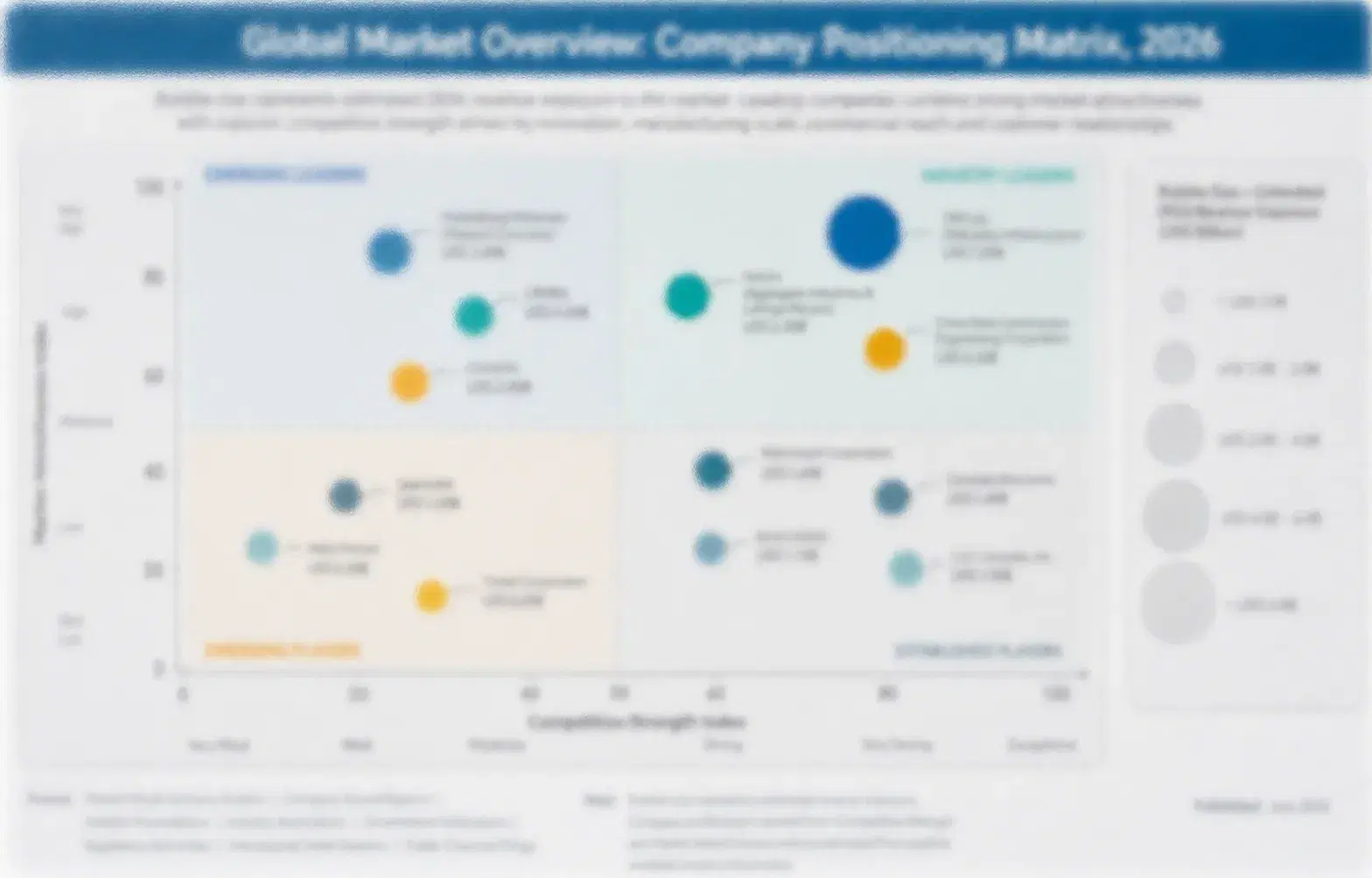
Measured on disclosed shielding and test chamber project revenue, the five largest suppliers hold a CR5 of 47%, which reflects a market where project execution capability and accreditation credibility matter more than manufacturing scale. ETS-Lindgren holds the broadest position across chamber types, Rohde & Schwarz brings instrumentation depth into complete test system supply, Frankonia and Comtest hold established European project positions, and TDK supplies absorber and ferrite materials to builders across the industry. Nobody in the group builds only chambers.
Three contests define activity. Compliance chambers compete on project execution, site works competence and delivery certainty rather than on absorber datasheets. Over-the-air ranges compete on quiet zone performance and measurement uncertainty. And absorber and shielding components compete on price and fire performance into projects other people are building. Acoustic chambers compete in a mature field on installation quality.

Pressure builds from Chinese chamber builders competing internationally on projects previously closed to them, and from instrumentation vendors bundling chambers into complete test systems. Rankings shift toward whoever executes projects rather than whoever specifies foam. Delivery certainty on a two year construction project is what a laboratory is actually buying here.
anechoic-chamber-market-trends-company-positioning-matrix-1787719719663

Competitive Moat and Risk Dimensions

ETS-LINDGREN

Moat: Project Execution And Accreditation Credibility

The company delivers chambers as construction projects with site works, commissioning and validation handled together, which is what buyers need even when it is not what they thought they bought. Accreditation bodies and laboratory customers know the reference installations. A competitor quoting a lower chamber price still has to persuade somebody to risk an accreditation on an unproven project team.
ETS-LINDGREN

Risk: Construction Exposure Sits Outside Control

Roughly 44% of project spend is building work executed by contractors the chamber supplier frequently does not control, and delays or errors there attach to the chamber supplier's reputation regardless of fault. Taking responsibility for site works means taking construction risk into a business with equipment margins. Neither taking it nor declining it is comfortable.
ROHDE & SCHWARZ

Moat: Instrumentation And System Integration

Supplying analysers, generators, antennas and software alongside the chamber allows the company to sell a validated measurement system rather than a room, which matters enormously for over-the-air testing where uncertainty budgets depend on everything working together. A chamber builder without instrumentation must integrate somebody else's equipment. That system-level responsibility is genuinely difficult for a construction-led competitor to offer at all.
ROHDE & SCHWARZ

Risk: Chamber Construction Is Not Instrumentation

The building half of a project demands site management, structural coordination and construction scheduling capability that an instrumentation business has no natural reason to hold. Partnering for that work reintroduces the coordination risk the integrated proposition was meant to remove. Buyers notice quickly which part of a combined offer is genuinely native to the supplier.

Players Tracked

Prominent Players

ETS-Lindgren
Rohde & Schwarz
Frankonia Group
TDK
Comtest Engineering

Other Key Players

Albatross Projects
Siepel
Panashield
Cuming Microwave
Global EMC
Microwave Vision Group
Keysight Technologies
Anritsu
Bluetest
Braden Shielding Systems
Holland Shielding Systems
Eckel Industries
IAC Acoustics
Chengdu Zhongdian
Shanghai Yuhan

Recent Developments

FEBRUARY 2025

Certification laboratory commissions compact antenna test range facility

An accredited certification laboratory commissioned a reflector-based compact antenna test range for millimetre wave device measurement, a capital facility investment rather than any corporate transaction. Far-field distance requirements at those frequencies had made conventional chamber geometry impractical for the device sizes being submitted for approval.
Signal: Physical geometry rather than any commercial preference is what actually forces these particular facility decisions here.
JUNE 2025

Accreditation body tightens revalidation requirements for shielded enclosures

An accreditation body tightened periodic revalidation requirements for shielded test enclosures, including specific attention to door assembly integrity. This was a standards and accreditation decision rather than any commercial development, and laboratories whose chambers had degraded quietly faced remediation work before any recertification could proceed.
Signal: Revalidation scrutiny turns a simple maintenance oversight into an accreditation problem for the whole laboratory involved.
OCTOBER 2025

Chinese chamber builder wins international automotive facility project

A Chinese chamber builder won a full-vehicle test facility project outside its domestic market, a competitive tender award rather than any partnership or acquisition arrangement. Projects of that scale had previously been contested only among established European and American suppliers holding very long reference lists indeed.
Signal: Project execution capability rather than national origin now decides who is considered credible at all anywhere.

Steel, Ferrite And Foam

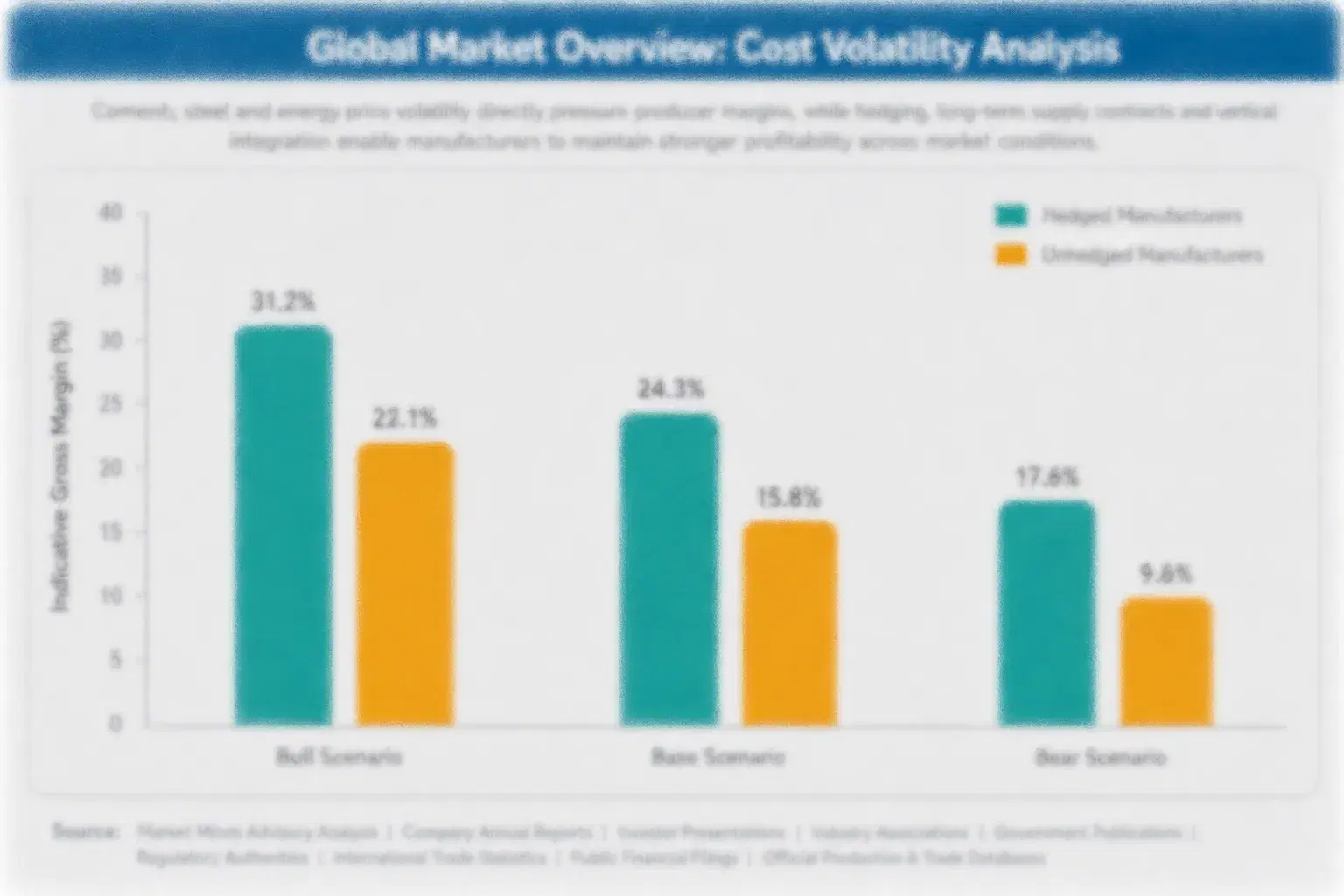
The bill of materials is heavy and unglamorous. Zinc-coated steel shielding panels, copper and beryllium copper gasket and finger stock, sintered nickel-zinc ferrite tiles, carbon-loaded polyurethane absorber foam, honeycomb ventilation waveguide and power line filters together account for 48 to 60% of chamber cost. Steel is the largest line by weight and by value on most projects. Ferrite tile production sits with a few Japanese and Chinese producers.
Two things moved. Steel pricing rose severely through 2021 and 2022 across every producing region, which United States Geological Survey iron and steel commodity data records, and chamber quotations issued before that period became impossible to honour. Nickel and zinc pricing then moved sharply as well, feeding directly into ferrite tile cost, which the same commodity data documents. Polyurethane foam feedstock tightened alongside both of them.

Exposure divides by contract structure rather than by scale. Suppliers holding fixed-price contracts through a long project timeline carry every commodity movement themselves, and chamber projects routinely run eighteen months from order to commissioning. Those with escalation clauses or shorter commitments pass it through. Asian builders sourcing steel and ferrite domestically carry a cost position that Western competitors importing both cannot approach on any project.
anechoic-chamber-market-trends-cost-volatility-analysis-1787719719945

Write commodity escalation into long project contracts

Chamber projects run eighteen months or longer from order to commissioning, and steel pricing moved severely enough during one such window that quotations became impossible to honour at any margin. Escalation clauses cost negotiating position against buyers who dislike open-ended pricing. They prevent the situation where a supplier completes a project at a loss or abandons it midway through construction.

Qualify ferrite tile supply across two producing countries

Sintered nickel-zinc ferrite tiles come from a small number of Japanese and Chinese producers, and shielding performance depends on tile properties that vary between them in ways requiring requalification. Qualifying a second source costs performance testing across the frequency range a chamber must cover. It removes a dependency on a component with no substitute in the absorber design at all.

Specify absorber foam meeting fire performance standards

Carbon-loaded polyurethane absorber burns readily unless treated, and chamber fires have destroyed facilities and the equipment inside them on more than one occasion in this industry. Specifying tested fire performance costs material price and some absorber efficiency. It removes a risk that no insurance settlement compensates properly, since a destroyed chamber takes a year to replace.

Portfolio Architecture for Margin Defence

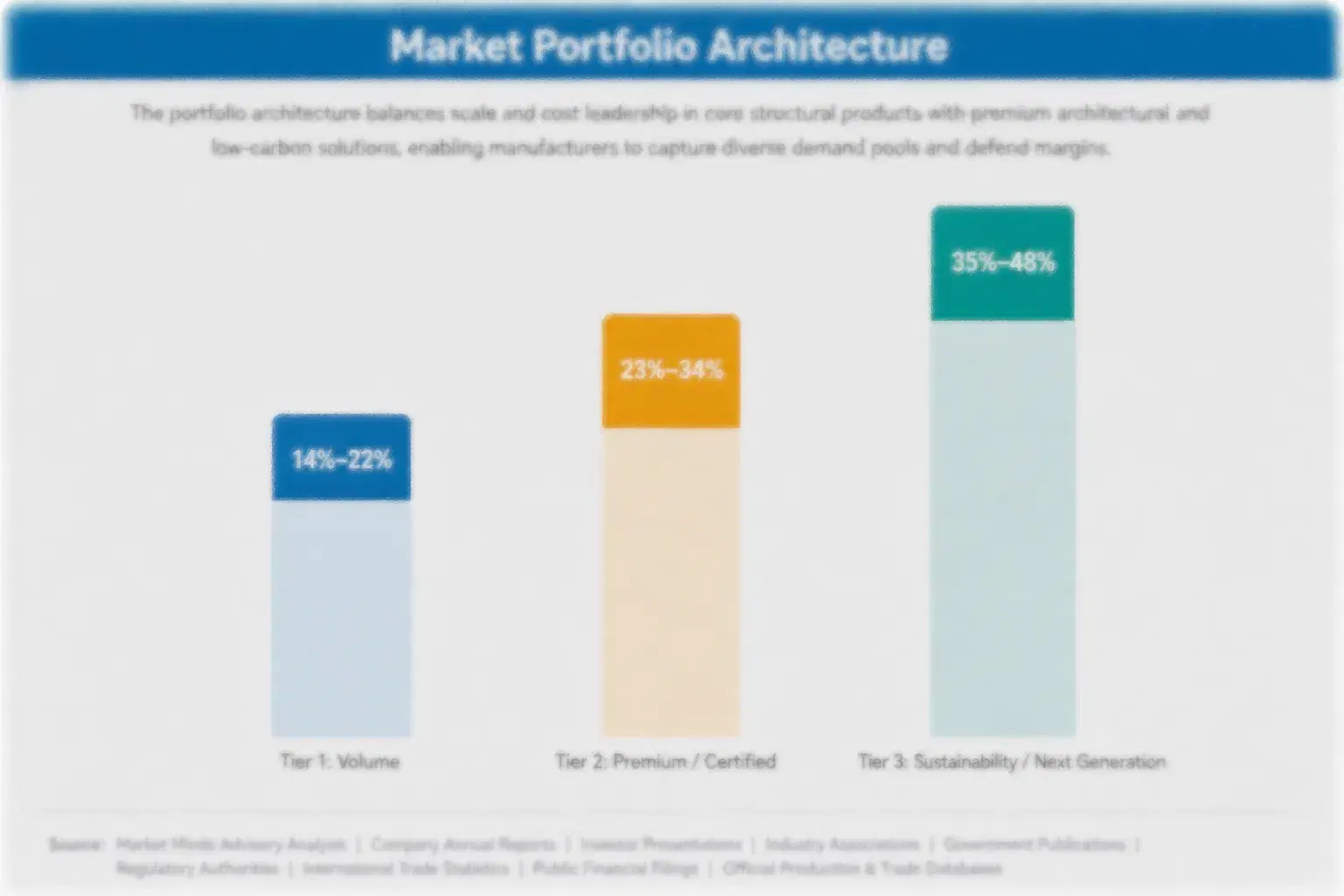
Margin follows engineering scarcity rather than project size, which surprises people who assume the largest chambers earn most. Absorber materials sold to other builders earn thinly against price competition. Acoustic chambers earn modestly in a mature and well-understood field. Standard compliance chambers earn reasonably on execution reputation. Full-vehicle chambers earn well on scale and complexity. Over-the-air and compact range facilities earn better. Validation, refurbishment and door maintenance services earn best of anything here.
The tension is that the highest margin work is the least visible. Refurbishment, revalidation and door servicing across a 24 year installed base generate excellent returns and no announcements, while new chamber projects generate press releases and carry construction risk. A supplier organised entirely around winning projects leaves the service revenue to whoever answers the telephone when a chamber fails, which is frequently not the company that built it.

High-value pools sit in three places. Chamber validation and revalidation services, which accreditation makes mandatory and which nobody else can perform on a competitor's room without credibility. Door maintenance programmes addressing the 63% failure cause that almost nobody sells against. And reflector range engineering, where quiet zone performance is a genuine capability barrier rather than a specification claim.

Volume / Commodity-Adjacent

Absorber materials, shielding panels and components supplied to other builders and integrators on price. The 10-point range separates manufacturers with domestic steel and ferrite sourcing from those importing both into higher cost regions.
Gross Margin: 18-28%

Premium / Certified

Standard compliance chambers, acoustic chambers and full-vehicle facilities delivered as complete projects including site coordination. The 14-point spread reflects how differently fixed-price construction-exposed contracts and escalation-protected ones perform across long project timelines.
Gross Margin: 30-44%

Sustainability / Regulatory / Next-Generation

Over-the-air and compact range facilities together with validation, revalidation and maintenance services across the installed base. The 26-point range is wide because capital facility engineering and recurring service work sit within one tier and behave nothing alike at all.
Gross Margin: 46-72%
anechoic-chamber-market-trends-portfolio-architecture-1787719720225

High-value Sub-segments and Strategic Watch-out

Validation And Maintenance Services

Highest margin available, made mandatory by accreditation and addressing the door assembly behind roughly 63% of revalidation failures across the installed base. The risk is that it generates no announcements and suppliers organised around projects consistently fail to resource it at all. Nobody markets it at all.
Gross Margin: 60-72%

Compact Range And Over-The-Air

Fastest growth at 12.6%, defended by quiet zone engineering and measurement uncertainty capability that lining a room with foam does not develop. The risk is that specification is decided by physics and a supplier without reflector capability simply cannot bid at all. Physics gates the bidder list.
Gross Margin: 46-58%

Standard Compliance Chambers

The volume core, delivered as construction projects where execution reputation and delivery certainty decide selection more than any technical specification. Suppliers hold it because the installed base it creates funds validation and refurbishment revenue for the following two decades. Execution reputation is the whole asset.
Gross Margin: 30-40%

Fixed-Price Construction Exposure

The strategic watch-out. Projects run eighteen months or longer and roughly 44% of spend is building work with commodity exposure the supplier absorbs. The risk is completing a project at a loss because steel moved after the quotation was issued. Eighteen months is a long exposure.
Gross Margin: 16-26%

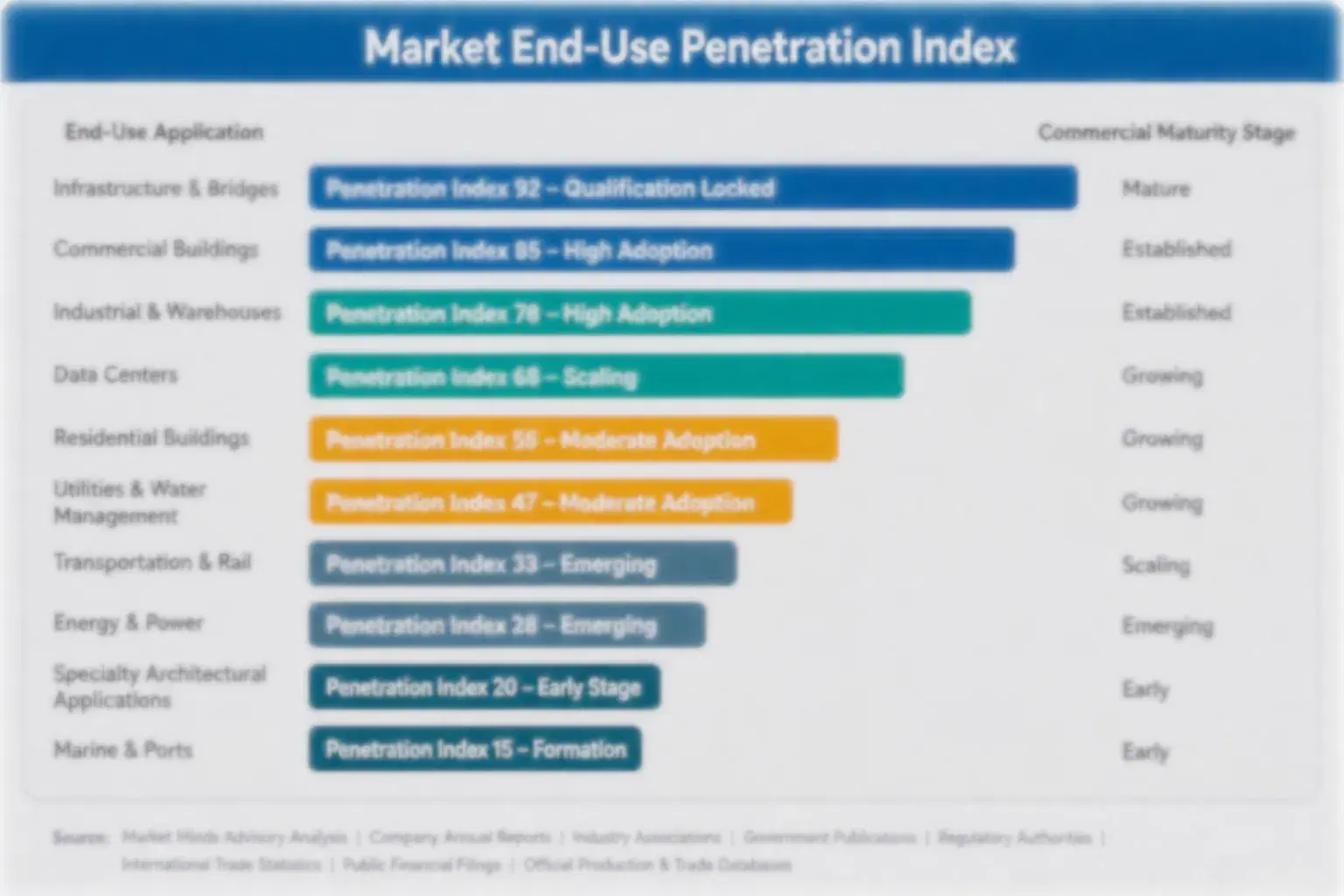
Twenty Years Of Aftermarket

A chamber project is the beginning of a two decade relationship rather than a transaction. Rooms remain in service around 24 years, requiring annual validation, absorber replacement roughly every 12 years, door servicing throughout and filter renewal periodically, all of which recurs long after the project team has moved on. That aftermarket is predictable, high margin and almost entirely unmarketed, so it goes to whoever a laboratory telephones when something fails.
Stickiness rests on accreditation continuity rather than on any contract. A laboratory whose chamber was commissioned and validated by one supplier, whose reference measurements sit in that supplier's reports, and whose accreditation depends on documented continuity does not change service provider casually. Full-vehicle facilities are stickiest of all, since a second chamber almost always goes to whoever delivered the first. Component buyers are barely sticky at all.

The buyer sits between engineering and facilities and reports to neither comfortably. Test engineers specify performance, facilities departments own the building works, and procurement compares quotations that describe different scopes entirely. That fragmentation is precisely why the 44% outside the chamber causes so much trouble, since nobody owns the whole project until it goes wrong.
anechoic-chamber-market-trends-end-use-penetration-index-1787719720619

Execute, Then Maintain

These are among the four positions where our research anticipates prominent divergence between winners and laggards over the coming forecast period. Each is grounded in the demand model, the regulatory perimeter, and the announced capacity pipeline.
01 / WHOLE PROJECT SCOPING

Quote the building or lose the argument

Around 44% of the total project spend is site preparation, structural floor loading, ventilation waveguide and access works that never appear on any chamber quotation, and buyers discover all of it well after they have committed to a supplier. Those who survey the site and cost the entire project before quoting lengthen the sale considerably and eliminate the argument that follows almost every overrun. It also turns a hardware comparison into a project comparison that a rival cannot easily enter.
02 / DOOR MAINTENANCE PROGRAMMES

Sixty-three percent of failures, one component

Roughly 63% of revalidation failures trace to shielded door assemblies where the contact finger stock has worn through repeated daily opening and closing, and a chamber commissioned at 100 decibels degrades quietly until somebody eventually gets round to measuring it properly. Scheduled finger stock replacement prevents an accreditation loss costing a laboratory far more than any maintenance contract ever would. Almost nobody sells this proactively at all, which leaves an obvious recurring revenue line sitting entirely unclaimed across the installed base.
03 / INSTALLED BASE REFURBISHMENT

Every room is a project halfway through

Chambers remain in productive service for around 24 years each while pyramidal absorber requires wholesale replacement roughly every 12, which makes every single installed room a refurbishment opportunity at roughly the midpoint of its working life. Absorber replacement, door rebuilds, filter renewal and full quiet zone requalification together cost a fraction of a new chamber and defer the capital decision by several years. Suppliers organised entirely around new projects leave all of that revenue to whoever bothers to chase it.
04 / REFLECTOR RANGE ENGINEERING

Physics decides who can even bid

Far-field distance scales with both frequency and antenna aperture together, so millimetre wave and large array device testing requires either an impractically large room or else a reflector-based compact range folding that distance optically at considerable expense. Quiet zone performance and the measurement uncertainty budget rather than any absorber specification decide those purchases entirely. That is an entirely different engineering discipline from lining a room with foam, and it gates who is able to bid on the work at all.

Engagement Snapshot From the Field

A live engagement with an industry participant carrying material or product regulatory and market exposure ahead of a defining policy shift, showing how our research translates into a defensible multi-year portfolio strategy.
MARKET MINDS ADVISORY · CLIENT ENGAGEMENT SUMMARY
Anechoic Chamber 2025-2035 Producer Strategic Portfolio Review and Transition Roadmap 2026·Investment Scenario on Anechoic Chamber 2025-2035 Exposure Evaluation 2025-26
CLIENT PROFILE
A test chamber supplier delivering compliance and acoustic chambers across European and Asian markets, with reported project revenue of 58 million dollars (client-reported, unverified by MMA). Roughly 81% came from new chamber projects. Service and validation work was handled reactively by the engineering team and no refurbishment or door maintenance programme existed anywhere in it.
STRATEGIC CHALLENGE
Two fixed-price projects had run to loss after steel pricing moved during construction, and a third had overrun on site works the company had not scoped. Management was preparing to reduce project pricing to win volume. That would have compounded exposure on exactly the contract structure already producing losses, while ignoring an installed base generating almost no revenue at all.
MMA APPROACH
MMA analysed project margin against contract structure, commodity exposure and site works scope, alongside an installed base census the company had never compiled. Twenty expert interviews with laboratory managers, accreditation assessors, facilities engineers and procurement leads established how these projects are actually specified and awarded. The analysis treated contract structure and aftermarket capture rather than project pricing as the routes available.
KEY FINDINGS
  1. Both loss-making projects carried fixed pricing across timelines longer than eighteen months, with no commodity escalation of any kind written into either contract.
  2. The installed base was substantially larger than anybody had counted, and the company had performed no validation or maintenance work on most of those chambers.
  3. Laboratory managers described door assembly failures as their most common revalidation problem, and none had ever been offered a maintenance programme by anybody.
  4. Site works had been excluded from quotations as a matter of practice, and every overrun interviewed had been attributed by the customer to the chamber supplier regardless.
CLIENT PROFILE
A test chamber supplier delivering compliance and acoustic chambers across European and Asian markets, with reported project revenue of 58 million dollars (client-reported, unverified by MMA). Roughly 81% came from new chamber projects. Service and validation work was handled reactively by the engineering team and no refurbishment or door maintenance programme existed anywhere in it.
STRATEGIC CHALLENGE
Two fixed-price projects had run to loss after steel pricing moved during construction, and a third had overrun on site works the company had not scoped. Management was preparing to reduce project pricing to win volume. That would have compounded exposure on exactly the contract structure already producing losses, while ignoring an installed base generating almost no revenue at all.
MMA APPROACH
MMA analysed project margin against contract structure, commodity exposure and site works scope, alongside an installed base census the company had never compiled. Twenty expert interviews with laboratory managers, accreditation assessors, facilities engineers and procurement leads established how these projects are actually specified and awarded. The analysis treated contract structure and aftermarket capture rather than project pricing as the routes available.
KEY FINDINGS
  1. Both loss-making projects carried fixed pricing across timelines longer than eighteen months, with no commodity escalation of any kind written into either contract.
  2. The installed base was substantially larger than anybody had counted, and the company had performed no validation or maintenance work on most of those chambers.
  3. Laboratory managers described door assembly failures as their most common revalidation problem, and none had ever been offered a maintenance programme by anybody.
  4. Site works had been excluded from quotations as a matter of practice, and every overrun interviewed had been attributed by the customer to the chamber supplier regardless.
RECOMMENDED STRATEGY
Phase 1: Phase one: write commodity escalation into every contract running beyond twelve months, accepting the negotiating friction that inevitably follows immediately afterwards. Phase 2: Phase two: compile the installed base and launch scheduled door maintenance and revalidation programmes across it before any competitor happens to notice. Phase 3: Phase three: include full site works scoping in every quotation, converting a hardware comparison into a project one buyers cannot easily replicate.
OUTCOME
Escalation clauses were accepted on all but one contract, which the company declined to bid. Installed base contact generated maintenance and refurbishment orders from chambers the company had not touched in a decade (client-reported, unverified by MMA). Full site works scoping lengthened the sales cycle and improved win rate. Project pricing was not reduced.

Frequently Asked Questions

Foundational context covering the market sizes, CAGR, scope, country, region and competition that inform every finding below. This section is provided to cover basics and most often pre-purchase conversations, answered from the MMA Primary Research Dataset.

What is the current size of the Anechoic Chamber Market?

The market was worth 0.6 billion dollars in 2025, covering compliance chambers, over-the-air ranges, vehicle facilities, acoustic chambers, materials and services. It reaches 0.65 billion dollars in 2026.

How large will the Anechoic Chamber Market be by 2036?

MMA forecasts 1.46 billion dollars by 2036, an increase of 0.81 billion dollars over the 2026 base. That represents an expansion multiple of 2.25 times across the forecast period.

What is the CAGR for the Anechoic Chamber Market 2026 to 2036?

The base case compounds at 8.4% annually. The bull case reaches 9.6% if new spectrum allocations force chamber replacement, while the bear case sits at 7.2% on laboratories extending existing room life instead.

Which segment is growing fastest?

Over-the-air and millimetre wave test chambers, at 12.6%, half again the market rate of 8.4%. Far-field distance scales with frequency and antenna aperture, which cabled measurement cannot substitute.

Who are the major companies in the Anechoic Chamber Market?

ETS-Lindgren, Rohde and Schwarz, Frankonia Group, TDK and Comtest Engineering lead on disclosed shielding and test chamber project revenue. Albatross Projects and Siepel hold notable European positions.

Which country is growing fastest?

India at 10.4%, as accredited certification laboratories are commissioned alongside electronics manufacturing investment. Testing abroad adds weeks and fees to every single product launch there.

Report Segmentation Architecture

The full report scope spans multiple orthogonal segmentation dimensions, with cross-tabulated demand data provided for each dimension pair. Coverage extends further to regional breakdowns, trend trajectories, and the competitive detail needed to support segment-level decision-making.

By Chamber Type

  • RF and EMC Compliance Chambers
  • Over-the-Air and mmWave Test Chambers
  • Full-Vehicle Automotive Chambers
  • Acoustic Anechoic and Hemi-Anechoic Chambers
  • Absorber Materials and Shielding Components
  • Chamber Validation Calibration and Upgrade Services

By End-Use Industry

  • Commercial Certification Laboratories
  • Consumer Electronics and Telecommunications
  • Automotive and Component Manufacturing
  • Defence and Aerospace
  • Medical Device Manufacturing
  • Universities and Research Institutes

By Commercial Dimension

  • Turnkey Project Delivery
  • Chamber Supply Without Site Works
  • Component and Material Supply
  • Validation and Accreditation Services
  • Refurbishment and Upgrade Contracts
  • Instrumentation Bundled Systems

By Region

  • North America
  • Western Europe
  • East Asia
  • South Asia and Pacific
  • Latin America
  • Middle East and Africa
  • Eastern Europe

Scope, Methodology, and Coverage

Every figure in this report is reproducible from documented input assumptions. The scope below maps the historical period, the forecast horizon, the segmentation dimensions, and the countries covered, alongside the underlying primary and qualitative methodology.
Historical Period
2020 to 2025
Forecast Period
2026 to 2036
Base Year
2025 (USD billions; MMA Primary Research Dataset, August 2026)
Market Definition
Scope covers shielded and absorber-lined test enclosures together with their constituent materials and lifecycle services, spanning radio frequency and electromagnetic compatibility compliance chambers, over-the-air and millimetre wave test chambers including reflector-based compact ranges, full-vehicle automotive chambers, acoustic anechoic and hemi-anechoic chambers, absorber materials shielding panels and door assemblies supplied as components, and chamber validation calibration refurbishment and upgrade services. Test instrumentation, antennas, positioners and software sold independently of a chamber, reverberation chambers and open area test sites, general architectural acoustic treatment, magnetically shielded rooms for medical imaging, and site construction work contracted separately by the buyer are excluded from the market size and all derived figures. The forecast follows the standard MMA horizon of 2026 to 2036 rather than any date range appearing in the market title.
Quantitative Units
USD billions (current prices); chambers delivered; site works share of project cost; shielding effectiveness in decibels; chamber service life in years
Segmentation Dimensions
By Chamber Type; By End-Use Industry; By Commercial Dimension; By Region
Regions Covered
North America, Western Europe, East Asia, South Asia and Pacific, Latin America, Middle East and Africa, Eastern Europe
Countries Covered
China, USA, Japan, Germany, South Korea, Taiwan, India, UK, France, Italy, Brazil, Poland, Mexico, Czechia, Saudi Arabia
Key Companies Profiled
ETS-Lindgren, Rohde & Schwarz, Frankonia Group, TDK, Comtest Engineering, Albatross Projects, Siepel, Panashield, Cuming Microwave, Global EMC, Microwave Vision Group, Keysight Technologies, Anritsu, Bluetest, Braden Shielding Systems, Holland Shielding Systems, Eckel Industries, IAC Acoustics, Chengdu Zhongdian, Shanghai Yuhan
Quantitative Methodology
Primary survey, n=3,800 respondents, Q4 2025, six countries; demand-side model with trade association cross-validation
Qualitative Methodology
47 expert interviews, Q4 2025; applied to validate demand model assumptions, identify emerging dynamics, and assess competitive positioning
Report Format
PDF and XLSX data workbook (Word format preview document)
Publisher
Market Minds Advisory
Report Code
MMA-2026-TEC-131
Published
August 2026
Contact
sales@marketmindsadvisory.com | www.marketmindsadvisory.com

Purchase the full Anechoic Chamber Market 2025-2035 Report (2026 to 2036).

The full report runs to 150 pages and covers all six chamber type segments, seven regions and 20 profiled suppliers in detail. It includes the complete segment CAGR set, regional certification volume and manufacturing concentration comparison, and project cost analysis separating chamber value from site works and building preparation. Company profiles carry evaluation on disclosed shielding and test chamber project revenue, with moat and risk assessment for the top five suppliers. The competitive section extends to 11 tracked facility, accreditation and tender developments across 2024 and 2025. Primary research inputs include a quantitative survey of 3,800 respondents and 47 expert interviews conducted in Q4 2025.
Six chamber type segments with individual CAGR forecasts
Seven regional markets with certification volume and manufacturing comparison
Twenty supplier profiles on consistent revenue evaluation basis
Eleven tracked facility and accreditation developments with commercial interpretation
Project cost separated between chamber, site works and commissioning
Installed base refurbishment opportunity modelled against chamber age

Built For The People Who Decide

From boardroom strategy to bench-side execution, this report is read cover-to-cover by leaders shaping the next decade of their industry, turning demand scenarios, market dynamics and valuation benchmarks into decisions.
CXOs/ Presidents/ VPs/ Managers
M&A and Corporate Development
Strategy Teams and R&D Heads
Procurement and Product Directors
Regulatory and Compliance Leaders
Investor Relations and Equity Analysts