
Market Minds Advisory
Advanced IC Substrates Market

Advanced IC Substrates Market: ABF Capacity, AI Chip Demand, and the Glass-Core Transition

AI accelerator demand is pulling FC-BGA substrate orders past confirmed capacity, forcing chipmakers to pre-pay for panel allocation while Ajinomoto film supply and glass-core prototyping race to keep pace with packages growing denser every generation.

Lead Analyst

Victor Gallo

Published

August 2026

Make Smarter Decisions with Customized Research Insights

Request a free sample report and evaluate market opportunities, growth trends, and competitive dynamics relevant to your business needs.

2025 MARKET VALUE$16.5BMarket Size 2025
2036 FORECAST VALUE$51.0BBase Case , 2026 to 2036
CAGR 2026 TO 203610.8 %Bull 12.1% / Bear 9.5%
INCREMENTAL OPPORTUNITY$32.7BNet 10- year value creation
EXPANSION MULTIPLE2.79x2036 value over 2026 base
Strategic Levers
M&A Pipeline
Regional Outlook
Country Rankings
Competitive Intelligence
Segmental Deep-dive
Call-Us : 91 93563 13602

Executive Snapshot and Market Trajectory

FC-BGA substrate capacity has become the binding constraint on AI accelerator production, with major foundry customers now locking multi-year panel allocation years before chips reach volume manufacturing, a reversal of the old order where substrates simply followed silicon roadmaps rather than shaping them.
FC-BGA substrates still carry the largest value, but AI-driven high-layer-count packages pull growth fastest as GPU and accelerator die sizes keep expanding well beyond what mainstream CPU packaging ever required across the industry. East Asia manufactures nearly all advanced substrate capacity, while North America compounds meaningfully as CHIPS Act incentives pull nascent domestic advanced packaging investment that Asian supply alone increasingly cannot serve fast enough for security-sensitive customers.
Five suppliers hold well over half of a genuinely concentrated global market, and Ibiden's deep Ajinomoto Build-up Film process expertise and primary Intel relationship have proven durable even as Unimicron's broader diversified customer base captures share across the Nvidia and AMD customer base specifically and consistently. Panel capacity allocation, ABF material supply, and glass-core substrate commercialisation now decide who wins next-generation accelerator contracts faster than any single lithography improvement moving through this category this decade.
Market Definition
The market covers advanced organic and glass-core substrates that interconnect silicon die to printed circuit boards, including FC-BGA, FC-CSP, SiP, and wire-bond BGA formats, sold to fabless chip designers, foundries, and outsourced assembly and test providers. Printed circuit boards and standalone lead frames are excluded.
Base Year Value
$16.5B in 2025 (MMA Primary Research Dataset, August 2026)
Forecast Period
2026 to 2036, eleven discrete annual values
CAGR
10.8% base case. Bull 12.1%. Bear 9.5%.
Fastest Growth Segment
FC-BGA Substrates: 16.5% CAGR
Fastest Growth Country
United States: 14.8% CAGR
Fastest Growth Region
South Asia and Pacific: 12.8% CAGR
Largest Region
East Asia: 43% of 2025 global value
Market Leaders
Ibiden Co. Ltd., Shinko Electric Industries Co. Ltd., Unimicron Technology Corporation, AT&S, Samsung Electro-Mechanics Co. Ltd. Source: MMA Analysis based on company annual reports.
Primary Survey
n=3,800 procurement and R&D decision-makers, Q4 2025, six countries
Methodology
Demand-side build-up, cross-validated against public data, 47 expert interviews

Advanced IC Substrates Market Forecast Scenarios

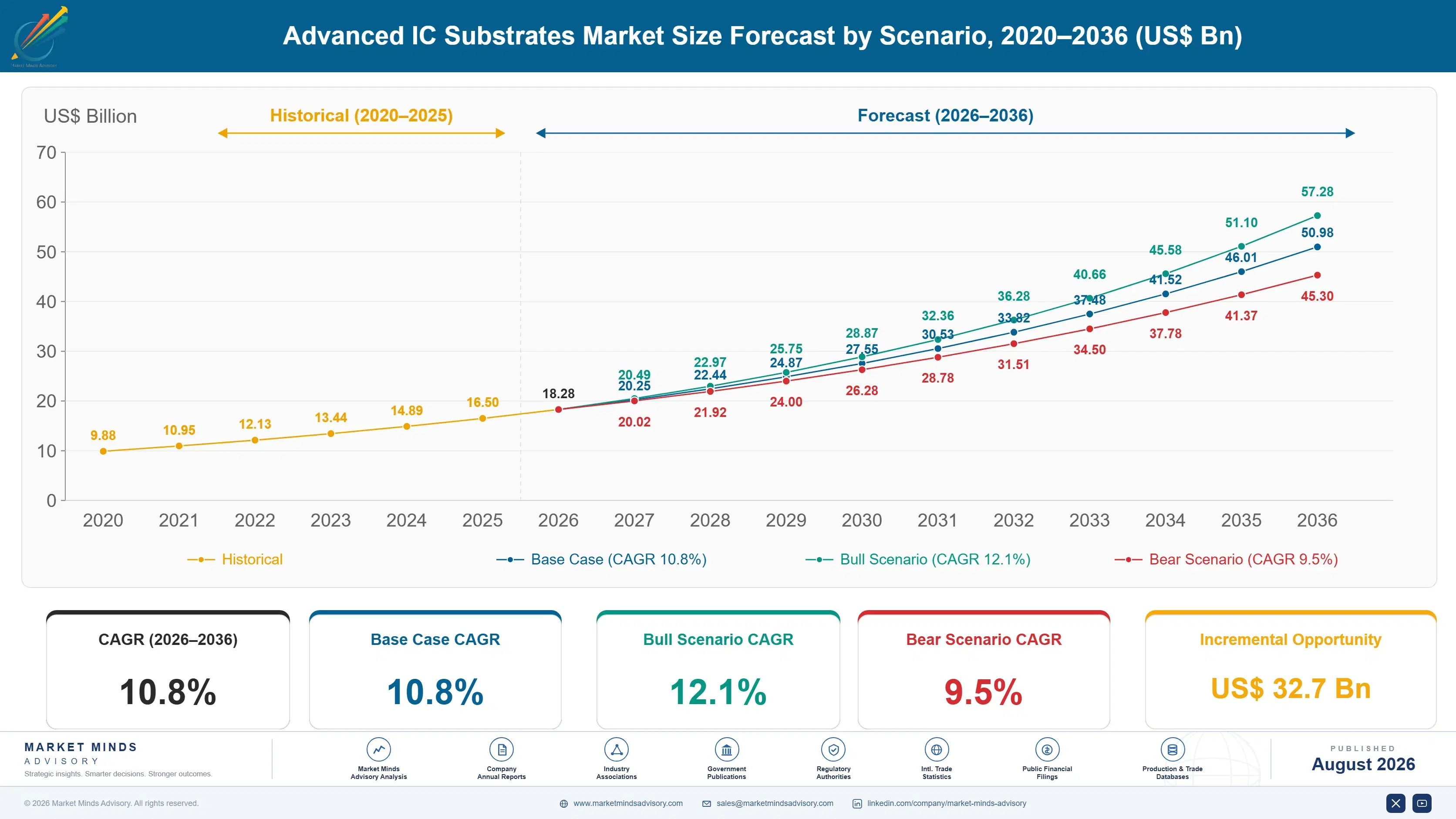
advanced-ic-substrates-market-size-forecast-scenario-1787300832177
Advanced IC substrate demand grew near 9.5% annually between 2020 and 2025, distorted by the severe 2021 to 2022 ABF substrate shortage that constrained chip production across the entire semiconductor industry before capacity additions eased the bottleneck through 2023 and 2024 across most major suppliers, though tightness has since returned on AI accelerator demand specifically.
The base case reaches 10.8% on three mechanisms. First, AI accelerator die sizes keep expanding, requiring larger, higher-layer-count FC-BGA substrates that consume disproportionately more capacity per chip than mainstream CPU packaging ever did. Second, chipmakers are diversifying substrate suppliers and geographies to reduce single-source risk after the 2021 shortage exposed genuine supply chain fragility. Third, CHIPS Act incentives are pulling nascent domestic advanced packaging capacity into the United States faster than organic demand alone would justify.
The bull case at 12.1% assumes AI accelerator shipment volumes keep growing faster than currently modelled and glass-core substrate commercialisation accelerates adoption timelines meaningfully across major foundry customers. The bear case at 9.5% assumes a broader semiconductor capital spending slowdown delays announced capacity additions and AI chip demand growth moderates from its current exceptional pace across major customers.

Capacity Economics Behind the AI Substrate Race

Advanced IC substrates behave like a lithography-adjacent bottleneck wearing a packaging label. FC-BGA substrates compete on layer count and panel yield for the largest AI accelerator dies, while smaller-format substrates compete on cost and cycle time across a completely different mobile and consumer electronics customer base, and both draw on overlapping ABF material and panel-plating capacity that a single supply shock can constrain at once.
CR5 CONCENTRATION58%Top five suppliers hold a genuinely concentrated global share
AVERAGE SELLING PRICEUSD 185 per substrateBlended price across FC-BGA and smaller formats today
LEADING PRODUCING COUNTRYJapan, 24% shareOne country hosts the deepest ABF process expertise
PANEL CAPACITY UTILISATION92%Qualified advanced panel lines run near full committed output
TRADE INTENSITY71% cross-borderMost finished substrates cross a border before assembly
ABF MATERIAL SHARE22-28%Ajinomoto film dominates the specialty input cost base
Commercial activity concentrates around panel capacity allocation rather than substrate design innovation alone. Suppliers that secure long-term ABF material supply and hold qualified capacity for the largest panel formats win AI accelerator contracts that smaller-panel competitors increasingly cannot bid for regardless of price, since foundry customers now pre-pay for allocation years ahead of actual chip production volume across every major program.
Over the next decade, panel capacity investment timing and glass-core substrate commercialisation will matter more than any single process improvement introduced this cycle across the industry. ABF material supply security, CHIPS Act-driven regional diversification, and AI accelerator design roadmaps will decide who captures the next wave of large foundry contracts before customers lock multi-year capacity agreements that are difficult to unwind.
"The chip used to decide the substrate. Now the substrate roadmap decides how big the chip is allowed to be, and that is a genuinely new constraint nobody planned for a few years ago."
Director, Semiconductor Packaging Practice · MMA Semiconductor Advanced Packagin

Market Trends

Glass-Core Substrates Move From Lab Prototype Toward Pilot Lines

Intel and Samsung have both disclosed glass-core substrate development programmes targeting the flatness and interconnect density limits that organic ABF substrates face as AI accelerator packages grow larger and thinner simultaneously. Glass cores offer dimensional stability organic substrates cannot match at the largest panel sizes, reducing warpage that limits how many dies a single package can reliably integrate. Intel has targeted glass substrate insertion into products later this decade, while Samsung Electro-Mechanics and several Japanese materials suppliers are separately racing to qualify compatible process chemistry. Commercial volume remains years away, but qualification investment is already reshaping supplier roadmaps industry-wide.
Market Impact: Adds 40% more layers per generation
Foundry Customers Pre-Pay For Multi-Year Panel Allocation

Major fabless chip designers have shifted from spot substrate purchasing to multi-year capacity reservation agreements, often including upfront capital contributions toward specific supplier panel line expansions, a structure that barely existed before the 2021 ABF shortage exposed how exposed unreserved buyers were. This reservation model effectively converts substrate suppliers into extensions of the customer's own capacity planning, locking in demand years before chips reach volume production. Suppliers holding these reservation agreements now plan capital expenditure against contracted revenue rather than forecast demand, a meaningfully lower-risk capital allocation position than the industry operated under previously.
Market Impact: Directs 3 billion dollars capacity

Market Opportunities and Growth Drivers

AI Accelerator Die Sizes Keep Expanding Substrate Requirements

Nvidia, AMD, and several hyperscaler custom silicon programmes have all released accelerator packages substantially larger than prior-generation CPU packages, requiring FC-BGA substrates with more layers and larger panel formats to route the interconnect density modern AI chips require. Each successive accelerator generation has pushed substrate specifications further, since more compute and memory bandwidth packed into one package demands proportionally more routing layers to connect everything reliably. This trend shows no sign of reversing, as chip designers continue prioritising raw performance over the packaging cost and yield challenges larger substrates introduce at every stage of manufacturing.
Market Impact: Concentrates 100% supply in one firm

CHIPS Act Incentives Pull Advanced Packaging Onshore

The US CHIPS and Science Act has directed billions of dollars toward domestic semiconductor manufacturing, with a meaningful share specifically targeting advanced packaging capability that the United States had almost entirely ceded to Asian suppliers over the prior two decades. Intel's Arizona and New Mexico advanced packaging investments, backed by CHIPS Act funding, aim to build domestic FC-BGA capacity for the first time at meaningful scale in decades. This onshoring push responds directly to national security concerns about substrate supply concentration in a small number of Asian facilities, a vulnerability the 2021 shortage made impossible to ignore politically.
Market Impact: Extends lead times by 18 months

Market Restraints and Challenges

ABF Material Supply Concentration Creates Single-Point Risk

Ajinomoto Build-up Film, the insulating dielectric material essential to FC-BGA substrate manufacturing, is produced by a single Japanese supplier with no qualified alternative material at comparable performance and cost. The root cause is decades of process-specific chemistry development that competitors have not successfully replicated, despite genuine attempts by several materials companies. This concentration means any disruption at Ajinomoto's production facilities would constrain the entire advanced substrate industry simultaneously, regardless of how much panel capacity individual substrate makers have built. Some suppliers are now co-investing in Ajinomoto's capacity expansion specifically to secure guaranteed allocation ahead of future demand.
Market Impact: Targets insertion within 4 years

Panel Capacity Buildout Lag Extends Delivery Lead Times

New advanced substrate panel lines require eighteen to twenty-four months from capital commitment to qualified production output, a lag that consistently trails the pace at which AI accelerator demand forecasts have been revised upward. The root cause is genuine equipment lead time for specialised plating, drilling, and lamination tools that only a handful of equipment makers worldwide can supply at the tolerances advanced substrates require. This mismatch between demand growth and capacity build timing has kept the industry in a persistent state of near-full utilisation, forcing customers to commit capital years before confirmed product volumes exist.
Market Impact: Locks in capacity 3 years ahead
4 additional market trends, 3 additional growth drivers, and 2 additional restraints and challenges are covered in the full report. Contact sales@marketmindsadvisory.com to access the complete intelligence.

Segment CAGR and Growth Architecture

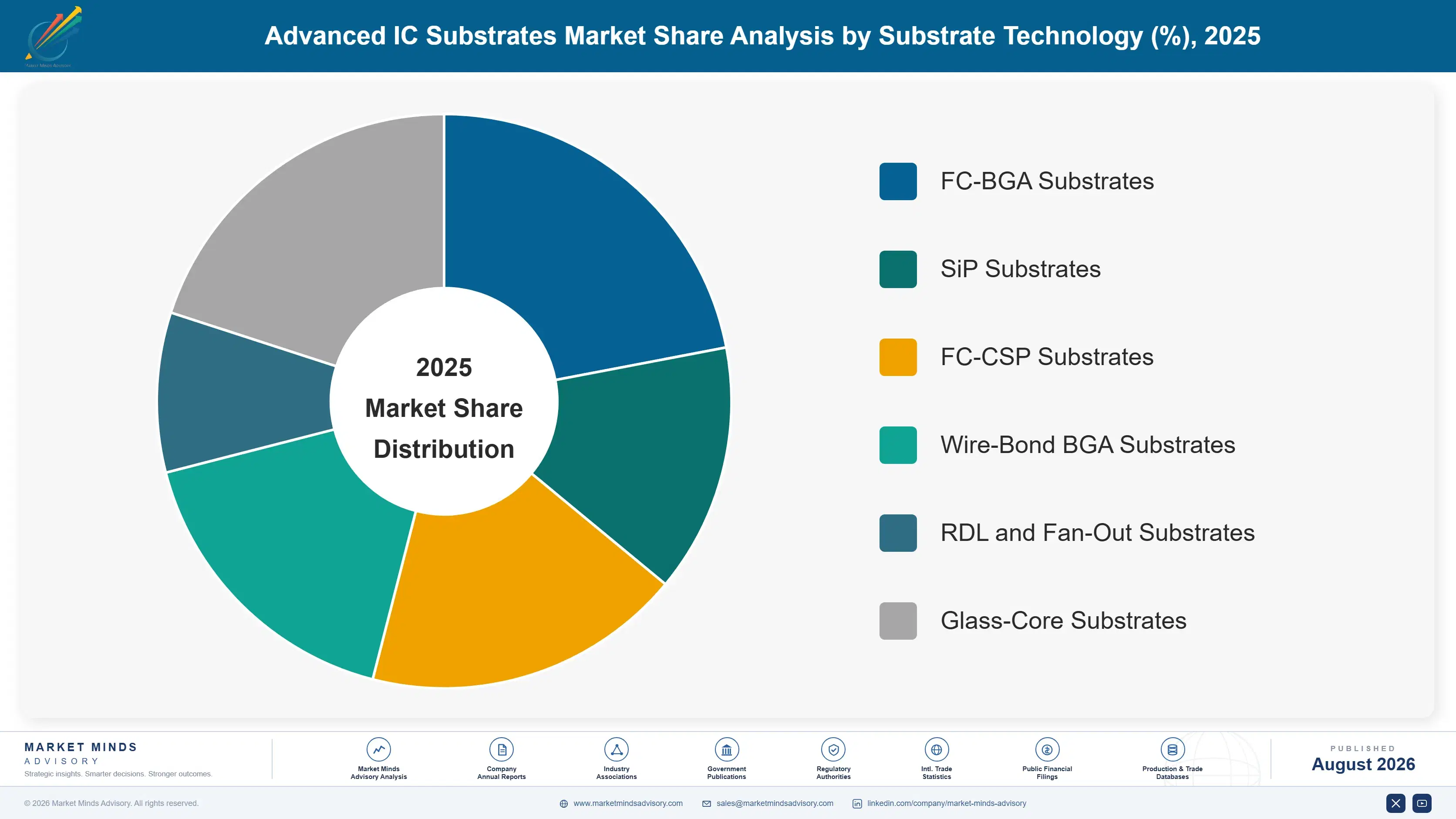
Segmentation follows substrate technology, a single classification logic grounded in the interconnect architecture and material system each type uses, from flip-chip ball grid array to wire-bond formats across the industry. Each technology carries its own layer count range, panel format, and qualified customer base, so commercial position tracks interconnect architecture rather than end-use device category.
advanced-ic-substrates-market-market-share-analysis-1787300832713

FC-BGA Substrates

FC-BGA substrates grow fastest at 16.5%, about 1.53 times the overall 10.8% rate, as AI accelerator and high-performance computing dies require ever larger, higher-layer-count packages that only flip-chip ball grid array architecture can currently route reliably. Panel formats have grown substantially over the past several product generations specifically to accommodate the interconnect density AI chips require, pushing suppliers toward equipment and process qualification investments smaller substrate makers cannot fund. Ibiden and Unimicron dominate the largest panel formats specifically, where qualified capacity remains genuinely scarce relative to accelerator shipment forecasts. Foundry customers increasingly pre-pay for multi-year allocation in this category alone, a financing structure barely used elsewhere in the substrate industry.
CAGR 16.5%

SiP Substrates

SiP substrates grow second-fastest at 13.2%, driven by chiplet and multi-die architectures that package multiple silicon dies, memory, and passive components onto a single substrate rather than a traditional single-die package. Apple, AMD, and several mobile chipset makers have all expanded SiP adoption specifically to integrate more functionality into smaller form factors than monolithic chip designs could achieve economically. This architecture shift favours substrate suppliers with strong multi-die routing and thermal management design capability over those competing purely on panel manufacturing scale. Samsung Electro-Mechanics and LG Innotek both hold strong SiP positions tied to mobile and wearable device customers specifically, a different qualified customer base than the AI-accelerator-focused FC-BGA segment serves.
CAGR 13.2%
Full segment breakdown across 6 segments available in the complete report.

Regional Architecture and Country Demand Map

Seven regions divide unevenly around a genuinely concentrated manufacturing base. East Asia holds the overwhelming majority of advanced substrate capacity, while South Asia and Pacific compounds fastest as Malaysia and Singapore's backend assembly cluster pulls substrate-adjacent investment that other regions increasingly cannot match on proximity.

North America

CHIPS Act incentives are pulling nascent domestic FC-BGA capacity into the United States for the first time at meaningful scale in decades, with Intel's Arizona and New Mexico advanced packaging investments anchoring the buildout specifically and directly. This onshoring push responds directly to national security concerns about substrate supply concentration in a small number of Asian facilities, a vulnerability the 2021 ABF shortage made politically impossible to ignore. Amkor and TTM Technologies both maintain domestic assembly and substrate operations that benefit from customer preference for supply chain diversification regardless of any near-term cost disadvantage. Growth here trails East Asia because domestic capacity remains a small fraction of qualified global output overall.
Share: 22% | CAGR: 10.5% (2026 to 2036)

Western Europe

AT&S, headquartered in Austria, anchors the region's advanced substrate manufacturing specifically, having invested heavily in a new Malaysian facility precisely because European cost structures and customer proximity could not support comparable domestic expansion at competitive scale. European semiconductor sovereignty initiatives have discussed advanced packaging investment, but announced capacity commitments remain modest relative to Asian or even North American investment levels currently underway. Automotive and industrial chip customers, concentrated in Germany specifically, sustain steady demand for mid-tier substrates that do not require the largest AI-accelerator panel formats. Growth trails every other tracked region because the manufacturing base here is genuinely thin relative to the region's chip design and automotive electronics strength.
Share: 18% | CAGR: 9.3% (2026 to 2036)
Regional intelligence for 5 additional markets available in the complete report: East Asia, South Asia and Pacific, Latin America, Middle East and Africa, Eastern Europe. Contact sales@marketmindsadvisory.com.
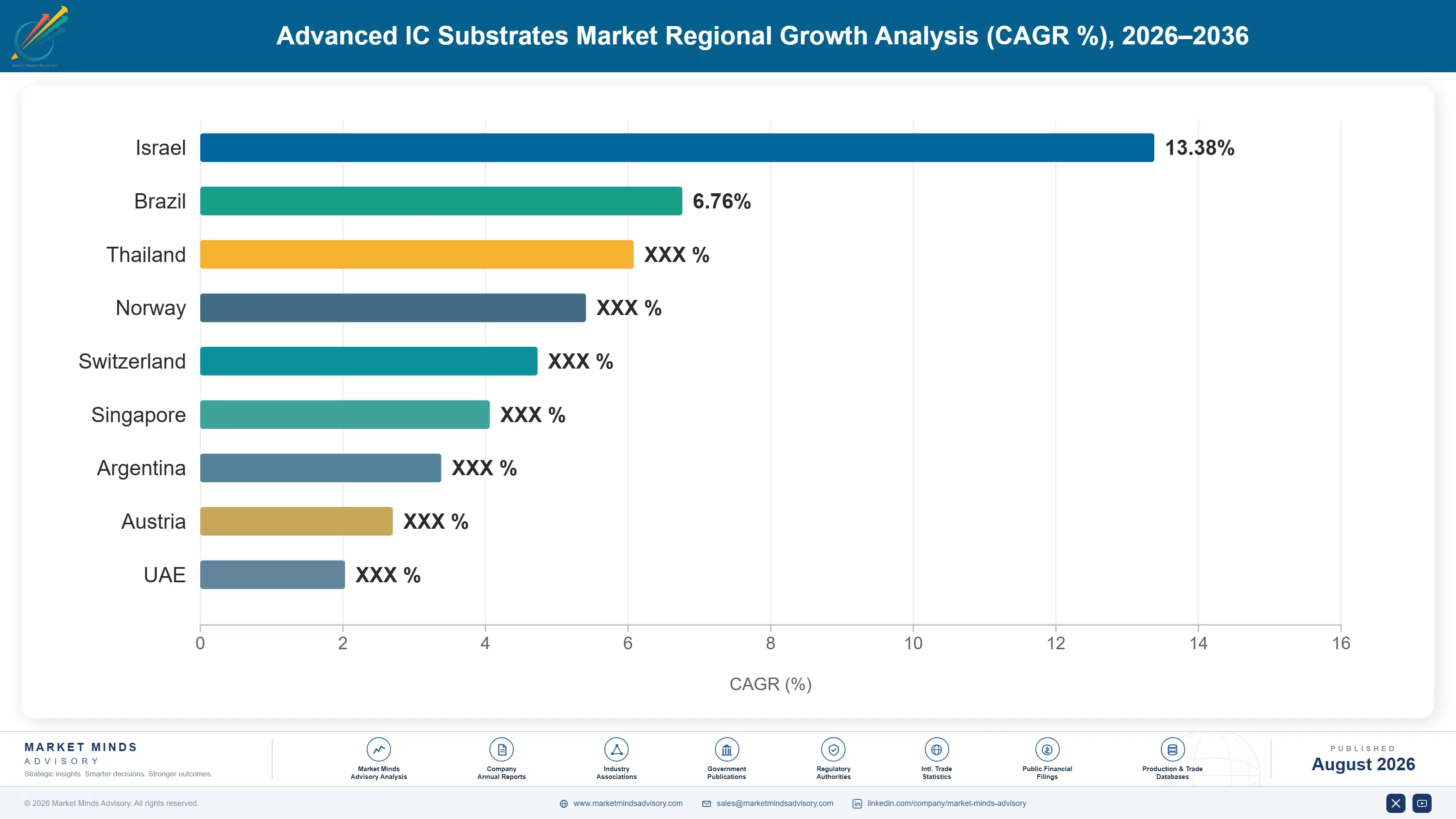
advanced-ic-substrates-market-country-cagr-analysis-1787300833224

How Substrate Makers Can Capture More Margin

Margin in this market concentrates where ABF material security, panel capacity commitment, and next-generation process qualification protect a supplier from allocation risk and customer disintermediation simultaneously across a full multi-year contract cycle. The four moves below shift revenue toward foundry customers who pay for guaranteed capacity rather than substrates priced purely off panel area.

Secure Multi-Year ABF Allocation Through Direct Co-Investment

Ajinomoto Build-up Film supply concentration means every substrate maker competes for allocation from a single material source during tight demand cycles, and suppliers without secured contracts risk production shortfalls regardless of how much panel capacity they have built. Co-investing directly in Ajinomoto's capacity expansion, rather than relying on standard purchase orders, secures guaranteed allocation and typically locks pricing roughly 8% to 12% below spot rates during shortage periods specifically. Suppliers that completed this co-investment ahead of the next demand surge are positioned to fulfil customer contracts that rivals dependent on open-market material purchasing cannot reliably guarantee.
Market Impact: Locks ABF pricing 8% to 12% below spot

Pursue CHIPS Act-Backed Domestic Capacity Expansion

US CHIPS Act funding covers a meaningful share of qualifying advanced packaging capital expenditure, effectively subsidising domestic capacity that would otherwise carry a genuine cost disadvantage against established Asian panel lines. Suppliers securing CHIPS Act co-funding can build domestic capacity at an effective cost roughly 20% to 30% below unsubsidised greenfield investment, while also capturing customers specifically seeking supply chain diversification for national security or single-source risk reasons. This funding window will not remain open indefinitely, so suppliers still evaluating domestic expansion should treat near-term application as time-sensitive capital planning rather than a deferrable strategic option.
Market Impact: Cuts domestic capex by roughly 20% to 30%

Qualify Glass-Core Process Early For Next-Generation Premium

Glass-core substrates remain years from commercial volume, but suppliers investing in process qualification now are positioned to capture the premium pricing early movers in any substrate transition historically command before broader competition arrives and compresses that advantage. Intel and Samsung's glass-core development programmes signal genuine customer demand for the dimensional stability organic substrates cannot match at the largest panel sizes, and suppliers with qualified glass-core capability when commercial volume arrives should capture pricing roughly 30% to 45% above equivalent organic FC-BGA substrates. Waiting until the technology matures further means entering against whoever qualified first.
Market Impact: Targets a 30% to 45% glass-core price premium

Offer Capacity Pre-Payment Financing To Lock Foundry Contracts

Foundry customers increasingly prefer suppliers willing to structure capacity reservation agreements including upfront capital contributions toward specific panel line expansions, converting what was once purely a purchase order relationship into a genuine capacity partnership between both parties involved. Suppliers offering this financing structure secure multi-year contracted revenue that de-risks capital expenditure decisions considerably, typically representing 15% to 25% of total expansion capital funded directly by the reserving customer itself. This structure increasingly separates suppliers who can credibly promise large-panel capacity from those still financing expansion purely against uncertain forecast demand.
Market Impact: Secures 15% to 25% of expansion capital funded

Who Controls the Margin Pool

Concentration is genuine at CR5 58%, assessed on installed advanced panel capacity, and the gap between leader and challenger reflects process technology depth rather than raw manufacturing scale. Ibiden's Ajinomoto Build-up Film expertise and primary Intel relationship give it a niche Unimicron's diversified base has not displaced.
Three dimensions define current activity. Panel capacity racing continues as suppliers commission new large-format lines faster than qualification processes can validate them for AI accelerator customers. ABF co-investment is accelerating, as suppliers secure material allocation directly rather than depend on open-market purchasing during tight cycles. Glass-core process qualification keeps advancing too, as suppliers position for a substrate transition still years from commercial volume but already reshaping capital allocation.

Pressure is building from two directions at once. Chinese domestic substrate makers are investing heavily to reduce dependence on Japanese and Taiwanese suppliers, testing whether process technology gaps can close faster than incumbents expect. Meanwhile foundry customers themselves are exploring vertical integration into substrate design, threatening to compress independent supplier margin on the highest-value AI accelerator contracts specifically. Rankings will shift toward suppliers combining ABF supply security with qualified large-panel capacity, not toward whoever holds the most total panel area globally.
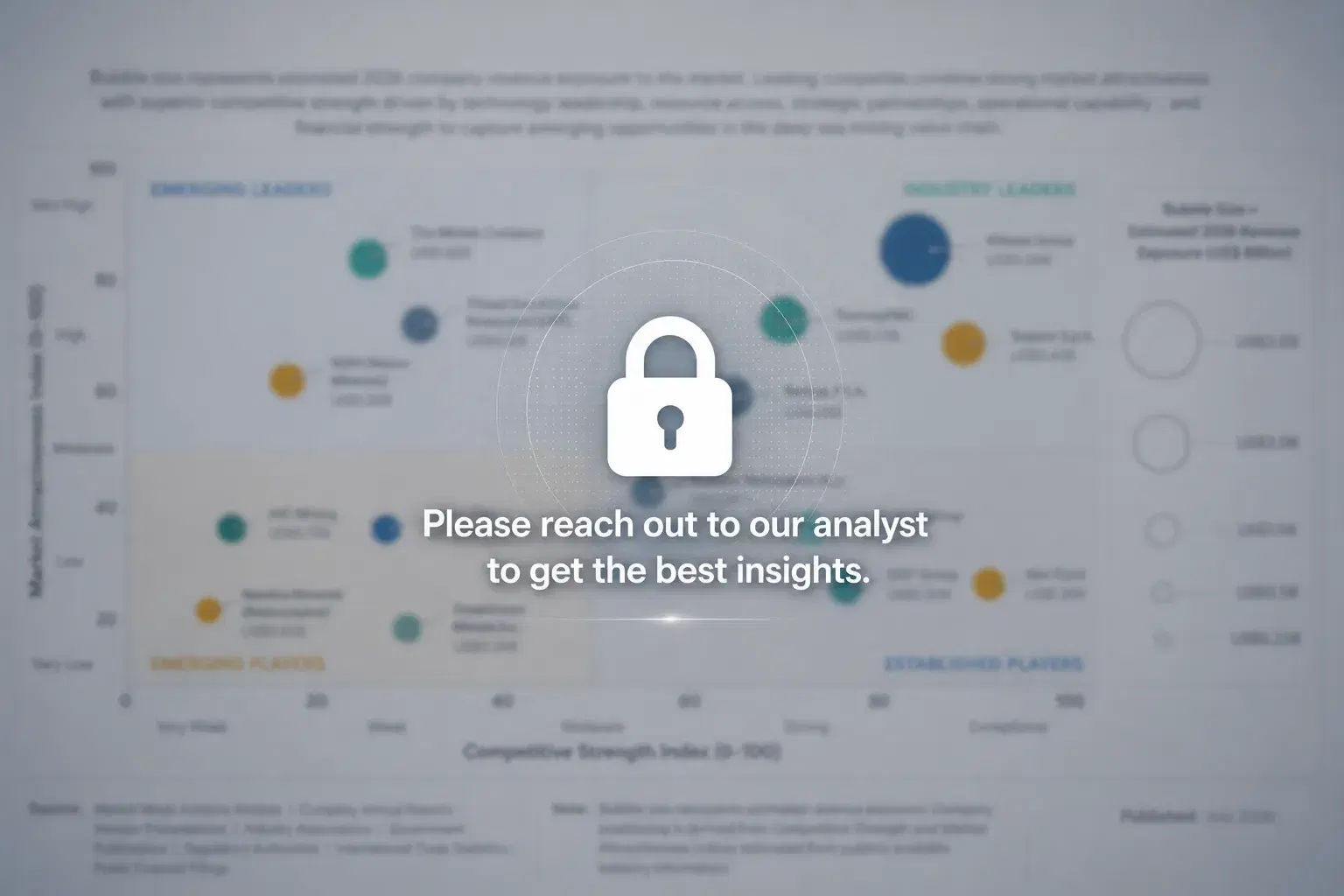
advanced-ic-substrates-market-company-positioning-matrix-1787300833745

Competitive Moat and Risk Dimensions

IBIDEN CO. LTD.

Moat: Deep ABF Process Expertise

Ibiden's decades of Ajinomoto Build-up Film process refinement, combined with its position as Intel's primary substrate supplier, give it qualified capacity and process yield rivals without comparable process history struggle to match consistently. That relationship depth compounds as Intel's own advanced packaging roadmap grows more demanding.
IBIDEN CO. LTD.

Risk: Customer Concentration In Intel Cycle

A substantial share of Ibiden's advanced substrate revenue ties to Intel's product cycle and capital spending decisions, exposing it more directly to any Intel-specific slowdown than diversified competitors serving multiple foundry customers simultaneously. A material Intel roadmap delay would compress Ibiden's near-term revenue faster than rivals would feel it.
UNIMICRON TECHNOLOGY CORPORATION

Moat: Broadest Diversified Customer Base

Unimicron's capacity spans the Nvidia and AMD customer base alongside mobile and consumer customers, giving it revenue diversity that reduces dependence on any single chip design roadmap succeeding on schedule as planned. That breadth advantage matters most when one customer segment slows while another accelerates unexpectedly.
UNIMICRON TECHNOLOGY CORPORATION

Risk: Overcapacity Risk From Aggressive Expansion

Unimicron has committed substantial capital to panel capacity expansion timed to current AI accelerator demand forecasts, a bet that would leave meaningful underutilised capacity if accelerator shipment growth moderates from its current exceptional pace. Capital intensity this high leaves less room for error than smaller, more conservative competitors carry.

Key Players

Ibiden Co. Ltd.
Shinko Electric Industries Co. Ltd.
Unimicron Technology Corporation
AT&S
Samsung Electro-Mechanics Co. Ltd.

Others

Nan Ya PCB Corporation
Kinsus Interconnect Technology Corp.
LG Innotek Co. Ltd.
Zhen Ding Technology Holding Limited
Daeduck Electronics Co. Ltd.
Kyocera Corporation
TTM Technologies Inc.
Simmtech Co. Ltd.
Fujikura Ltd.
Meiko Electronics Co. Ltd.
Compeq Manufacturing Co. Ltd.
ASE Technology Holding Co. Ltd.
Amkor Technology Inc.
Ajinomoto Co. Inc.
Doosan Corporation

Recent Developments

FEBRUARY 2026

Ibiden expands Ogaki advanced substrate facility

Ibiden announced a further expansion of its Ogaki, Japan advanced substrate facility, adding qualified large-panel FC-BGA capacity specifically targeted at AI accelerator customers whose die sizes and layer count requirements continue exceeding what existing qualified industry capacity can reliably supply across this cycle and the next.
Signal: Organic capacity expansion, not an acquisition, signals continued confidence in sustained AI accelerator demand growth ahead.
SEPTEMBER 2025

Commerce Department finalizes CHIPS Act packaging awards

The US Department of Commerce finalized additional CHIPS Act funding awards specifically targeting domestic advanced packaging capability, directing meaningful federal co-investment toward FC-BGA capacity that had almost entirely migrated to Asian suppliers over the prior two full decades of industry consolidation and manufacturing specialisation abroad.
Signal: A funding award, not a corporate transaction, accelerates domestic capacity timelines that pure private investment alone would have delayed.
JUNE 2025

Unimicron signs AI accelerator capacity reservation deal

Unimicron signed a multi-year capacity reservation agreement with a major AI accelerator designer, including a substantial upfront capital contribution toward a new large-panel production line, securing contracted revenue years ahead of the line reaching qualified volume production capacity for customer shipment, delivery, and final acceptance.
Signal: A capacity reservation agreement, not a joint venture, locks demand without transferring equity or operational control.

ABF Film, Copper, and Cost

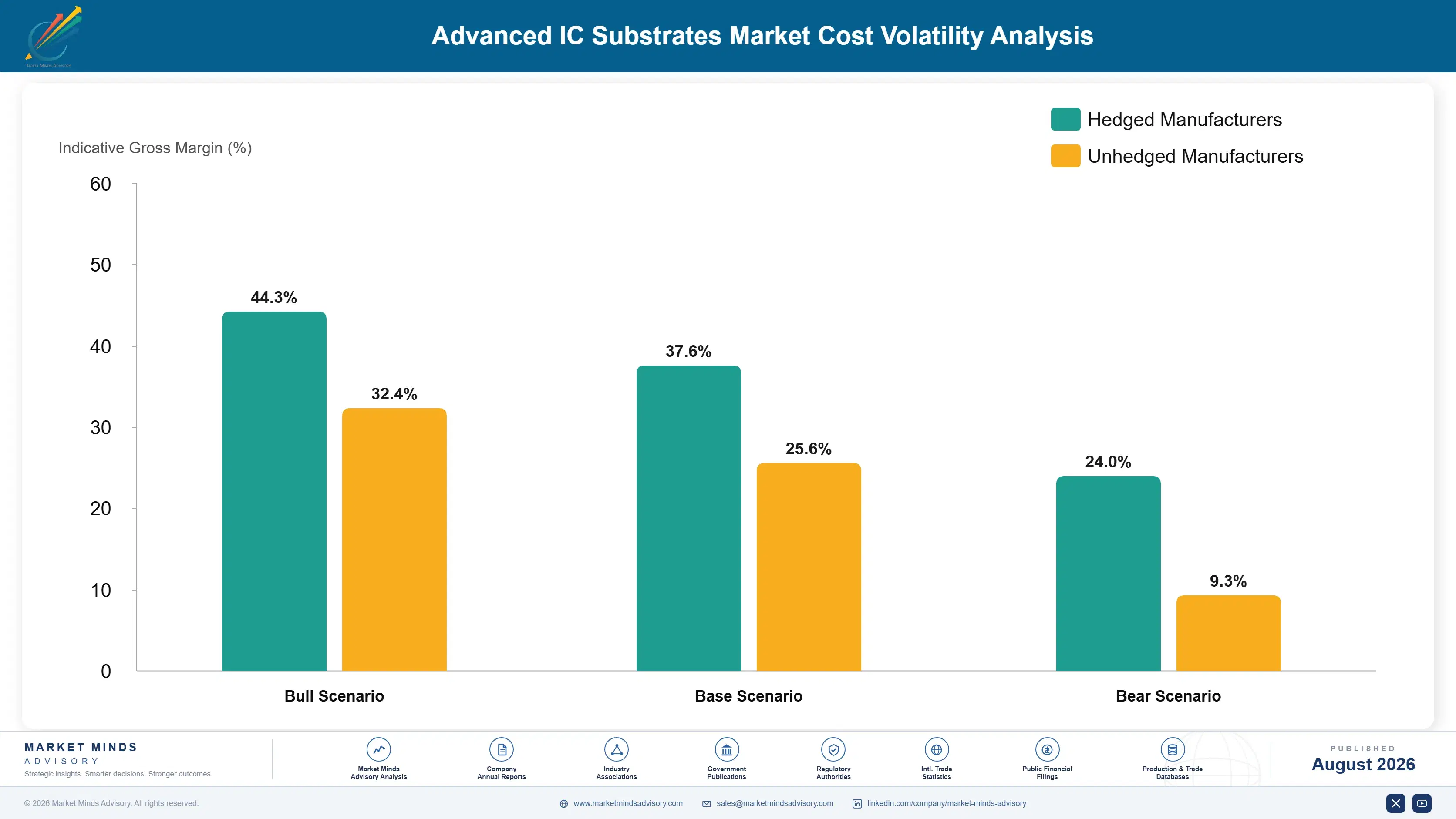
Ajinomoto Build-up Film accounts for 22% to 28% of cash cost of goods sold in FC-BGA substrate manufacturing, sourced exclusively from Ajinomoto's Japanese production facilities with no qualified alternative material at comparable performance. Copper foil and gold plating for interconnect layers contribute a further 18% to 24%, with specialty resin and glass fibre making up most of the remainder.
The 2021 to 2022 ABF shortage remains the sector's defining volatility event. Pandemic-driven demand for laptops, servers, and consumer electronics simultaneously overwhelmed Ajinomoto's production capacity, constraining chip production across the entire semiconductor industry for over a year. Intel and AMD both disclosed substrate supply as a material constraint on shipment volumes in subsequent earnings disclosures. Ajinomoto has since expanded production capacity meaningfully, though tightness has returned as AI accelerator demand pulls substrate consumption higher than the original capacity expansion anticipated.

Exposure separates suppliers with secured long-term ABF contracts from those purchasing on standard commercial terms without priority allocation. Ibiden and Shinko, holding the deepest historical relationships with Ajinomoto, secured priority allocation during the 2021 shortage that smaller substrate makers could not obtain regardless of price. Suppliers without comparable relationship depth face genuine allocation risk during future tight cycles.
advanced-ic-substrates-market-cost-volatility-analysis-1787300833939

Co-Invest In Ajinomoto Capacity For Priority Allocation

Direct co-investment in Ajinomoto's production expansion, rather than standard purchase agreements, secures priority allocation during tight cycles that smaller suppliers relying on open commercial terms cannot obtain regardless of the price they are willing to pay. This structure has already proven decisive once, during the 2021 shortage specifically, when priority-allocated suppliers kept shipping while others faced production shortfalls.

Qualify Alternative Dielectric Materials Where Technically Feasible

Several materials companies are developing alternative dielectric films for less demanding substrate applications outside the highest-layer-count FC-BGA category, and qualifying these alternatives where feasible reduces total dependence on a single material source. This diversification will not fully replace ABF for the most demanding AI accelerator packages, but it eases pressure on the shared material pool during tight supply cycles.

Build Long-Term Copper And Gold Supply Agreements

Locking multi-year copper foil and gold plating supply agreements with diversified metal suppliers, rather than buying entirely on the spot market, reduces exposure to precious metal price volatility that has meaningfully affected interconnect layer cost recently. Suppliers with these agreements in place quote customer contracts with materially more pricing confidence than rivals still exposed to daily spot metal price swings.

Portfolio Architecture for Margin Defence

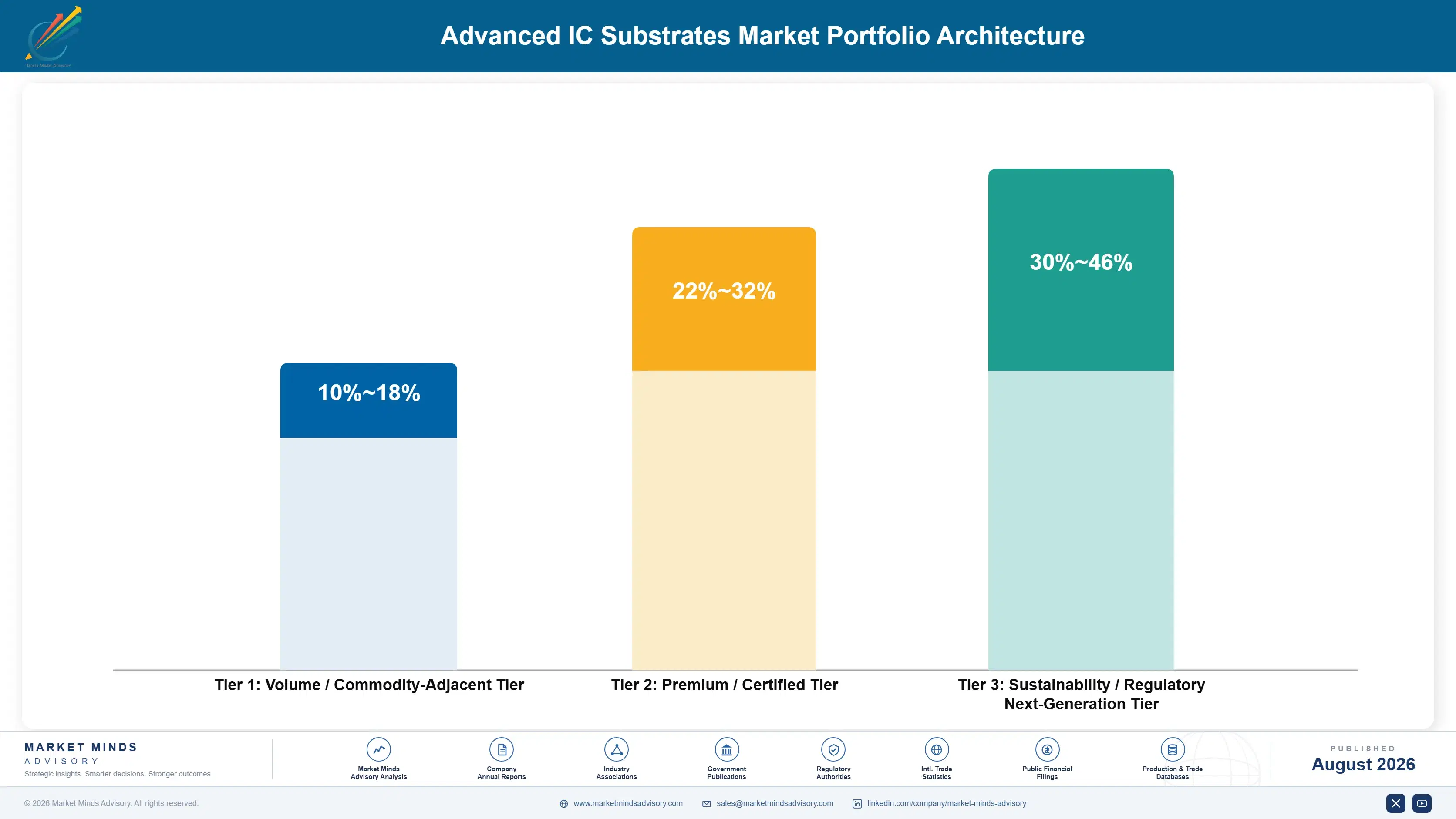
The portfolio splits into three margin tiers separated by layer count, panel format, and qualified customer base rather than unit volume alone. Wire-bond and basic substrates for consumer electronics compete almost entirely on manufacturing cost and yield, while large-panel FC-BGA and emerging glass-core substrates earn considerably more because fewer suppliers can qualify the process technology or panel scale required.
The tension running through every supplier's strategy is volume against premium. Wire-bond and mid-tier substrates fund manufacturing overhead and keep production lines running, but they earn thin single-digit to low-double-digit margins that barely survive a bad material cost quarter. Large-panel AI accelerator substrates carry the earnings upside, yet they demand panel capacity investment, ABF supply security, and qualification depth that smaller substrate makers often cannot sustain through a full investment cycle.

High-value pools concentrate wherever panel scale or process qualification matters most: large-panel FC-BGA for AI accelerators, glass-core substrates entering commercial qualification, and CHIPS Act-backed domestic capacity all sit here. Wire-bond and basic FC-CSP substrates, sold into distributed consumer electronics channels, remain the volume anchor that keeps manufacturing lines utilised but contribute comparatively little to blended profitability.

Volume / Commodity-Adjacent Tier

Wire-bond and basic BGA substrates for consumer electronics and entry-level chips, sold on manufacturing cost and yield, competing directly against regional makers on landed cost with minimal process differentiation today.
Gross Margin: 10-18%

Premium / Certified Tier

Mid-tier FC-CSP and standard FC-BGA substrates carrying established qualification with mainstream CPU and mobile chipset customers that newer entrants without comparable process history cannot easily displace anytime soon at scale.
Gross Margin: 22-32%

Sustainability / Regulatory / Next-Generation Tier

Large-panel FC-BGA substrates for AI accelerators, plus CHIPS Act-backed domestic capacity and glass-core substrates entering commercial qualification, commanding a genuine premium for panel scale and next-generation process depth already achieved.
Gross Margin: 30-46%
advanced-ic-substrates-market-portfolio-architecture-1787300834435

High-value Sub-segments and Strategic Watch-out

FC-BGA Substrates

FC-BGA substrates are the high-value, high-growth pool, expanding at 16.5% as AI accelerator dies require ever larger, higher-layer-count packages. The wide margin range reflects panel qualification status: suppliers with the largest qualified formats capture the top end, while smaller-panel producers earn considerably less on the same underlying technology.
Gross Margin: 28-44%

SiP Substrates

SiP substrates form the high-value, moderate-growth pool at 13.2%, serving chiplet and multi-die architectures that pack more functionality into smaller form factors. The wide range reflects design complexity, since suppliers with strong multi-die routing capability earn more than those competing on panel manufacturing scale alone.
Gross Margin: 20-32%

Wire-Bond BGA Substrates

Wire-bond BGA substrates are the volume core, the largest unit segment by far and the one every maker depends on to keep production lines running through demand cycles. Margins stay thin because pricing tracks material and delivered cost closely, leaving limited room for differentiation across competing domestic and imported supply.
Gross Margin: 10-17%

FC-CSP Substrates

FC-CSP substrates are the strategic watch-out, squeezed as Chinese domestic makers scale mobile-focused capacity that undercuts established suppliers on price for mature mobile chipset applications. The wide range reflects that suppliers holding premium mobile customer relationships still earn well while undifferentiated capacity increasingly competes on price.
Gross Margin: 12-24%

How Substrate Demand Actually Repeats

Demand here increasingly runs on multi-year capacity reservation agreements rather than purchase orders, since AI accelerator customers now pre-pay for panel allocation years before chips reach volume production. This annuity-like structure gives suppliers holding these agreements a revenue visibility construction-style capital equipment sellers rarely enjoy.
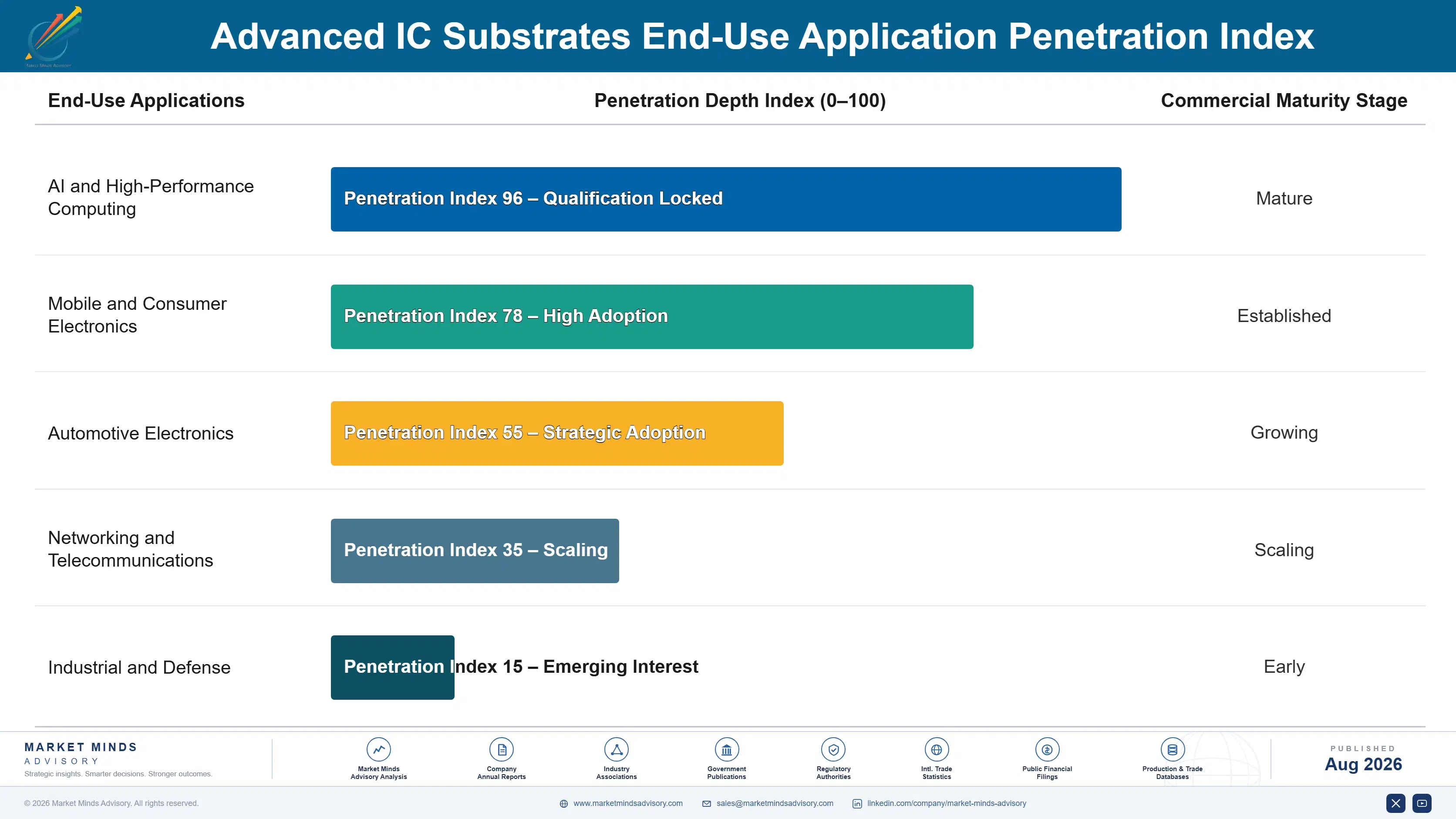
Adoption depth varies sharply by vertical. AI accelerator and high-performance computing customers, once a supplier clears process qualification for a specific panel format, rarely switch mid-programme, since requalifying substrate suppliers risks production delays that cost far more than any price gap could offset. Mobile and consumer electronics customers sit closer to the middle, loyal within a product generation but open-bid at the next design cycle. Automotive customers sit at the far end, locked in by qualification timelines that make switching a multi-year undertaking.

Buyer profiles have shifted generationally too. Foundry and chip design procurement teams increasingly weigh supply chain diversification and geographic risk as heavily as unit price, a shift the 2021 ABF shortage accelerated considerably. Younger supply chain executives also treat multi-region sourcing as a genuine strategic priority, a change in framing starting to influence supplier selection beyond pure process qualification.
advanced-ic-substrates-market-end-use-penetration-index-1787300834923

Where Substrate Makers Should Bet Next

These are among the four positions where our research anticipates prominent divergence between winners and laggards over the coming forecast period. Each is grounded in the demand model, the regulatory perimeter, and the announced capacity pipeline.
01 / ABF SUPPLY SECURITY STRATEGY

Co-investing in Ajinomoto capacity is becoming the clearest differentiator during shortages

The 2021 to 2022 ABF shortage separated suppliers who secured priority allocation from those left scrambling on the open market, and that lesson has not faded as AI accelerator demand pulls substrate consumption back toward genuine tightness again. Ibiden and Shinko's deep historical relationships with Ajinomoto gave them a durable advantage smaller competitors could not replicate quickly, regardless of how much panel capacity those competitors had separately built. Suppliers still relying entirely on standard commercial purchase terms should treat co-investment as urgent, not discretionary, supply chain planning.
02 / CHIPS ACT CAPACITY TIMING

The domestic funding window will not stay open indefinitely for advanced packaging

CHIPS Act co-funding effectively subsidises domestic FC-BGA capacity that would otherwise carry a genuine cost disadvantage against established Asian panel lines built over decades of specialisation and accumulated process know-how. Suppliers securing funding now capture both the cost benefit and the customer preference for supply chain diversification that national security concerns have made a genuine commercial consideration across the industry. Waiting for the funding environment to mature further means entering after the most attractive award allocations have already been claimed by faster-moving competitors.
03 / GLASS-CORE QUALIFICATION PRIORITY

Early process investment secures position before broader competition arrives

Glass-core substrates remain years from commercial volume, but the suppliers investing in process qualification now are positioned to capture the premium pricing early movers in any substrate transition historically command before competition compresses that advantage meaningfully. Intel and Samsung's parallel development programmes signal genuine customer demand for dimensional stability organic substrates cannot match at the largest panel sizes chip designers now require for their most advanced products. Suppliers waiting for the technology to mature further risk entering against incumbents who qualified years earlier.
04 / CAPACITY RESERVATION FINANCING

Customer-funded expansion is de-risking capital allocation for suppliers who offer it

Foundry customers increasingly prefer suppliers willing to structure capacity reservation agreements including upfront capital contributions, converting a purchase order relationship into a genuine capacity partnership that shares investment risk between both parties involved in the arrangement. Suppliers offering this financing structure secure contracted revenue that de-risks expansion decisions considerably compared with building purely against forecast demand that could fail to materialise as originally projected. This structure increasingly separates suppliers who can credibly promise large-panel capacity from those still financing expansion speculatively.

Engagement Snapshot From the Field

A live engagement with an industry participant carrying material or product regulatory and market exposure ahead of a defining policy shift, showing how our research translates into a defensible multi-year portfolio strategy.
MARKET MINDS ADVISORY · CLIENT ENGAGEMENT SUMMARY
Advanced IC Substrates Producer Strategic Portfolio Review and Transition Roadmap 2026·Investment Scenario on Advanced IC Substrates Exposure Evaluation 2025-26
CLIENT PROFILE
A fabless AI accelerator designer preparing its next-generation chip launch approached MMA while evaluating whether to diversify beyond its single incumbent substrate supplier ahead of an anticipated demand surge. The client reported projected annual substrate spend near USD 620 million at full production volume, with the incumbent relationship dating back several product generations (client-reported, unverified by MMA).
STRATEGIC CHALLENGE
The incumbent supplier offered favourable pricing tied to exclusivity, but the client's supply chain team worried that single-sourcing left the launch exposed to the same allocation risk that constrained shipments industry-wide during the 2021 shortage, without knowing whether a second qualified supplier could realistically be ready in time for launch.
MMA APPROACH
MMA assessed qualification timelines and panel capacity availability across three alternative suppliers, modelling the cost and schedule impact of dual-sourcing against the incumbent's exclusivity pricing offer in detail. We also reviewed each alternative's ABF supply security position specifically, given its direct relevance to allocation risk during any future industry-wide shortage.
KEY FINDINGS
  1. Two of three alternative suppliers could complete qualification within the client's launch timeline, though both required an eight-month lead time the client had not budgeted for initially.
  2. The incumbent's exclusivity pricing saved roughly 6% versus dual-sourcing, a gap materially smaller than the potential cost of a single-supplier allocation shortfall during peak demand.
  3. One alternative supplier held direct co-investment in Ajinomoto capacity, giving it priority allocation status the incumbent's standard purchase terms did not carry.
  4. Dual-sourcing 25% of volume to the co-invested alternative preserved most exclusivity pricing benefits while meaningfully reducing single-source allocation risk (client-reported, unverified by MMA).
CLIENT PROFILE
A fabless AI accelerator designer preparing its next-generation chip launch approached MMA while evaluating whether to diversify beyond its single incumbent substrate supplier ahead of an anticipated demand surge. The client reported projected annual substrate spend near USD 620 million at full production volume, with the incumbent relationship dating back several product generations (client-reported, unverified by MMA).
STRATEGIC CHALLENGE
The incumbent supplier offered favourable pricing tied to exclusivity, but the client's supply chain team worried that single-sourcing left the launch exposed to the same allocation risk that constrained shipments industry-wide during the 2021 shortage, without knowing whether a second qualified supplier could realistically be ready in time for launch.
MMA APPROACH
MMA assessed qualification timelines and panel capacity availability across three alternative suppliers, modelling the cost and schedule impact of dual-sourcing against the incumbent's exclusivity pricing offer in detail. We also reviewed each alternative's ABF supply security position specifically, given its direct relevance to allocation risk during any future industry-wide shortage.
KEY FINDINGS
  1. Two of three alternative suppliers could complete qualification within the client's launch timeline, though both required an eight-month lead time the client had not budgeted for initially.
  2. The incumbent's exclusivity pricing saved roughly 6% versus dual-sourcing, a gap materially smaller than the potential cost of a single-supplier allocation shortfall during peak demand.
  3. One alternative supplier held direct co-investment in Ajinomoto capacity, giving it priority allocation status the incumbent's standard purchase terms did not carry.
  4. Dual-sourcing 25% of volume to the co-invested alternative preserved most exclusivity pricing benefits while meaningfully reducing single-source allocation risk (client-reported, unverified by MMA).
RECOMMENDED STRATEGY
Phase 1: Phase 1 (0 to 8 months): Qualify the ABF-secured alternative supplier for 25% of projected launch volume immediately and formally. Phase 2: Phase 2 (8 to 18 months): Monitor incumbent allocation reliability closely through the launch ramp and rebalance volume if shortfalls emerge. Phase 3: Phase 3 (18 to 36 months): Reassess the full supplier mix annually using accumulated allocation and pricing data as negotiating leverage.
OUTCOME
The client qualified the second supplier ahead of launch, and when the incumbent later reported a temporary allocation constraint during peak demand, the client's dual-sourced volume absorbed the shortfall without a shipment delay. Management credited the diversification with protecting the launch timeline (client-reported, unverified by MMA).

Frequently Asked Questions

Foundational context covering the market sizes, CAGR, scope, country, region and competition that inform every finding below. This section is provided to cover basics and most often pre-purchase conversations, answered from the MMA Primary Research Dataset.

What is the current size of the Advanced IC Substrates Market?

The global advanced IC substrates market was valued at USD 16.5 billion in 2025. FC-BGA substrates for AI accelerators account for the fastest-growing share of that total.

How large will the Advanced IC Substrates Market be by 2036?

The market is projected to reach USD 51.0 billion by 2036, up from USD 18.3 billion in 2026. That represents an incremental opportunity of roughly USD 32.7 billion across the decade.

What is the CAGR for the Advanced IC Substrates Market 2026 to 2036?

The base case CAGR is 10.8% annually. MMA models a bull case of 12.1% if AI accelerator shipments keep accelerating, and a bear case of 9.5% if semiconductor capital spending slows broadly.

Which segment is growing fastest?

FC-BGA substrates grow fastest at 16.5% CAGR, about 1.53 times the overall market rate, as AI accelerator dies require ever larger, higher-layer-count packages than mainstream CPU packaging ever needed.

Who are the major companies in the Advanced IC Substrates Market?

Ibiden, Shinko, Unimicron, AT&S, and Samsung Electro-Mechanics lead the category on installed advanced panel capacity worldwide. Ibiden holds the deepest Ajinomoto Build-up Film process expertise specifically.

Which country is growing fastest?

The United States posts the fastest national CAGR at 14.8%, driven by CHIPS Act incentives pulling nascent domestic advanced packaging capacity onshore for the first time in decades.

Report Segmentation Architecture

The full report scope spans multiple orthogonal segmentation dimensions, with cross-tabulated demand data provided for each dimension pair. Coverage extends further to regional breakdowns, trend trajectories, and the competitive detail needed to support segment-level decision-making.

By Substrate Technology

  • FC-BGA Substrates
  • SiP Substrates
  • FC-CSP Substrates
  • Wire-Bond BGA Substrates
  • RDL and Fan-Out Substrates
  • Glass-Core Substrates

By End-Use Application

  • AI and High-Performance Computing
  • Mobile and Consumer Electronics
  • Automotive Electronics
  • Networking and Telecommunications
  • Industrial and Defense

By Commercial Dimension

  • Direct Foundry Supply Contracts
  • Capacity Reservation Agreements
  • OSAT and Assembly Partner Channels
  • Government-Backed Domestic Capacity Programmes

By Region

  • North America
  • Western Europe
  • East Asia
  • South Asia and Pacific
  • Latin America
  • Middle East and Africa
  • Eastern Europe

Scope, Methodology, and Coverage

Every figure in this report is reproducible from documented input assumptions. The scope below maps the historical period, the forecast horizon, the segmentation dimensions, and the countries covered, alongside the underlying primary and qualitative methodology.
Historical Period
2020 to 2025
Forecast Period
2026 to 2036
Base Year
2025 (USD billions; MMA Primary Research Dataset, August 2026)
Market Definition
The market covers advanced organic and glass-core substrates that interconnect silicon die to printed circuit boards, including FC-BGA, FC-CSP, SiP, wire-bond BGA, and fan-out formats, sold to fabless designers, foundries, and OSAT providers. Printed circuit boards themselves and standalone lead frames are excluded.
Quantitative Units
USD billions (current prices); millions of substrate units shipped where applicable
Segmentation Dimensions
By Substrate Technology; By End-Use Application; By Commercial Dimension; By Region
Regions Covered
North America, Western Europe, East Asia, South Asia and Pacific, Latin America, Middle East and Africa, Eastern Europe
Countries Covered
USA, China, Germany, France, UK, Japan, South Korea, India, Australia, Canada, Brazil, Mexico, Indonesia, Vietnam, Thailand, Malaysia, UAE, Saudi Arabia, South Africa, Nigeria, Turkey, Poland, Netherlands, Italy, Spain, Sweden, Switzerland, Argentina, Colombia, Singapore, and additional markets relevant to this sector
Key Companies Profiled
Ibiden Co. Ltd., Shinko Electric Industries Co. Ltd., Unimicron Technology Corporation, AT&S, Samsung Electro-Mechanics Co. Ltd., Nan Ya PCB Corporation, Kinsus Interconnect Technology Corp., LG Innotek Co. Ltd., Zhen Ding Technology Holding Limited, Daeduck Electronics Co. Ltd., Kyocera Corporation, TTM Technologies Inc., Simmtech Co. Ltd., Fujikura Ltd., Meiko Electronics Co. Ltd., Compeq Manufacturing Co. Ltd., ASE Technology Holding Co. Ltd., Amkor Technology Inc., Ajinomoto Co. Inc., Doosan Corporation
Quantitative Methodology
Primary survey, n=3,800 respondents, Q4 2025, six countries; demand-side model with trade association cross-validation
Qualitative Methodology
47 expert interviews, Q4 2025; applied to validate demand model assumptions, identify emerging dynamics, and assess competitive positioning
Report Format
PDF and XLSX data workbook (Word format preview document)
Publisher
Market Minds Advisory
Report Code
MMA-2026-TEC-106
Published
August 2026
Contact
sales@marketmindsadvisory.com | www.marketmindsadvisory.com

Purchase the full Advanced IC Substrates Market Report (2026 to 2036).

The full MMA Advanced IC Substrates report sizes the market across six substrate technologies, five end-use applications, four commercial channels, and seven regions through 2036. It profiles 20 participants on a consistent installed advanced panel capacity basis, scoring the top two on ABF supply security, panel scale, and glass-core qualification progress. Scenario models quantify how AI accelerator demand, CHIPS Act incentives, and ABF material supply cycles move both demand and realised pricing. The report also includes delivered-cost modelling by technology, a material exposure screen, panel capacity investment tracking, and a glass-core transition readiness framework built for strategy, procurement, and investment teams.
Six-technology segmentation with panel and value forecasts
Seven-region demand map with country-level detail
Twenty-company competitive profiles on panel capacity
ABF and copper feedstock cost sensitivity modelling
CHIPS Act and capacity investment tracking
Glass-core transition readiness and assessment playbook

Built For The People Who Decide

From boardroom strategy to bench-side execution, this report is read cover-to-cover by leaders shaping the next decade of their industry, turning demand scenarios, market dynamics and valuation benchmarks into decisions.
CXOs/ Presidents/ VPs/ Managers
M&A and Corporate Development
Strategy Teams and R&D Heads
Procurement and Product Directors
Regulatory and Compliance Leaders
Investor Relations and Equity Analysts