
Market Minds Advisory
Acrylic Styrene Acrylonitrile Resin Market

Acrylic Styrene Acrylonitrile Resin Market: Acrylic Styrene Acrylonitrile Resin Market: A Polymer That Exists Because Another Yellows

This resin costs roughly 38% more than the styrenic it replaces and exists for one reason, which is that the cheaper polymer yellows and chalks in sunlight within a couple of years.

Lead Analyst

Published

August 2026

Make Smarter Decisions with Customized Research Insights

Request a free sample report and evaluate market opportunities, growth trends, and competitive dynamics relevant to your business needs.

2025 MARKET VALUE$1.7BMarket Size 2025
2036 FORECAST VALUE$3.4BBase Case , 2026 to 2036
CAGR 2026 TO 20366.6 %Bull 7.8% / Bear 5.4%
INCREMENTAL OPPORTUNITY$1.6BNet 10- year value creation
EXPANSION MULTIPLE1.90x2036 value over 2026 base
Strategic Levers
M&A Pipeline
Regional Outlook
Country Rankings
Competitive Intelligence
Segmental Deep-dive
Call-Us : 91 93563 13602

Executive Snapshot and Market Trajectory.

One property justifies this entire polymer. Replacing the butadiene rubber in a standard styrenic with a saturated acrylate rubber removes the double bonds that ultraviolet light attacks, which is why one yellows outdoors and this one does not. Nothing else about the polymer matters much.
East Asia takes 30% of value on producer concentration and on the automotive and construction demand sitting alongside it, with Western Europe at 24% behind. Alloy and blend grades grow at 9.9%, half again the market rate of 6.6%, as formulators combine weatherability with impact or heat performance that neither component delivers alone anywhere. That premium is what every cost review argues about, year after year, without ever quite resolving anything at all there.
Concentration reaches 68%, high for a polymer, because natural weathering qualification takes around 36 months of genuine outdoor exposure and no shortcut has ever been accepted. That timescale protects incumbents more effectively than any patent, since a competitor cannot qualify a grade faster than the sun moves. A competitor holding identical chemistry still waits out three years before anybody in automotive will sign off on a single specification there.
Market Definition
The market covers acrylate-modified styrene acrylonitrile copolymer resins, commonly designated ASA, supplied for weatherable applications, spanning automotive exterior grades, building profile and capstock grades, general purpose weatherable grades, alloy and blend grades combining ASA with other polymers, recycled content grades, and colour concentrate and compounding services for these resins. Standard ABS and SAN resins, polycarbonate and other engineering thermoplastics supplied alone, weatherable coatings and paint systems, and finished moulded components are excluded from scope.
Base Year Value
$1.7B in 2025 (MMA Primary Research Dataset, August 2026)
Forecast Period
2026 to 2036, eleven discrete annual values
CAGR
6.6% base case. Bull 7.8%. Bear 5.4%.
Fastest Growth Segment
ASA Alloy and Blend Grades: 9.9% CAGR
Fastest Growth Country
India: 8.6% CAGR
Fastest Growth Region
South Asia and Pacific: 8.8% CAGR
Largest Region
East Asia: 30% of 2025 global value
Market Leaders
INEOS Styrolution, LG Chem, SABIC, Chi Mei Corporation, Kumho Sunny. Source: MMA Analysis based on disclosed styrenic and weatherable resin revenue, company annual reports 2025.
Primary Survey
n=3,800 procurement and R&D decision-makers, Q4 2025, six countries
Methodology
Demand-side build-up, cross-validated against public data, 47 expert interviews

Acrylic Styrene Acrylonitrile Resin Market Forecast Scenarios

acrylic-styrene-acrylonitrile-resin-market-size-forecast-scenario-1787719701337
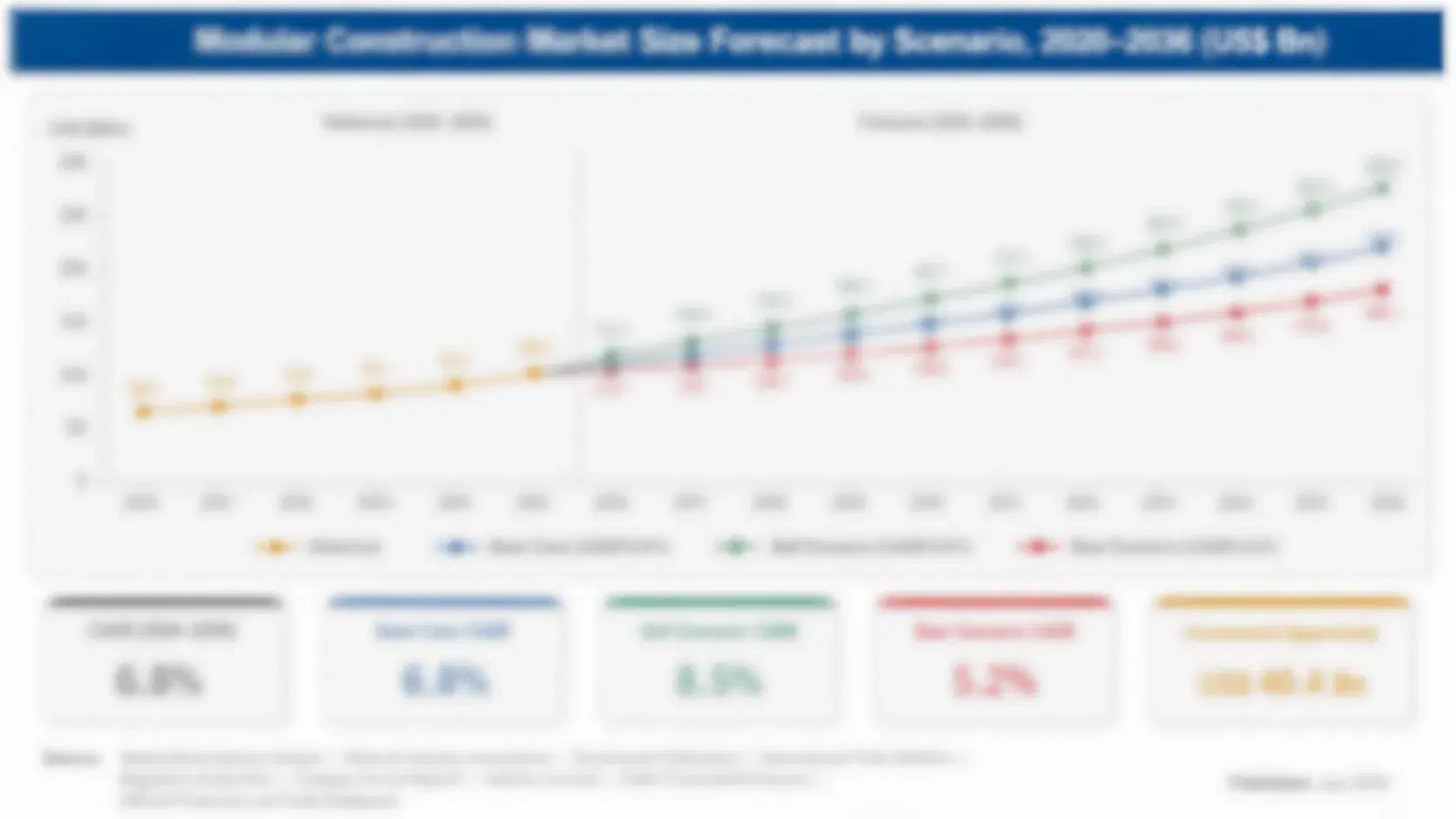
Growth from 2020 to 2025 ran at 5.4% and one automotive decision drove most of it. Vehicle makers moving exterior parts from painted to moulded-in-colour finishing removed the paint layer that had been providing ultraviolet protection, which made the substrate polymer responsible for weathering on its own. Grilles, mirror housings and pillar trim converted accordingly. Building capstock applications grew steadily alongside without anything dramatic happening in either direction.
The 6.6% base case rests on three mechanisms. Alloy and blend grades keep growing as formulators combine weatherability with heat or impact performance for applications neither resin serves alone. Capstock use keeps expanding in siding, profile and pipe, since a thin weatherable layer over a cheaper substrate buys the property only where sunlight reaches. And Indian and Southeast Asian automotive and construction demand keeps rising from a genuinely modest base.
The bull case at 7.8% assumes unpainted exterior finishing extends further across vehicle programmes, since every painted part converted transfers weathering responsibility to the resin underneath. The bear case at 5.4% is ultraviolet-stabilised standard styrenic grades and coating systems closing enough of the performance gap to make a 38% premium harder to justify at specification review.

Sunlight Sets The Price

The chemistry behind this polymer explains everything else. A standard styrenic terpolymer gets its toughness from butadiene rubber, and butadiene carries unsaturated double bonds that ultraviolet light breaks, which is why those parts yellow and embrittle outdoors. Substituting a saturated acrylate rubber removes the vulnerable bonds entirely. The resin costs roughly 38% more and the whole commercial question is whether a part sees enough sunlight to justify that.
FIVE-FIRM CONCENTRATION68%Share of category revenue held by the largest resin producers
PRICE PREMIUM OVER ABS38%Additional cost against the standard styrenic it replaces
WEATHERING TEST DURATION36 monthsOutdoor exposure a new grade needs before qualification
UNPAINTED EXTERIOR SHARE46%Vehicle exterior parts moulded in colour rather than painted
CAPSTOCK LAYER THICKNESS0.3 mmWeatherable cap applied over a cheaper substrate below
AUTOMOTIVE DEMAND SHARE52%Category volume consumed by vehicle exterior applications alone
Automotive answered that question by deciding not to paint. Around 46% of vehicle exterior parts are now moulded in colour rather than painted, and paint had been carrying ultraviolet protection the substrate no longer receives. Grilles, mirror housings, roof rails and pillar trim converted accordingly, and automotive now consumes about 52% of category volume. When an OEM reverts to painted finish, that demand disappears.
Qualification is what protects the producers. Natural weathering exposure in Florida or Arizona runs around 36 months before a grade can be signed off, and accelerated xenon testing guides development without replacing the outdoor programme. A competitor with an equivalent resin still waits three years of sunshine. That is a barrier no patent provides and no capital expenditure shortens by a single week.
"You cannot buy your way past three years of Florida. That is the entire moat in this business, and it is the only one I cover that is enforced by the weather rather than by lawyers."
Director, Engineering Polymers Practice · MMA Engineering Plastics and Polymers Practice · August 2026

Market Trends

Unpainted Exteriors Transfer Weathering To The Resin

Around 46% of vehicle exterior parts are now moulded in colour, which removes a paint layer that had been carrying ultraviolet protection and makes the substrate responsible for surviving outdoors on its own. That conversion is what drives this polymer rather than any change in its own properties. Cost, weight and finishing plant elimination motivate the decision, and weatherable resin specification follows it automatically wherever a programme commits to unpainted parts. Nothing about the resin itself changed here, and demand for it moved sharply anyway. Paint was the thing that left.
Market Impact: Applies premium to 0.3 millimetres
Alloys Combine Weatherability With Something Else

Blending with polycarbonate or other engineering resins produces grades holding weatherability alongside heat resistance or impact performance that neither component delivers alone, and those grow at 9.9% as applications demand both together. Formulation and compatibility work is genuinely difficult and the weathering qualification still applies to the finished blend. Compounders rather than base resin producers do much of this work, which distributes value differently from the rest of the category. Value is moving toward the formulator and away from the pellet producer. Few producers have responded to that shift yet.
Market Impact: Grows India fastest at 8.6%

Market Opportunities and Growth Drivers

Capstock Buys Weatherability Only Where Sunlight Falls

Co-extruding a weatherable cap layer of around 0.3 millimetres over a cheaper substrate delivers the ultraviolet performance exactly where it is needed and nowhere else, which is why siding, window profile and pipe applications adopted the approach so readily. The economics are compelling because the premium applies to a fraction of the wall thickness. Adhesion between layers and matched thermal behaviour are the technical requirements, and both are well understood by now. A part with one weathered face has almost no good reason not to be built this way now.
Market Impact: Delays qualification by 36 months

Indian Automotive And Construction Demand Rises Together

Vehicle production and construction activity across India are both expanding, and unpainted exterior finishing is being adopted on newer programmes rather than retrofitted onto existing ones. India grows fastest of any country at 8.6%. Imported resin carries most of that volume currently, with domestic compounding capability developing faster than any base polymer production is. Ultraviolet exposure levels across much of the region make the performance argument straightforward to demonstrate. Nothing about the argument needs explaining twice in a climate that demonstrates it every summer. Unprotected parts there simply fail visibly.
Market Impact: Carries a 38% price premium

Market Restraints and Challenges

Three Years Of Sunshine Before Anybody Signs Off

Natural weathering exposure runs around 36 months before a grade is qualified, and accelerated xenon testing guides development without replacing the outdoor programme in any specification anybody accepts. Root cause is that ultraviolet degradation involves mechanisms accelerated testing reproduces imperfectly. Commercial impact is that new grades reach market slowly and incumbents are protected accordingly. Mitigation involves starting exposure programmes years before commercial need, which requires committing money against uncertain demand. Nobody has found a way to make ultraviolet damage happen faster than it actually does. Three years remains three years.
Market Impact: Converts 46% of exterior parts

A Thirty-Eight Percent Premium Invites Constant Review

The resin costs roughly 38% more than the standard styrenic it replaces, which puts it on every cost reduction list a programme engineer maintains and keeps ultraviolet-stabilised alternatives permanently under evaluation. Root cause is that the benefit appears in year three rather than at assembly. Commercial impact is repeated specification challenge. Mitigation runs through warranty and field return data, which producers hold and rarely present in the form a cost engineer would accept. The material loses that argument almost every time it is framed as a simple price comparison alone.
Market Impact: Grows alloy grades at 9.9%
3 additional market trends, 2 additional growth drivers, and 4 additional restraints and challenges are covered in the full report. Contact sales@marketmindsadvisory.com to access the complete intelligence.

Segment CAGR and Growth Architecture

Segmentation follows grade type and application form: what the resin is formulated for and how it reaches the finished part. Six categories cover the market without overlap. End-use industry, colour system and processing route are treated as separate commercial dimensions throughout this report rather than as segmentation logic in their own right entirely here.
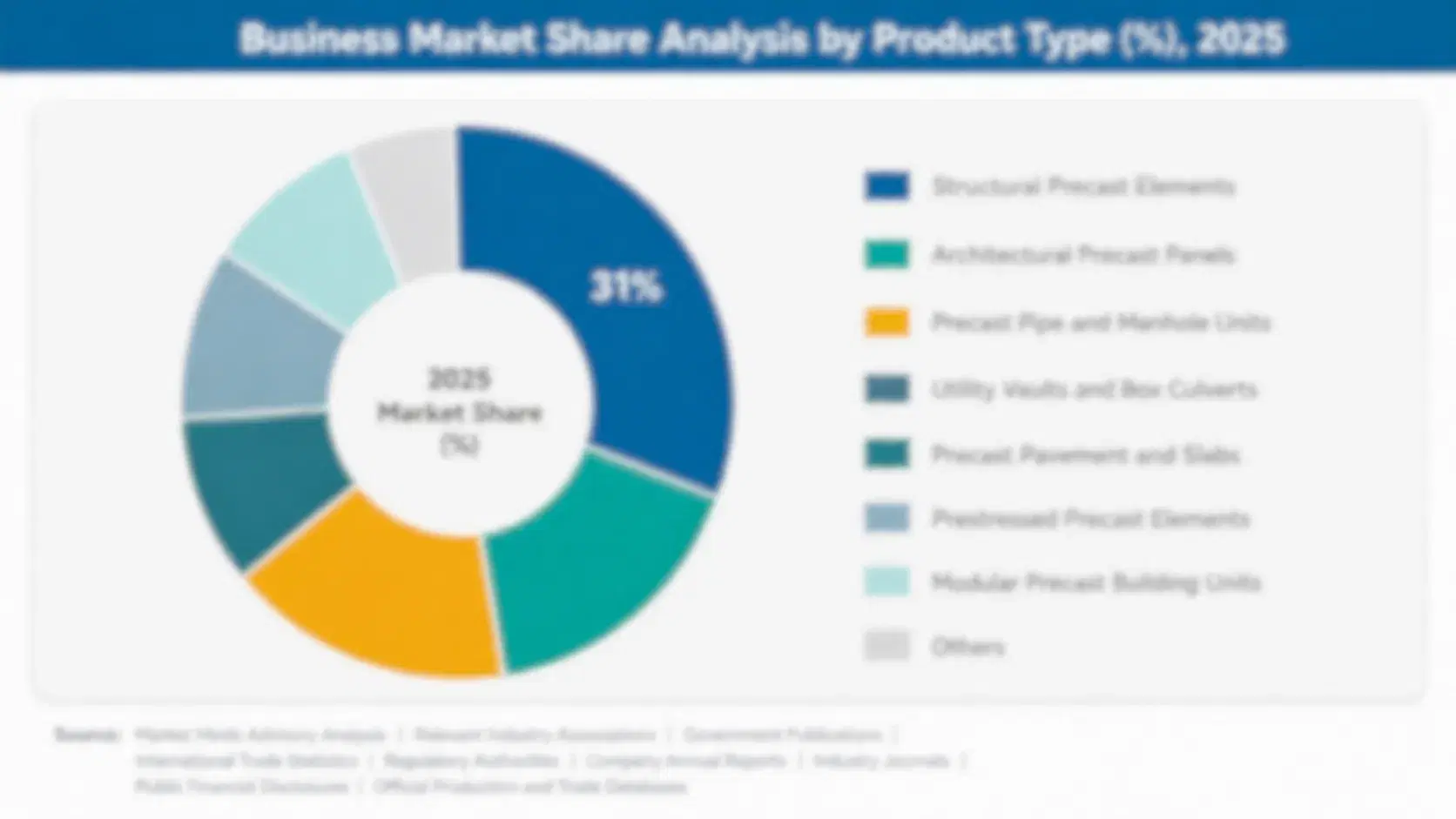
acrylic-styrene-acrylonitrile-resin-market-market-share-analysis-1787719701520

ASA Alloy and Blend Grades

Blends with polycarbonate and other engineering resins grow at 9.9%, half again the market rate of 6.6%, by holding weatherability alongside heat resistance or impact performance that neither component provides on its own. Compatibility and formulation work is genuinely difficult, and the full weathering qualification applies to each finished blend rather than transferring from the base resin. Compounders rather than polymer producers perform much of this development, which distributes value toward a part of the chain that the rest of the category has historically overlooked entirely. A producer selling pellets into this chain captures base resin margin and watches the formulation value accrue somewhere else. Few have moved to fix it.
CAGR 9.9%

Building Profile and Capstock Grades

Weatherable cap layers of around 0.3 millimetres co-extruded over cheaper substrate grow at 8.4% because the approach buys ultraviolet performance exactly where sunlight reaches and applies the premium to a small fraction of wall thickness. Siding, window profile, fencing and pipe all use it. Layer adhesion and matched thermal behaviour are the technical requirements and both are now well understood, which has moved competition toward colour consistency and long-term gloss retention rather than toward anything about the polymer itself. Window and siding guarantee periods running to a decade or more turn ultraviolet performance into a warranty obligation rather than a preference, which is why the specification rarely gets reopened afterwards.
CAGR 8.4%
Full segment breakdown across 6 segments available in the complete report.

Regional Architecture and Country Demand Map

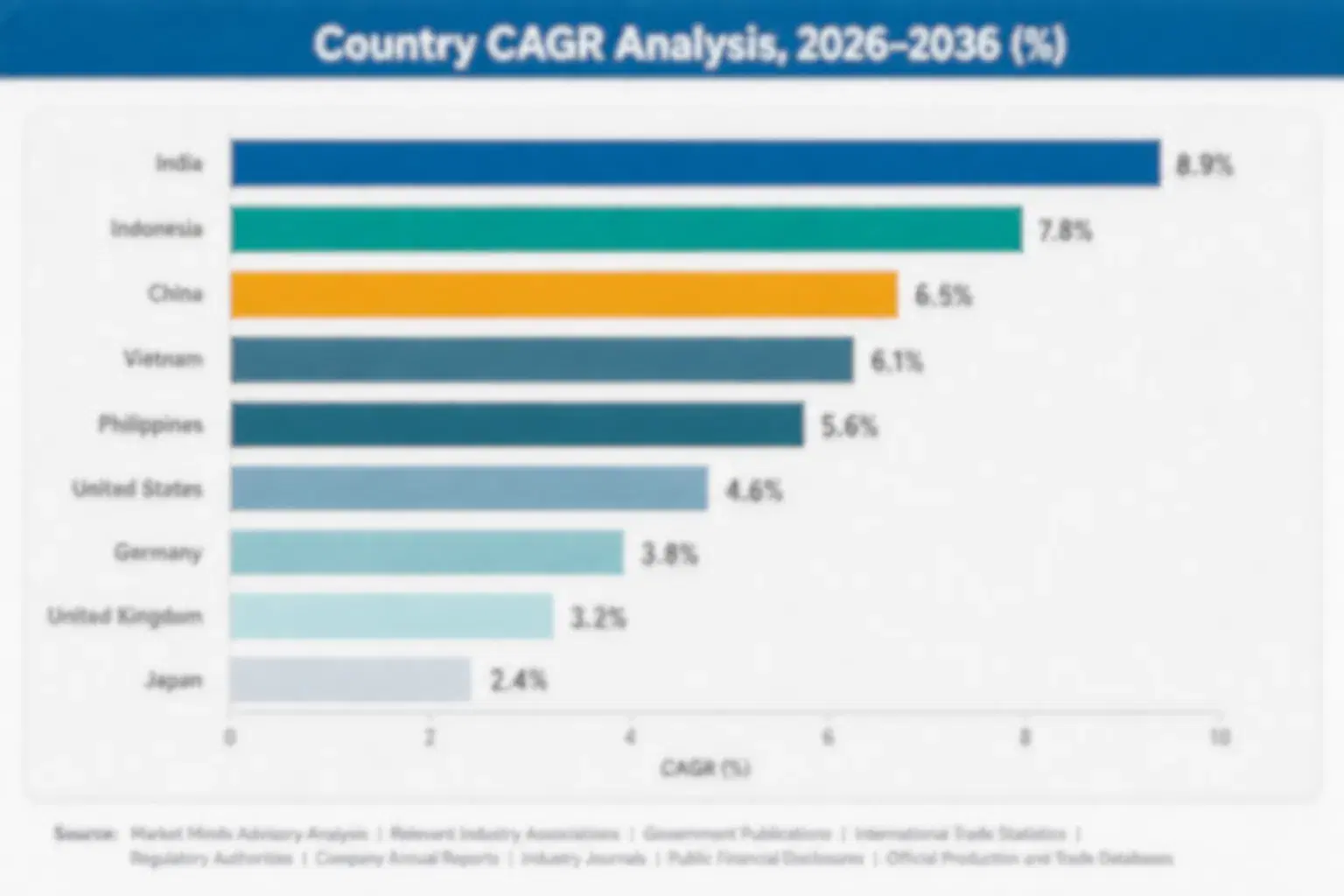
Geography follows producer location alongside automotive and construction demand rather than population. East Asia leads on both counts, and India grows fastest from a base that remains genuinely modest. Producer concentration explains rather more of the pattern here than any downstream demand measure really does.

North America

Automotive exterior applications dominate consumption, with unpainted finishing well established across pickup and sport utility programmes where grilles, cladding and trim carry large moulded-in-colour surfaces. Building capstock use in siding is substantial and long-standing, supported by a residential construction market that has used weatherable cap layers for decades. Florida exposure sites host much of the industry's natural weathering programme, which gives regional technical centres a role considerably larger than local consumption alone would justify. Recycled content grades receive less specification attention here than in Europe, and the automotive weathering programmes run at Florida and Arizona sites give regional technical teams influence over grade development well beyond what local volume would suggest.
Share: 22% | CAGR: 5.8% (2026 to 2036)

Western Europe

German automotive programmes drive most consumption, with exterior trim, grilles and pillar components specifying weatherable resin as standard on unpainted surfaces. Producer presence is strong and the region hosts significant technical and application development capability. Building profile and window applications use capstock widely, supported by long guarantee periods on window systems that make ultraviolet performance a warranty question rather than a preference. Recycled content grades receive more regulatory attention here than anywhere else. Producers here carried a genuine energy cost disadvantage against Asian competitors through the crisis years and have not fully recovered it since, which has pushed competition toward grade specialisation and qualification depth rather than toward anything resembling a price contest.
Share: 24% | CAGR: 5.0% (2026 to 2036)
Regional intelligence for 5 additional markets available in the complete report: East Asia, South Asia and Pacific, Latin America, Middle East and Africa, Eastern Europe. Contact sales@marketmindsadvisory.com.
acrylic-styrene-acrylonitrile-resin-market-country-cagr-analysis-1787719701704

Selling Three Years Ahead Of Demand

The resin carries a 38% premium, qualification needs 36 months of outdoor exposure, automotive takes 52% of volume and capstock applies the premium to 0.3 millimetres. Four levers work on exposure programmes, warranty evidence, capstock economics and alloy formulation rather than on price, which is where this particular argument nearly always goes badly wrong.

Start Exposure Programmes Before Anybody Asks

Natural weathering runs around 36 months and no accelerated method substitutes for it in any specification anybody accepts, so a grade begun today qualifies in three years and one begun on receipt of an enquiry qualifies far too late. Producers holding racks of exposed samples across colours and formulations can answer a request immediately. It costs money committed against demand nobody has confirmed, and it is the only route to being ready. Racks of samples simply sitting in the sun are an unusual asset and a genuinely decisive one here.
Market Impact: Covers the full 36 month qualification window ahead

Present Warranty Data To The Cost Engineer

A 38% premium appears on every cost reduction list because the benefit arrives in year three and the cost arrives at assembly, which is an argument the resin loses whenever it is framed as a material price comparison. Field return and warranty claim data reframes it as a cost avoided rather than a cost added. Producers hold that evidence and rarely present it in a form a cost engineer would actually accept or use. Almost nobody has ever shown a cost engineer the actual field return numbers involved in any of this.
Market Impact: Defends a 38% material price premium at review

Push Capstock Wherever Sunlight Reaches One Side

Co-extruding a weatherable layer of around 0.3 millimetres over cheaper substrate applies the premium to a small fraction of wall thickness while delivering full ultraviolet performance on the exposed surface. That converts the price objection into a rounding error for any part with one weathered face. Siding, profile, fencing and pipe already work this way, and plenty of moulded outdoor parts could and simply have not been reconsidered. The premium argument that dominates every solid moulded part discussion becomes almost irrelevant once the part geometry allows for a capped layer.
Market Impact: Applies the premium to only 0.3 millimetre layers

Build Alloy Capability Alongside The Compounders

Blends holding weatherability with heat or impact performance grow at 9.9%, and compounders rather than polymer producers do much of that formulation work, which places the growing value away from base resin supply. Producers partnering with compounders on qualification and formulation capture it; those selling pellets and leaving the rest to somebody else do not. Weathering qualification still applies to each blend, which keeps the 36 month barrier fully intact throughout. The fastest growing part of this market is being formulated by companies that do not make any polymer themselves.
Market Impact: Captures the value in a 9.9% growth segment

Who Controls the Margin Pool

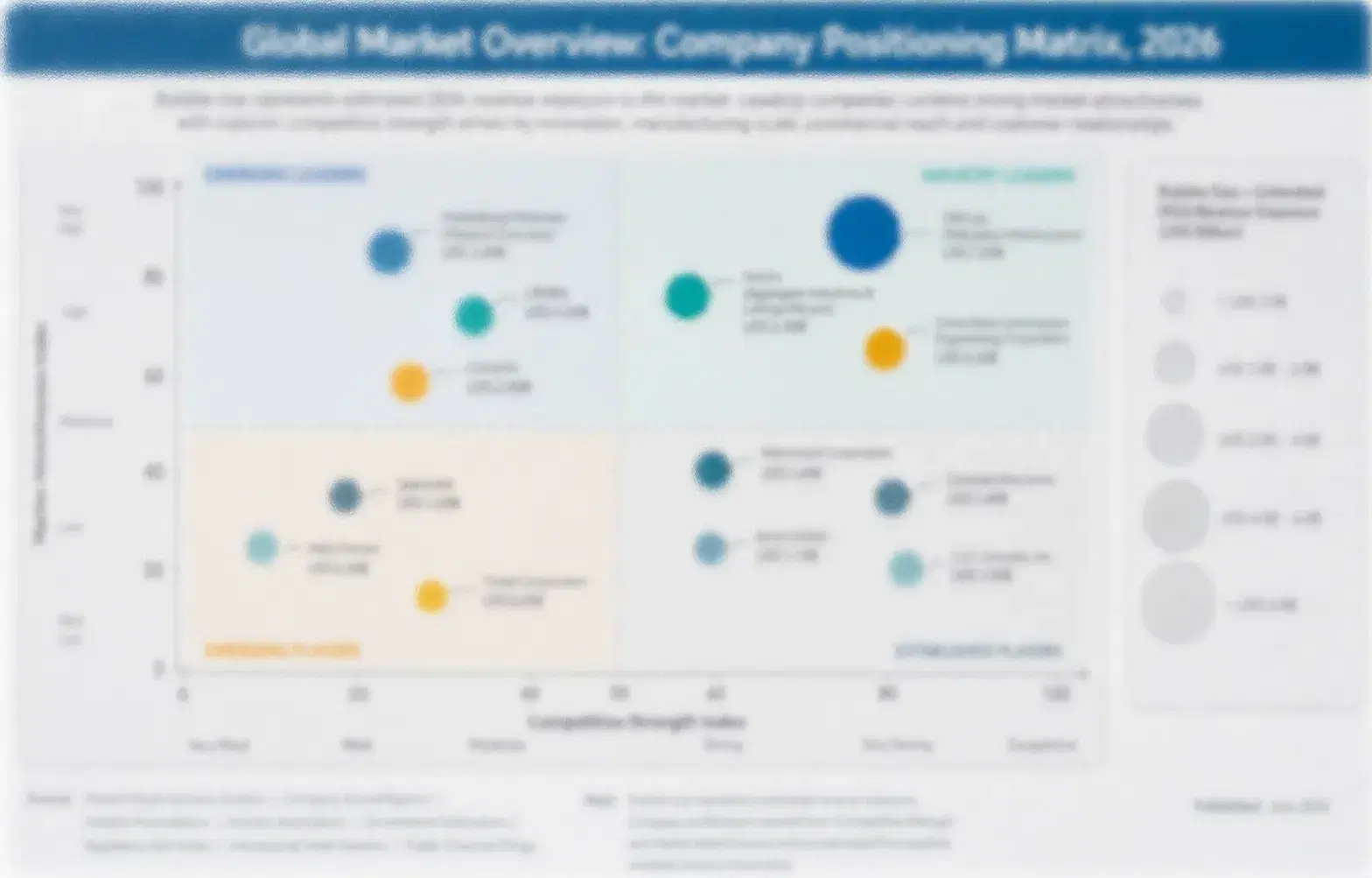
Measured on disclosed styrenic and weatherable resin revenue, the five largest producers hold a CR5 of 68%, which is high for a commodity-adjacent polymer and reflects qualification timescales rather than any manufacturing barrier. INEOS Styrolution and LG Chem hold the broadest grade portfolios with the longest weathering records, SABIC carries integrated styrenics capability, and Chi Mei and Kumho Sunny hold substantial Asian positions with their own qualification histories. Nobody outside that group holds a comparable qualification record anywhere.
Three contests define activity. Automotive grades compete on qualification record and colour matching rather than on price, since a specified grade is difficult to displace. Capstock grades compete on gloss retention and colour consistency over years. And alloys compete on formulation capability, increasingly among compounders rather than producers. The compounders are where that third contest is now genuinely being fought out.

Pressure builds from Chinese capacity expansion changing regional pricing and pushing export volume outward. Rankings shift toward whoever holds exposure data across the widest range of colours, since colour rather than polymer is what fails visibly first. A colour that fades is what a customer actually notices, and no producer holds exposure data across every one of them.
acrylic-styrene-acrylonitrile-resin-market-company-positioning-matrix-1787719701887

Competitive Moat and Risk Dimensions

INEOS STYROLUTION

Moat: Weathering Records And Grade Breadth

The company holds decades of natural exposure data across a wide grade and colour range, which is exactly what an automotive specification engineer wants to see and exactly what a new entrant cannot produce faster than the weather permits. Qualification records of that depth take a very long time to build. A competitor with equivalent chemistry still waits three years.
INEOS STYROLUTION

Risk: Automotive Concentration Cuts Both Ways

Automotive consumes about 52% of category volume and a programme reverting to painted exterior finishing removes that demand immediately and completely. Specification depth in one industry becomes exposure to that industry's finishing decisions. Vehicle programme timing also means volume arrives and disappears in steps rather than smoothly.
LG CHEM

Moat: Asian Scale And Cost Position

Producing at scale within the region holding both the largest demand and the fastest growth gives the company a cost and logistics position that Western producers cannot approach on Asian business. Its own qualification records are long enough to satisfy the vehicle makers operating there. That combination of weathering data and regional cost is difficult for anybody else to assemble.
LG CHEM

Risk: Regional Capacity Expansion Compresses Price

Chinese capacity expansion has changed regional pricing considerably, and additional supply competing for the same automotive and construction demand compresses margin across everybody producing there. Scale advantages erode when several producers hold them simultaneously. Export volumes pushed outward from the region carry that pressure into other markets too.

Players Tracked

Prominent Players

INEOS Styrolution
LG Chem
SABIC
Chi Mei Corporation
Kumho Sunny

Other Key Players

Trinseo
Formosa Chemicals and Fibre
Toray
Techno-UMG
Denka
Lotte Chemical
Shanghai Huayi
Ningbo LG Yongxing
Jiangsu Zhongsheng
Astra Polymers
RTP Company
Ravago
LyondellBasell
Covestro
Avient

Recent Developments

FEBRUARY 2025

Vehicle programme reverts exterior components to painted finish

A vehicle manufacturer reverted several exterior components on a programme from moulded-in-colour to painted finishing following appearance and colour matching difficulties across suppliers. This was a design and finishing decision rather than any commercial development, and it removed weatherable resin demand from those particular parts entirely.
Signal: Demand here follows exterior finishing decisions that resin producers neither influence nor manage to anticipate at all.
JUNE 2025

Producer publishes extended natural exposure results across colour range

A resin producer published natural weathering results covering an extended colour range after multi-year outdoor exposure at multiple sites. This was a technical data publication rather than any product launch, and colour rather than base polymer is where visible weathering failure typically appears first in service.
Signal: Colour-specific exposure data is what specification engineers actually want and very rarely ever manage to receive.
OCTOBER 2025

Compounder qualifies weatherable alloy grade for heat exposed application

A compounder completed qualification of a weatherable alloy grade combining ultraviolet stability with elevated heat performance for an under-bonnet adjacent exterior application. This was an organic development rather than any acquisition, and full weathering qualification applied to the blend rather than transferring from its base resin.
Signal: Formulation value keeps moving toward the compounders while qualification timescales stay entirely unchanged throughout all of it.

Styrene, Acrylonitrile, Acrylate

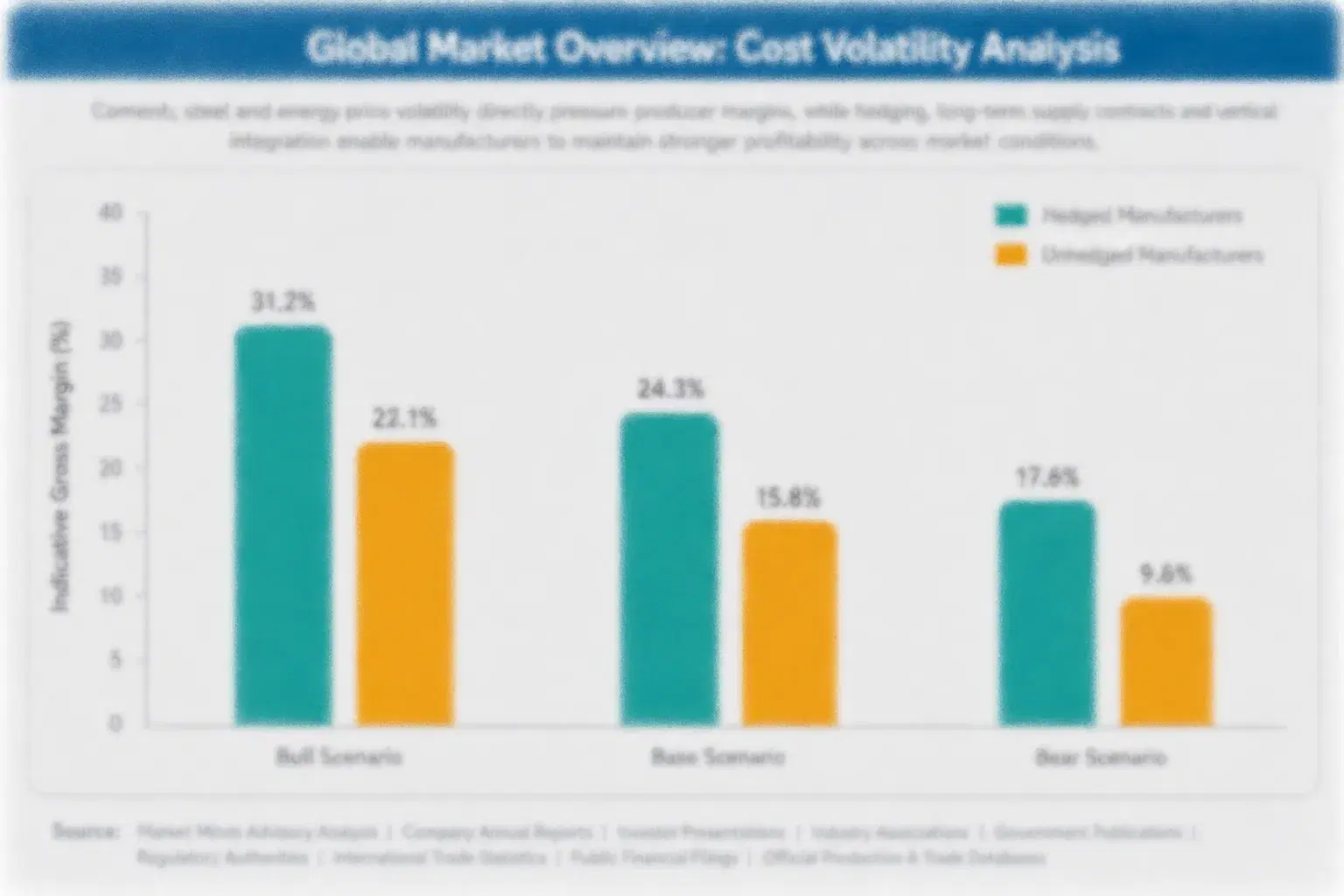
Three monomers and a compounding step carry almost all of the cost. Styrene, acrylonitrile and butyl acrylate together with stabiliser and pigment packages and compounding energy account for 62 to 74% of finished resin cost. Styrene follows benzene and ethylene, acrylonitrile follows propylene and ammonia, and butyl acrylate follows propylene through acrylic acid, which means the whole formulation sits downstream of two petrochemical chains moving independently of one another.
Both chains moved sharply. Petrochemical feedstock pricing rose severely through 2021 and 2022, which EIA data records, and acrylonitrile in particular tightened as propylene availability and ammonia pricing moved together. European energy pricing then rose through 2022, which IEA data documents, and polymerisation and compounding are both energy-intensive enough that European producers carried a real cost disadvantage against Asian competitors throughout that whole period and afterwards.

Exposure divides by monomer integration rather than by scale. Producers with their own styrene and acrylonitrile carry cost through the chain and capture margin at each step; those buying monomers on the open market carry full exposure with no offset anywhere. Compounders buying finished base resin face the narrowest position of all, which is why formulation capability rather than purchasing is where they compete.
acrylic-styrene-acrylonitrile-resin-market-cost-volatility-analysis-1787719702075

Integrate acrylonitrile supply or contract it long term

Acrylonitrile follows propylene and ammonia together and tightened sharply when both moved, and it is the monomer with the fewest alternative sources in most regions. Integration costs capital and long-term contracting costs volume commitment against uncertain demand. Either removes exposure to the input that has repeatedly caused the sharpest cost movements across the whole styrenic family.

Hold exposure racks across colours ahead of demand

Natural weathering runs around 36 months and colour rather than base polymer is where visible failure appears first, so a producer without exposed samples in a requested colour cannot answer an enquiry for three years. Maintaining racks across a wide colour range costs site fees and sample preparation continuously. It converts a three year delay into an immediate answer.

Site compounding where energy costs least

Polymerisation and compounding are energy-intensive enough that European producers carried a genuine cost disadvantage against Asian competitors through the energy crisis and have not fully recovered it since. Relocating costs capital and disrupts established customer logistics considerably. It addresses an exposure that reshaped relative positions once already and shows every sign of doing so again.

Portfolio Architecture for Margin Defence

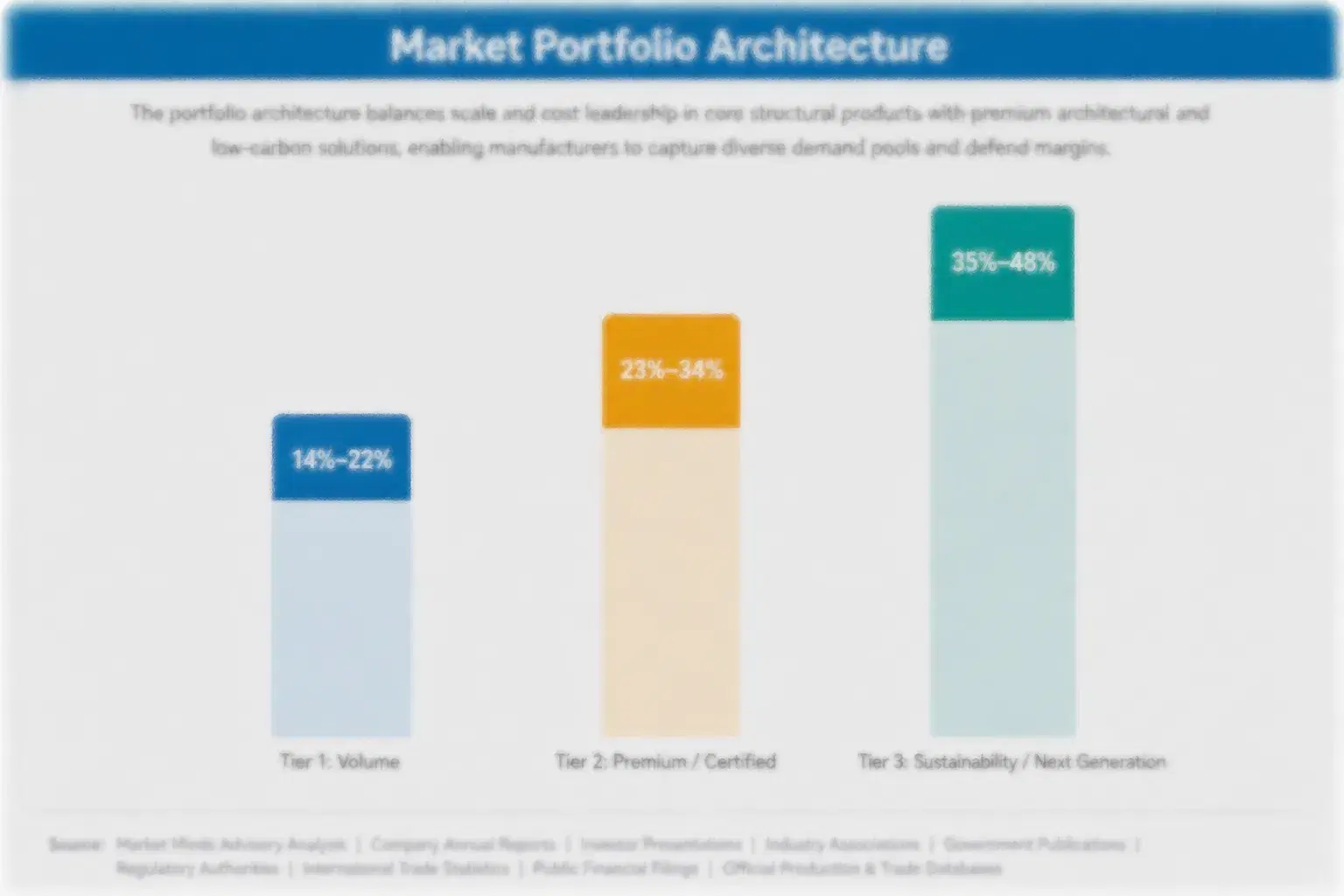
Margin follows qualification depth rather than chemistry, which is the pattern that explains this whole category. General purpose weatherable grades earn modestly against regional competition. Colour concentrate and compounding earns thinly on service margins. Recycled content grades earn moderately while regulatory attention supports them. Building capstock grades earn reasonably on long specification records. Automotive exterior grades earn well on qualification lock-in. Alloy and blend grades earn best, on formulation capability few producers hold.
The tension is that the growing value sits with compounders rather than with polymer producers. Alloy formulation, colour development and application-specific blending are where the 9.9% growth is happening, and a producer selling pellets into that chain captures the base resin margin and none of the formulation value. Several producers have concluded they should be compounding and rather fewer have actually built the capability to do it properly.

High-value pools sit in three places. Automotive grades protected by qualification records that take three years of sunshine to replicate. Alloy and blend formulation, where compatibility work is genuinely difficult and the weathering barrier still applies. And colour-specific exposure data across a wide range, which is expensive to maintain and is exactly what a specification engineer asks for first.

Volume / Commodity-Adjacent

General purpose weatherable grades and colour concentrate supplied into price-competitive regional demand. The 10-point range separates producers with integrated monomer supply from those buying styrene and acrylonitrile on the open market at spot pricing.
Gross Margin: 14-24%

Premium / Certified

Building capstock and recycled content grades supplied against long specification records and guarantee obligations. The 14-point spread reflects how differently established capstock positions and newer recycled grades are priced against their respective competition.
Gross Margin: 26-40%

Sustainability / Regulatory / Next-Generation

Automotive exterior grades protected by qualification records alongside alloy and blend formulations combining weatherability with other properties. The 20-point range is wide because qualification-locked automotive supply and formulation-led alloy development earn on quite different bases.
Gross Margin: 38-58%
acrylic-styrene-acrylonitrile-resin-market-portfolio-architecture-1787719702268

High-value Sub-segments and Strategic Watch-out

Alloy And Blend Formulations

Highest margin and fastest growth at 9.9%, protected by compatibility work that is genuinely difficult and by weathering qualification applying to each finished blend. The risk is that compounders rather than polymer producers do most of this work and capture most of the value created.
Gross Margin: 48-58%

Qualified Automotive Grades

Strong economics from specification lock-in that a competitor cannot break faster than three years of natural exposure allows anybody to move. The risk is that automotive takes 52% of volume, so a finishing decision reverting parts to paint removes demand immediately. That risk is real.
Gross Margin: 38-50%

Building Capstock Supply

The steady core, applying the premium to around 0.3 millimetres of wall thickness where sunlight actually reaches the surface. Suppliers hold it because window and siding guarantee periods make ultraviolet performance a warranty question rather than a preference. Change is genuinely unattractive to everybody involved.
Gross Margin: 28-38%

Premium Justification Erosion

The strategic watch-out. A 38% premium sits on every cost reduction list while stabilised alternatives and coatings keep narrowing the gap. The risk is losing specifications on a material price comparison that never considers year three at all. Year three never really enters that conversation.
Gross Margin: 14-22%

Locked By Programme, Then Forgotten

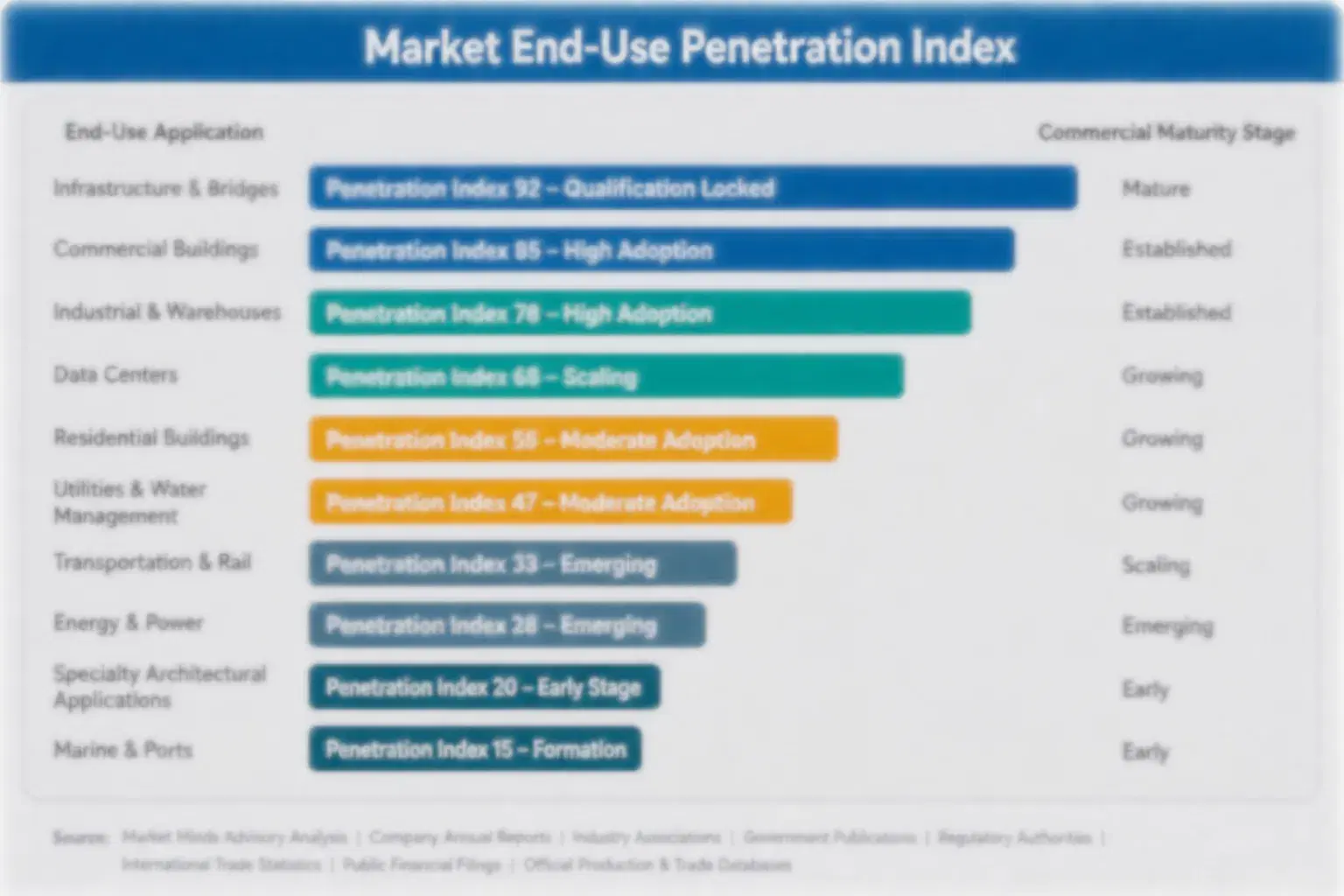
Demand here is locked in at specification and then runs unchanged for years. A vehicle programme qualifying a grade consumes it across the whole production run, which is typically six or seven years, without revisiting the decision unless something fails or a cost review forces the question. Building profile systems behave similarly across even longer periods. That produces revenue remarkably predictable once won and almost impossible to win at any other moment.
Stickiness is therefore close to absolute within a programme and close to zero between them. Requalifying a resin requires the full weathering exposure again, which nobody undertakes mid-programme for a price difference. Every new programme, however, reopens the decision completely, and a producer who lost the previous one starts level. Capstock relationships in building are stickier still, since guarantee obligations discourage change.

The decision maker sits in materials engineering and is influenced heavily by cost engineering. Materials engineers specify against weathering data and colour matching evidence, while cost engineers maintain a list on which a 38% premium appears every year. Neither can decide alone, which is why warranty and field return data matters so much and why producers who cannot supply it lose specifications they should have kept.
acrylic-styrene-acrylonitrile-resin-market-end-use-penetration-index-1787719702451

Qualification Is The Moat

These are among the four positions where our research anticipates prominent divergence between winners and laggards over the coming forecast period. Each is grounded in the demand model, the regulatory perimeter, and the announced capacity pipeline.
01 / EXPOSURE PROGRAMME INVESTMENT

Three years of sunshine cannot be bought

Natural weathering runs around 36 months and no accelerated method substitutes for it in any specification that anybody in this industry currently accepts, so a grade started today only qualifies in three years and one started on receipt of an enquiry qualifies far too late for it. Producers holding exposed racks across a wide colour and formulation range answer any enquiry immediately. It costs money committed against demand that nobody has confirmed, and there is simply no alternative route available anywhere.
02 / WARRANTY EVIDENCE PRESENTATION

Year three costs never reach the cost engineer

A 38% premium appears on almost every cost reduction list a programme engineer maintains, because the material cost arrives at assembly while the benefit only appears in year three when the parts either still look acceptable or do not. Framed as a straightforward material price comparison, the resin loses that argument almost routinely. Field return and warranty claim data reframes it as a cost avoided rather than added, and producers hold that evidence and rarely present it at all usefully.
03 / CAPSTOCK ECONOMICS EXTENSION

Buy the property only where light falls

Co-extruding a weatherable layer of around 0.3 millimetres over a cheaper substrate delivers full ultraviolet performance on the exposed face while applying the premium to only a small fraction of the total wall thickness. That converts the price objection into something close to a rounding error for any part carrying only one weathered surface. Siding, profile, fencing and pipe applications all already work this way, and a great many moulded outdoor parts have simply never once been properly reconsidered since.
04 / FORMULATION VALUE CAPTURE

The growth sits with the compounder

Alloy and blend grades combining weatherability with either heat or impact performance grow at 9.9%, and compounders rather than the base polymer producers now perform the greater part of that formulation work themselves. A producer selling pellets into that chain captures the base resin margin and none of the formulation value being created above it. Partnering with the compounders on qualification and joint development captures a very good deal of it, while weathering timescales keep the entry barrier entirely intact.

Engagement Snapshot From the Field

A live engagement with an industry participant carrying material or product regulatory and market exposure ahead of a defining policy shift, showing how our research translates into a defensible multi-year portfolio strategy.
MARKET MINDS ADVISORY · CLIENT ENGAGEMENT SUMMARY
Acrylic Styrene Acrylonitrile Resin Producer Strategic Portfolio Review and Transition Roadmap 2026·Investment Scenario on Acrylic Styrene Acrylonitrile Resin Exposure Evaluation 2025-26
CLIENT PROFILE
A styrenic resin producer supplying weatherable grades across European and Asian markets, with reported weatherable resin revenue of 210 million dollars (client-reported, unverified by MMA). Roughly 74% came from automotive exterior grades. Natural exposure racks covered a narrow colour range and no alloy formulation capability existed anywhere within the business at that particular point in time.
STRATEGIC CHALLENGE
Two automotive specifications had been lost to competitors offering colour-specific exposure data the company could not match, and a third programme had reverted parts to painted finish entirely. Management was preparing a price reduction to defend remaining specifications. That competed on the one dimension where Asian producers held a permanent advantage while leaving the qualification gap entirely unaddressed.
MMA APPROACH
MMA analysed specification wins and losses against exposure data held by colour and against competitor qualification records, a comparison the company had never constructed. Twenty-two expert interviews with automotive materials engineers, cost engineers, compounders and window system manufacturers established what actually decides a specification. The analysis treated exposure programme breadth and alloy capability rather than pricing as the routes available.
KEY FINDINGS
  1. Both lost specifications had turned on colour-specific weathering data, and the company held exposure results for a fraction of the colours its competitors could evidence.
  2. Cost engineers interviewed had never been shown warranty or field return data by any resin producer, and several said it would have changed their recommendation.
  3. Compounders were performing the alloy formulation work driving the fastest segment growth, and the company sold them base resin and captured nothing further.
  4. Exposure rack capacity was the binding constraint on colour coverage, and expanding it cost far less than the specifications already lost had been worth.
CLIENT PROFILE
A styrenic resin producer supplying weatherable grades across European and Asian markets, with reported weatherable resin revenue of 210 million dollars (client-reported, unverified by MMA). Roughly 74% came from automotive exterior grades. Natural exposure racks covered a narrow colour range and no alloy formulation capability existed anywhere within the business at that particular point in time.
STRATEGIC CHALLENGE
Two automotive specifications had been lost to competitors offering colour-specific exposure data the company could not match, and a third programme had reverted parts to painted finish entirely. Management was preparing a price reduction to defend remaining specifications. That competed on the one dimension where Asian producers held a permanent advantage while leaving the qualification gap entirely unaddressed.
MMA APPROACH
MMA analysed specification wins and losses against exposure data held by colour and against competitor qualification records, a comparison the company had never constructed. Twenty-two expert interviews with automotive materials engineers, cost engineers, compounders and window system manufacturers established what actually decides a specification. The analysis treated exposure programme breadth and alloy capability rather than pricing as the routes available.
KEY FINDINGS
  1. Both lost specifications had turned on colour-specific weathering data, and the company held exposure results for a fraction of the colours its competitors could evidence.
  2. Cost engineers interviewed had never been shown warranty or field return data by any resin producer, and several said it would have changed their recommendation.
  3. Compounders were performing the alloy formulation work driving the fastest segment growth, and the company sold them base resin and captured nothing further.
  4. Exposure rack capacity was the binding constraint on colour coverage, and expanding it cost far less than the specifications already lost had been worth.
RECOMMENDED STRATEGY
Phase 1: Phase one: expand natural exposure racks across a far wider colour range immediately, since coverage takes three years to arrive. Phase 2: Phase two: build warranty and field return evidence into the commercial package aimed specifically at cost engineering rather than materials. Phase 3: Phase three: partner with compounders on alloy qualification rather than selling them base resin and conceding all of the formulation value.
OUTCOME
Exposure rack capacity was tripled and colour coverage will complete over the following three years. Warranty evidence was assembled and presented at two cost reviews, one of which retained a specification under challenge (client-reported, unverified by MMA). A compounder partnership on alloy qualification was agreed. The price reduction was cancelled, having addressed none of the actual reasons for the losses.

Frequently Asked Questions

Foundational context covering the market sizes, CAGR, scope, country, region and competition that inform every finding below. This section is provided to cover basics and most often pre-purchase conversations, answered from the MMA Primary Research Dataset.

What is the current size of the Acrylic Styrene Acrylonitrile Resin Market?

The market was worth 1.7 billion dollars in 2025, covering automotive, capstock, general purpose, alloy, recycled and compounding grades. It reaches 1.81 billion dollars in 2026.

How large will the Acrylic Styrene Acrylonitrile Resin Market be by 2036?

MMA forecasts 3.43 billion dollars by 2036, an increase of 1.62 billion dollars over the 2026 base. That represents an expansion multiple of 1.90 times across the forecast period.

What is the CAGR for the Acrylic Styrene Acrylonitrile Resin Market 2026 to 2036?

The base case compounds at 6.6% annually. The bull case reaches 7.8% if unpainted exterior finishing extends further, while the bear case sits at 5.4% on stabilised alternatives closing the performance gap.

Which segment is growing fastest?

Alloy and blend grades, at 9.9%, half again the market rate of 6.6%. They hold weatherability alongside heat or impact performance that neither component provides alone.

Who are the major companies in the Acrylic Styrene Acrylonitrile Resin Market?

INEOS Styrolution, LG Chem, SABIC, Chi Mei Corporation and Kumho Sunny lead on disclosed styrenic and weatherable resin revenue. Trinseo, Techno-UMG and Denka hold notable positions.

Which country is growing fastest?

India at 8.6%, as vehicle production and construction expand together and unpainted exterior finishing appears on newer programmes. Imported resin currently carries most of that volume.

Report Segmentation Architecture

The full report scope spans multiple orthogonal segmentation dimensions, with cross-tabulated demand data provided for each dimension pair. Coverage extends further to regional breakdowns, trend trajectories, and the competitive detail needed to support segment-level decision-making.

By Grade Type

  • Automotive Exterior Grades
  • Building Profile and Capstock Grades
  • General Purpose Weatherable Grades
  • Alloy and Blend Grades
  • Recycled Content Grades
  • Colour Concentrate and Compounding

By End-Use Industry

  • Automotive Exterior Components
  • Building Siding and Cladding
  • Window and Door Profile
  • Outdoor Furniture and Equipment
  • Electrical and Electronic Housings
  • Agricultural and Marine Applications

By Commercial Dimension

  • Automotive Programme Specification
  • Direct Resin Supply Contracts
  • Compounder and Formulator Supply
  • Distributor and Trader Channels
  • Capstock Co-Extrusion Supply
  • Recycled Content Programme Supply

By Region

  • North America
  • Western Europe
  • East Asia
  • South Asia and Pacific
  • Latin America
  • Middle East and Africa
  • Eastern Europe

Scope, Methodology, and Coverage

Every figure in this report is reproducible from documented input assumptions. The scope below maps the historical period, the forecast horizon, the segmentation dimensions, and the countries covered, alongside the underlying primary and qualitative methodology.
Historical Period
2020 to 2025
Forecast Period
2026 to 2036
Base Year
2025 (USD billions; MMA Primary Research Dataset, August 2026)
Market Definition
Scope covers acrylate-modified styrene acrylonitrile copolymer resins, the polymer family commonly designated ASA, supplied in pellet, compounded or concentrate form for applications requiring weathering resistance, spanning automotive exterior grades, building profile and capstock grades for co-extrusion, general purpose weatherable grades, alloy and blend grades combining this resin with polycarbonate or other engineering thermoplastics, recycled content grades, and colour concentrate and compounding services supplied for these resins. Standard ABS SAN and other unmodified styrenic resins, polycarbonate polyamide and other engineering thermoplastics supplied without this component, weatherable paints coatings and film laminates, ultraviolet stabiliser additives sold independently, and finished moulded or extruded components are excluded from the market size and all derived figures.
Quantitative Units
USD billions (current prices); tonnes supplied; price premium over standard styrenic; weathering qualification duration in months; capstock layer thickness
Segmentation Dimensions
By Grade Type; By End-Use Industry; By Commercial Dimension; By Region
Regions Covered
North America, Western Europe, East Asia, South Asia and Pacific, Latin America, Middle East and Africa, Eastern Europe
Countries Covered
China, South Korea, Germany, USA, Taiwan, Japan, India, Poland, Mexico, Brazil, Italy, France, Thailand, Turkey, Saudi Arabia
Key Companies Profiled
INEOS Styrolution, LG Chem, SABIC, Chi Mei Corporation, Kumho Sunny, Trinseo, Formosa Chemicals and Fibre, Toray, Techno-UMG, Denka, Lotte Chemical, Shanghai Huayi, Ningbo LG Yongxing, Jiangsu Zhongsheng, Astra Polymers, RTP Company, Ravago, LyondellBasell, Covestro, Avient
Quantitative Methodology
Primary survey, n=3,800 respondents, Q4 2025, six countries; demand-side model with trade association cross-validation
Qualitative Methodology
47 expert interviews, Q4 2025; applied to validate demand model assumptions, identify emerging dynamics, and assess competitive positioning
Report Format
PDF and XLSX data workbook (Word format preview document)
Publisher
Market Minds Advisory
Report Code
MMA-2026-CHM-131
Published
August 2026
Contact
sales@marketmindsadvisory.com | www.marketmindsadvisory.com

Purchase the full Acrylic Styrene Acrylonitrile Resin Market Report (2026 to 2036).

The full report runs to 155 pages and covers all six grade type segments, seven regions and 20 profiled producers in detail. It includes the complete segment CAGR set, regional producer capacity and end-use demand comparison, and analysis of weathering qualification timescales as a barrier to competitive entry. Company profiles carry evaluation on disclosed styrenic and weatherable resin revenue, with moat and risk assessment for the top five producers. The competitive section extends to 12 tracked specification, technical and capacity developments across 2024 and 2025. Primary research inputs include a quantitative survey of 3,800 respondents and 47 expert interviews conducted in Q4 2025.
Six grade type segments with individual CAGR forecasts
Seven regional markets with producer capacity and demand comparison
Twenty producer profiles on consistent revenue evaluation basis
Twelve tracked specification and capacity developments with commercial interpretation
Weathering qualification timescales assessed as a competitive barrier
Capstock economics modelled against solid moulded part pricing

Built For The People Who Decide

From boardroom strategy to bench-side execution, this report is read cover-to-cover by leaders shaping the next decade of their industry, turning demand scenarios, market dynamics and valuation benchmarks into decisions.
CXOs/ Presidents/ VPs/ Managers
M&A and Corporate Development
Strategy Teams and R&D Heads
Procurement and Product Directors
Regulatory and Compliance Leaders
Investor Relations and Equity Analysts